
MANILA, Philippines — The Philippines and Australia signed an updated bilateral Defense Cooperation Arrangement (DCA) on Sunday, November 15, 2026, aimed at strengthening military cooperation, streamlining defense coordination, and expanding joint security engagements amid evolving regional challenges.
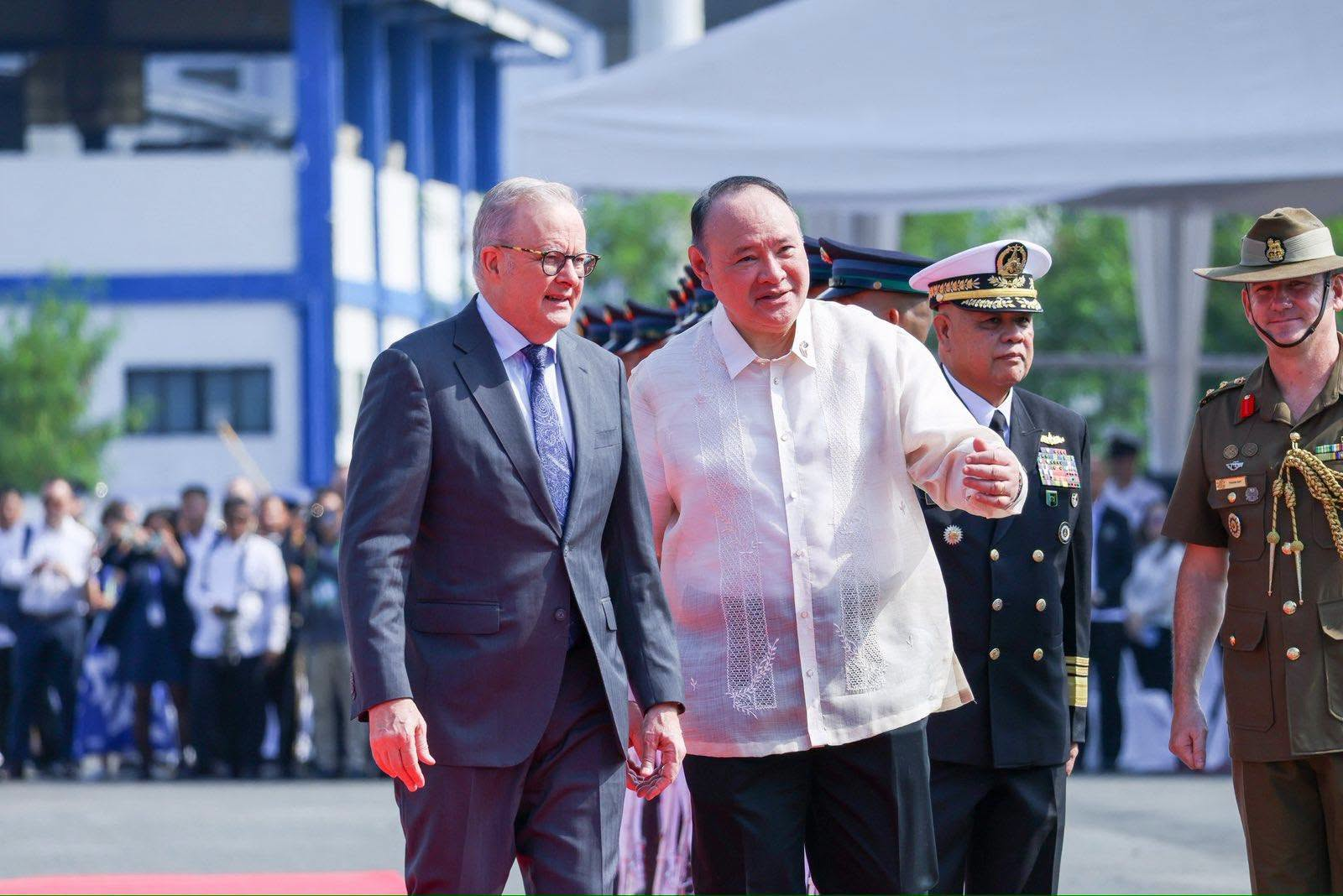
Defense Secretary Gilberto Teodoro Jr. and Australian Ambassador to the Philippines Marc Innes-Brown signed the agreement at the Eva Macapagal Cruise Terminal, Pier 15, Manila South Harbor, with Australian Prime Minister Anthony Albanese witnessing the ceremony.
The signing took place ahead of the 49th ASEAN Summit and Related Summits, hosted by the Philippines as ASEAN chair.
According to the Department of National Defense (DND), the renewed arrangement builds on three decades of defense cooperation under the original 1995 agreement, providing an updated framework for broader military engagements and collaboration in areas of mutual interest.
The revised DCA is expected to improve coordination between Philippine and Australian defense authorities, particularly in implementing activities covered by the Philippines-Australia Status of Visiting Forces Agreement (SOVFA).
Speaking to reporters following the signing, Teodoro said the updated arrangement would significantly reduce administrative procedures and allow both countries to carry out defense activities more efficiently.
“It will make things much, much faster and easier. Rather than 100 steps to do a single thing, it will just now take 10. And it will be more purposive and not ad hoc,” Teodoro said.
The defense chief explained that the arrangement would establish a more systematic approach to coordinating bilateral defense activities, replacing lengthy procedures that previously complicated implementation.
The renewed agreement follows the Statement of Intent on Enhanced Defense Cooperation signed by Teodoro and Australian Deputy Prime Minister and Defense Minister Richard Marles on August 22, 2025.
That earlier commitment recognized the need to modernize the bilateral defense framework to reflect the expanding scope and strategic importance of military cooperation between Manila and Canberra.
The DND said the updated arrangement responds to an increasingly complex regional security environment and supports continued cooperation between the two countries.
Australia has been one of the Philippines’ longstanding defense partners, with bilateral military relations supported by existing agreements that facilitate training, exercises, and other cooperative activities.
The SOVFA, in particular, provides the legal framework governing the temporary presence of visiting military personnel during approved activities in either country.
By streamlining coordination under the agreement, the renewed DCA could make it easier for both governments to organize joint training, military exchanges, and other defense engagements.
The signing also coincides with the 80th anniversary of diplomatic relations between the Philippines and Australia, highlighting eight decades of cooperation across defense, trade, development, and regional affairs.
The agreement comes as the Philippines continues to strengthen security partnerships with regional allies and partners while advancing its defense modernization and territorial defense priorities.
For both countries, the renewed arrangement provides an institutional framework for sustaining defense cooperation and improving their ability to coordinate responses to shared security concerns.
The DND emphasized that the agreement builds on existing bilateral arrangements rather than replacing the legal framework governing visiting forces.
The Philippines and Australia are expected to pursue further defense engagements under the updated arrangement, although specific activities and implementation schedules were not announced during the signing.