
The Asia Pacific region is set to weather another year of global uncertainty, with consumer spending and accelerating adoption of artificial intelligence anchoring growth even as trade routes shift and geopolitical risks linger.
According to the 2026 outlook released by the Mastercard Economics Institute, global real GDP growth is expected to ease slightly to 3.1 percent in 2026 from an estimated 3.2 percent in 2025. Yet across Asia Pacific, economic momentum is projected to remain broadly stable, underscoring the region’s resilience amid tariff realignments, supply-chain reconfiguration, and uneven technological gains worldwide.
MEI said the global environment entering 2026 is defined by a balance of risks and opportunities. Fiscal support and rapid technological progress, particularly the integration of AI into business operations, are providing meaningful tailwinds, although their impact will vary widely across markets.
At the same time, persistent geopolitical tensions and shifting trade patterns continue to fragment global commerce, creating uncertainty for exporters and manufacturers.
Despite these pressures, Asia Pacific is expected to maintain steady growth. Easing inflation, supportive monetary policy, and rising real incomes in several markets are strengthening household balance sheets.
Consumers remain tech-enabled and value-conscious, prioritizing travel and live experiences while keeping a close eye on prices for everyday essentials. Tourism continues to act as a key economic engine, with both outbound and intra-regional travel gaining pace.
“Given its centrality to global trade, Asia Pacific has shown remarkable resilience at a time when tariff uncertainty and shifting supply chains have threatened to upend international commerce,” said David Mann.
He noted that improving household conditions across much of the region point to a defining theme for 2026: while trade and technology dominate headlines, underlying consumer demand remains firm. For businesses, he added, staying aligned with these demand trends will be critical.
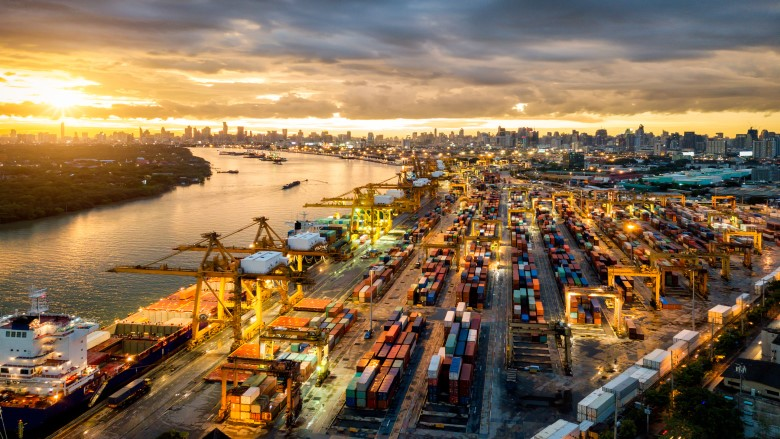
Trade dynamics remain a major factor shaping the outlook. Following tariff changes in 2025, global trade flows are being re-routed, with the Chinese Mainland diversifying exports beyond traditional markets as the U.S. share of its e-commerce sales declined.
For Asia Pacific, this shift presents a mixed picture. Some economies importing lower-cost goods are seeing disinflationary benefits, while exporters in parts of Northeast and South Asia face pressure from tariffs and softer external demand. Even so, the region’s role at the heart of global supply chains remains intact, supported by expanding roles for India, ASEAN economies, and the Chinese Mainland as firms rethink sourcing and investment strategies.
AI adoption and policy support are emerging as another powerful growth driver. MEI’s AI Spending Index points to strong momentum in economies such as South Korea, Japan, India, and Hong Kong SAR, reflecting rising uptake of AI tools by both businesses and consumers.
Alongside this, targeted investments in AI hubs, data centers, smart cities, and semiconductor ecosystems are laying the groundwork for the next phase of digital productivity, positioning Asia Pacific to benefit disproportionately from the global shift toward AI-enabled growth.
Travel continues to stand out as one of the region’s most durable engines of economic activity. In the first half of 2025, Singapore’s outbound travel spending exceeded pre-pandemic levels by USD 2.7 billion, while Indonesia and the Philippines led regional growth, with outbound spending up 40 percent and 28 percent, respectively.
Inbound tourism across Japan and parts of ASEAN has largely normalized, while intra-regional travel is expanding as consumers favor experiences over goods. This sustained appetite for leisure and experiences highlights the strength of the services sector and its importance to the broader economic outlook.
Looking across major markets, the Chinese Mainland is forecast to grow 4.5 percent in 2026, supported by strengthening consumption and the rise of “new consumption” categories such as beauty, wellness, lifestyle upgrades, and fandom-driven collectibles.
In South Asia, India is projected to expand 6.6 percent on the back of domestic demand, monetary easing, and growth in digital and services sectors, while Sri Lanka and Bangladesh continue their recoveries as inflation eases and tourism and remittances support household spending.
Japan’s economy is expected to grow 1.0 percent, reflecting rising real incomes and a gradual shift toward a more sustainable, wage-driven cycle, supported by continued investment in AI, semiconductors, and energy security.
Across Southeast Asia, growth trajectories are set to diverge, with Indonesia and the Philippines among the fastest-growing economies, while Malaysia, Singapore, and Thailand see more moderate expansions amid external demand risks.
In Australia and New Zealand, easing cost pressures and lower interest rates are expected to lift household spending, with consumers continuing to channel discretionary income toward travel, leisure, and accessible entertainment.
Across the region, small and medium-sized enterprises are increasingly adopting digital tools and online channels to streamline operations and reach customers, reinforcing resilience as trade patterns evolve.
While the overall outlook remains constructive, MEI cautioned that Asia Pacific still faces a complex mix of risks in 2026, ranging from trade fragmentation and tariff pressures to external shocks and uneven technological progress. How governments and businesses adapt, invest in digital readiness, and respond to shifting consumer behavior will ultimately shape the region’s next phase of growth.