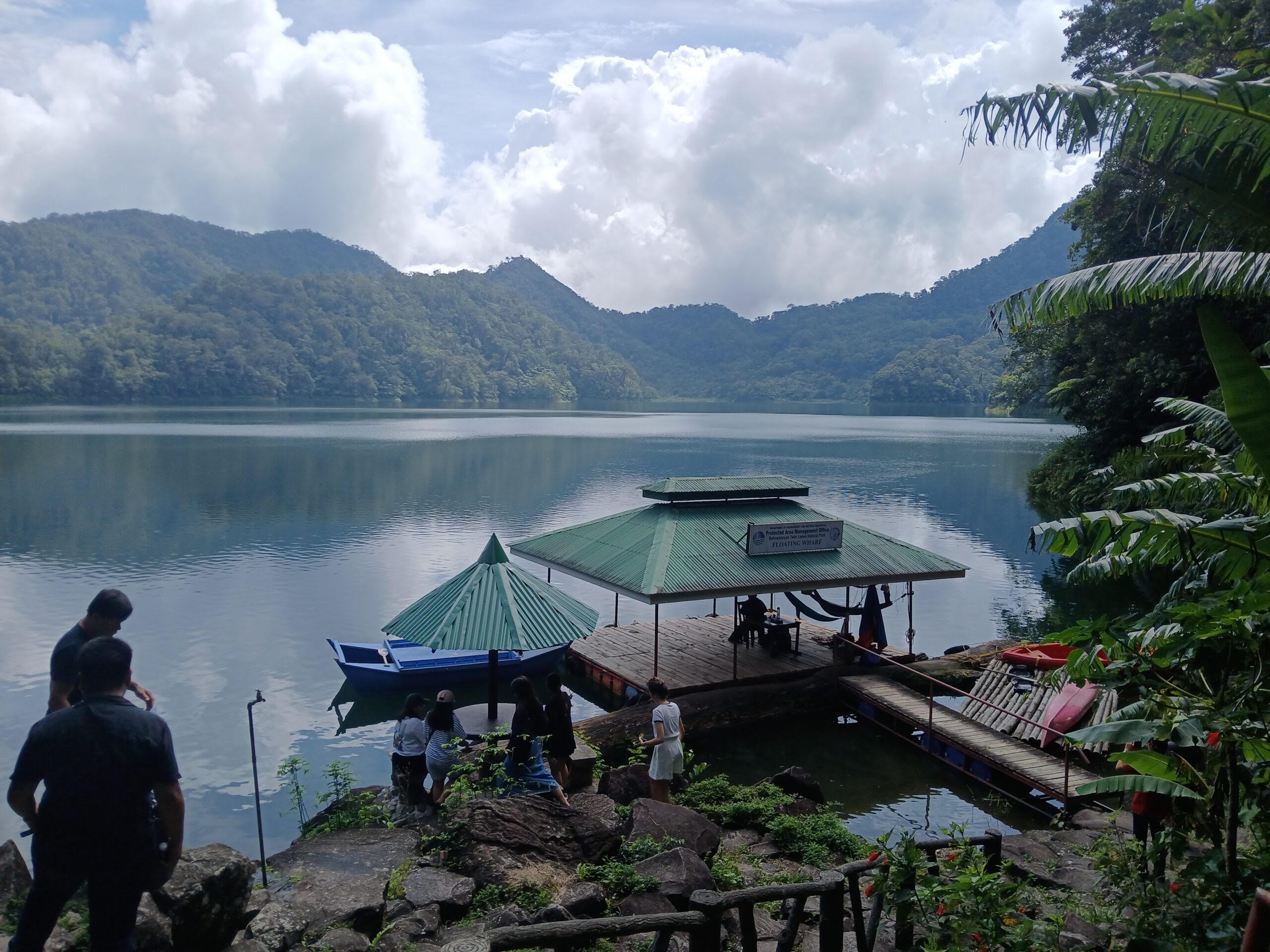

Balinsasayao Twin Lakes Natural Park in Negros Oriental, Philippines. (Photo from
With the launch of the Association of Southeast Asian Nations (ASEAN) Heritage Parks Regional Action Plan 2026–2035, environment leaders in Southeast Asia will be implementing a 10-year strategic road map that will enhance the management and conservation of ecosystems while supporting regional cooperation and biodiversity objectives.
Organized by the ASEAN Center for Biodiversity (ACB) and the Department of Environment and Natural Resources (DENR), the launch was attended by representatives from ASEAN’s 11 member countries, namely Brunei Darussalam, Cambodia, Indonesia, Lao People’s Democratic Republic, Malaysia, Myanmar, the Philippines, Singapore, Thailand, Timor-Leste and Vietnam.
According to Bird Conservation Society of Thailand data research scientist Rick Leong, the road map is “valuable because it gives AHPs a common direction for the next decade.”
“The challenges we face in Thailand are not isolated from what is happening elsewhere in the Philippines, and in the bigger region of Southeast Asia,” Leong pointed out.
He shared that supporting the road map are newly launched capacity-building initiatives and micro-funding designed to boost on-the-ground protection, community livelihoods and cross-border knowledge sharing.
In addition, Phase III of the ASEAN Small Grants Program (SGP III), established in 2017, will also be offering up to 17.2 million euros in grants to be spread out in the following five AHPs: Xe Sap National Park in Lao PDR; Bach Ma National Park and Hue/Quang Nam Saola Nature Reserves in Vietnam; Prek Toal Ramsar site and Virachey National Park in Cambodia; and Balinsasayao Twin Lakes Natural Park in the Philippines.
Supported by the European Union and the Federal Republic of Germany through KfW Development Bank, ACB executive director Jerome Montemayor described SGP III as “a catalyst for community-led conservation, supporting local solutions and livelihoods.”
Building on these regional initiatives, Environment Secretary Juan Miguel Cuna announced that the Philippines will strengthen collaboration among the country’s AHPs, with PAN helping in the creation of “a stronger bridge between these individual experiences and collective commitments, connecting park managers to one another, national priorities with regional cooperation and the work done on the ground with the broader global agenda for biodiversity and sustainable development.”
“(It can) bring together the managers and representatives of existing and newly declared ASEAN Heritage Parks, while giving protected areas pursuing AHP nomination an opportunity to learn from those who have already gone through the process,” Cuna noted.