
(Photo courtesy of PIA)
MANILA – The Anti-Red Tape Authority (ARTA) has welcomed the introduction of electronic notarization in the Philippines, saying the new system will simplify document processing, reduce costs, and make government-related transactions more convenient for businesses and the public.
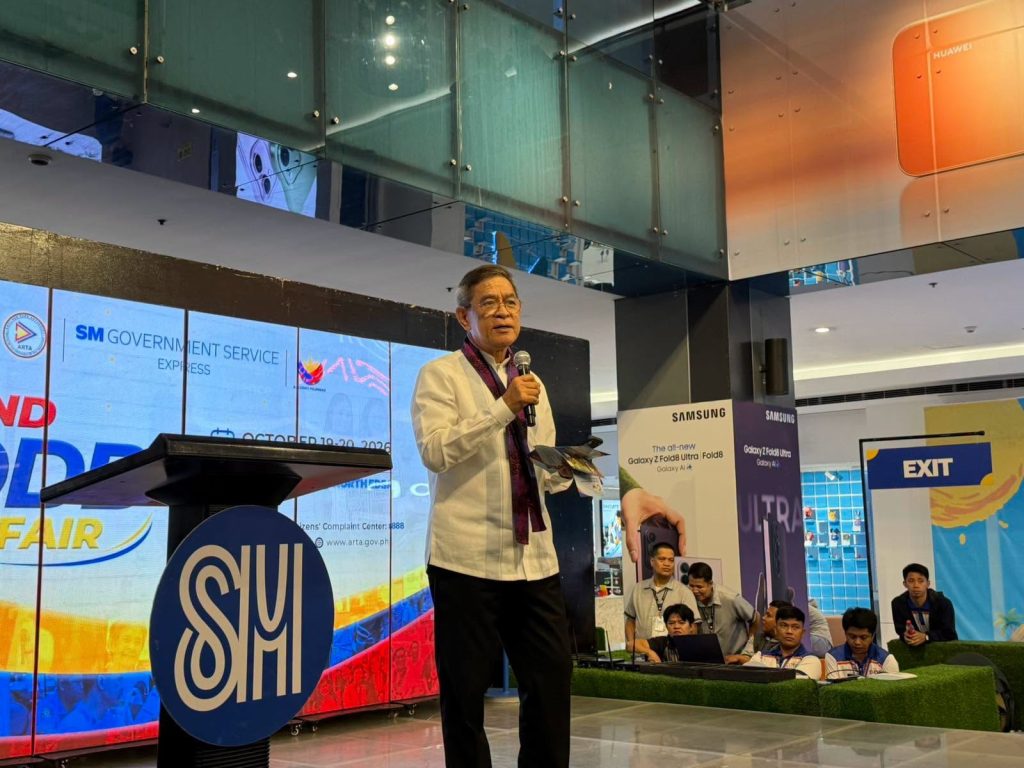
Speaking at the Grand Ease of Doing Business (EODB) Fair at SM North EDSA Annex in Quezon City on Monday, October 19, ARTA Secretary Ernesto Perez described e-notarization as a significant development in the government’s digital transformation efforts.
Perez said the service would particularly benefit small business owners who often spend time and money traveling to complete documentary requirements.
“For small entrepreneurs, this is a big help,” Perez said.
Under the new system, eligible electronic documents can be notarized through accredited online platforms, reducing the need for applicants to physically visit notary public offices.
“Pwede na nilang gawin ito from the comfort of their home or the comfort of their office,” he added.
The Supreme Court officially launched the electronic notarization service on October 19, allowing Filipinos to process eligible documents through approved digital platforms.
Among the Supreme Court-accredited electronic notarization facilities are Twala, QLegal, and NotarizeIT.
Users may register through these platforms and select a commissioned electronic notary public to process their documents in accordance with existing regulations.
Perez said the initiative supports the administration’s efforts to eliminate unnecessary bureaucratic procedures and improve the delivery of public services.
He emphasized that simplifying government transactions is essential to encouraging business growth, attracting investments, and creating employment opportunities.
According to Perez, complicated regulatory requirements and lengthy processing times have remained major concerns among entrepreneurs and foreign investors.
He said digital solutions could help address these challenges by making transactions faster, more predictable, and accessible.
Meanwhile, the Grand EODB Fair brought together various government agencies and private sector partners to provide services in a single location.
The event aimed to help citizens and businesses complete government transactions without visiting multiple offices.
Perez reiterated the administration’s directive to reduce bureaucratic delays and improve frontline government services.
“Huwag natin pahirapan ang taong bayan. Tanggalin natin ang mahabang pila. Ilapit natin ang serbisyo para sa taong bayan,” he said, citing President Ferdinand Marcos Jr.’s call for more efficient public service delivery.
The ARTA chief also encouraged citizens and business owners to report unnecessary delays, inefficient procedures, and other service-related concerns to the agency.
He noted that public complaints have helped ARTA intervene in delayed permit applications and resolve pending transactions.
Perez thanked participating government agencies and private sector partners for supporting the EODB Fair, emphasizing the importance of coordinated efforts in improving public services.
“As one government, under one roof, we are bringing services directly to the people,” he said.
ARTA maintained that digitalization and regulatory reforms would remain central to its efforts to improve government efficiency, strengthen transparency, and make doing business in the Philippines easier.