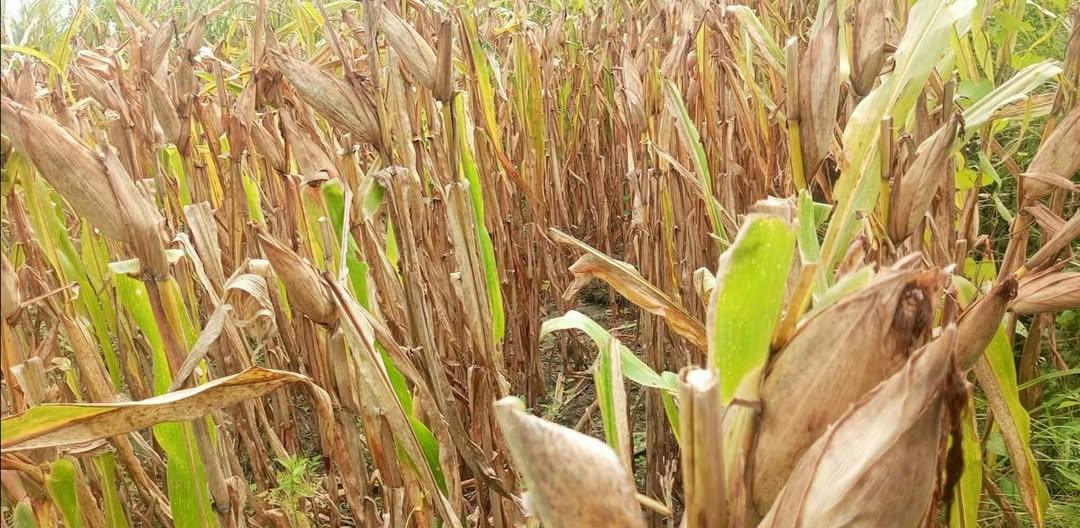

(Photo by PNA)
SAN JOSE DE BUENAVISTA, Antique – The Office of the Provincial Agriculturist (OPA) in Antique is encouraging farmers to cultivate corn and other crops requiring less water as the province prepares for the possible effects of Super El Niño.
OPA Information Officer Christian Dubria said Thursday that the recommendation follows projections presented by the Department of Science and Technology (DOST) during the Provincial Disaster Risk Reduction and Management Council meeting on October 5.
According to the forecast, Antique could experience a dry spell from November to December, with drought conditions expected in early 2027.
Dubria said shifting to crops with lower water requirements could help farmers sustain agricultural production and protect their livelihoods amid possible irrigation shortages.
He highlighted the profitability of corn farming, citing the success of Rex Baldestamon, a retired ship captain from Patnongon who received the Outstanding Corn-Based Farmer award during the Department of Agriculture’s 2026 Regional Gawad Saka Awards.
Baldestamon adopted High-Density Planting (HDP), a modern farming technique that maximizes available agricultural land by increasing the number of corn plants grown in a given area.
Using the method, he achieved high corn yields on his nine-hectare lowland farm.
Baldestamon explained that HDP minimizes spaces where weeds can grow, reducing the need for pesticides and labor while improving land productivity.
Through the technique, he reported harvesting approximately 140 sacks of corn, equivalent to eight metric tons per hectare per cropping cycle.
He sells his produce for Php 25 to Php 26 per kilogram, generating substantial income from each harvest.
“I could earn as much as PHP165,000 per hectare per cropping from the corn production,” Baldestamon said.
The provincial agriculture office cited his experience as an example of how improved farming practices and crop selection could help farmers maintain productivity despite changing weather conditions.
With the anticipated dry spell and drought, agricultural authorities are encouraging farmers to consider suitable alternative crops and adopt efficient farming methods to minimize potential losses.