
By Connie Calipay
LEGAZPI CITY – Albay’s provincial government on Wednesday assured sustained assistance for families displaced and staying in evacuation centers due to Mayon Volcano’s unrest
In an interview, Albay Governor Noel Rosal said the provincial government is preparing to extend assistance beyond the usual short-term disaster response, recognizing that the continuing volcanic activity could last for months and require sustained resources.
He added that ongoing changes in the volcano’s condition require close monitoring, particularly the movement of lava and changes in the ground.
“For now, the province will maintain Alert Level 3 and strictly enforce the prohibition on human activities and permanent residence within the 6-km. Permanent Danger Zone (PDZ),” he said.
Rosal said the provincial government has prepared a 15-day assistance plan for affected families, with the Department of Social Welfare and Development (DSWD) continuing to provide food assistance and the province mobilizing medical services and other essential support.
The Albay Public Safety and Emergency Management Office (APSEMO) is also on standby to address potential water supply shortages at evacuation centers.
He said the situation could become more challenging if Mayon escalates to Alert Level 4, which may require the evacuation of an additional 5,000 to 10,000 families, depending on the size of the danger zone.
“The crucial concern is the possible escalation to Alert Level 4. We could be looking at an additional 5,000 families, possibly 10,000, depending on whether the danger zone is extended to eight or 10 km.,” Rosal said.
Despite the ongoing unrest, he said, tourism activities outside the restricted areas may continue, including conventions, meetings, and other MICE (Meetings, Incentives, Conferences and Exhibitions) events.
Rosal also expressed concern about possible health problems among evacuees if the unrest coincides with the looming El Niño phenomenon, particularly heat-related illnesses and other health risks inside evacuation centers.
He said the provincial government is monitoring the readiness of its eight hospitals, ensuring adequate medicines and medical supplies, while the Bicol Regional Hospital and Medical Center may provide additional support for cases beyond the capacity of local facilities.
The governor thanked President Ferdinand R. Marcos Jr. and national government agencies, particularly the DSWD and the Office of Civil Defense (OCD), for their continued support in sustaining assistance to affected communities.
He said the national government’s continued provision of food assistance, cash aid, and livelihood opportunities has helped ease the burden on displaced families and affected farmers.
“Thank you to President Marcos for continuously providing the needs of our people, especially those staying in evacuation centers and our farmers. This support means a lot to us,” Rosal said.
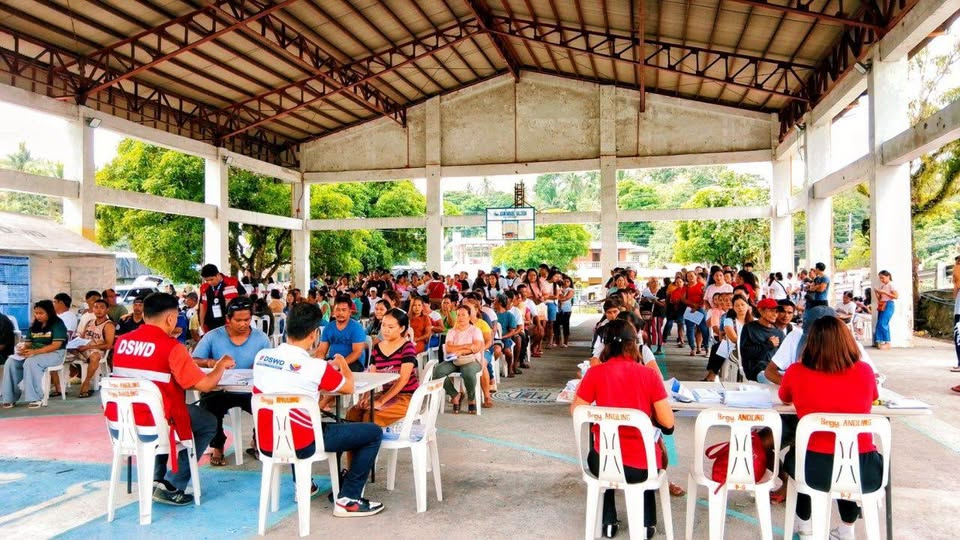
Meanwhile, internally displaced persons (IDPs) from Camalig received a payout from DSWD-Bicol’s cash-for-work program.
A total of 600 beneficiaries received PHP5,005 each, which serves as their salary for 11 days of work and helps them meet immediate needs while staying in evacuation centers.
The cash-for-work program forms part of the government’s continuing efforts to provide temporary employment to families displaced by the ongoing volcanic activity and ensure their welfare and safety.
Of the total, 353 were from Barangay Anoling, 139 from Barangay Cabangan, 104 from Barangay Quirangay, three from Barangay Salugan, and one from Barangay Sua. (PNA)