
As global trade continues to shape economies and fuel international collaboration, women are increasingly stepping into influential roles—redefining the future of commerce across industries. From real estate to international trade development, and from business conferences to high-level negotiations, women are driving innovation and fostering inclusive economic growth.
In March 2020, the World Trade Centers Association (WTCA) spotlighted the growing impact of women in global economies, revealing a striking insight: female entrepreneurs were generating twice the revenue of their male counterparts from the same level of investment. Since then, women’s participation in economic leadership has continued to evolve.
By 2024, women hold 26% of parliamentary seats globally—more than double the 11% recorded in 1995. According to the World Trade Organization (WTO), women currently represent 12% of leadership and senior management roles, with 14% in middle-management positions as of 2023.
Within WTCA’s global network, several trailblazing women are leading World Trade Centers (WTCs) around the world, infusing new energy and vision into international commerce. Their leadership is reshaping traditionally male-dominated sectors and inspiring a more diverse, dynamic business landscape.
These women aren’t just leading—they’re guiding entrepreneurs into global markets and sharing invaluable insights. Here are some of their top tips for going global, along with advice for the next generation of women leaders:
1. Play the long game
“Grow your international business at a pace that your operations and partners can sustain,” advises Karen Gerwitz, President and CEO of WTC Denver. “Approach it with a long-term mindset, not a quick-win mentality.”
Cristina Sbaizero, CEO of WTC Trieste, agrees: “Global expansion is a gradual process that demands commitment, strategic thinking, and adaptability.”
2. Understand local markets
Cultural awareness is key. “Entrepreneurs need a deep understanding of local markets and cultural nuances,” says Catherine Lee, Managing Director of WTC Suzhou. “What works in one region may not apply elsewhere.”
Adds Sbaizero, “Start with thorough market research—study demand, consumer behavior, competition, and regulations. Customizing your offering to suit local tastes is crucial.”
3. Build strategic collaborations
Classic leadership still matters—but blending it with modern tactics is the key, according to Pamela D. Pascual, Chairman and CEO of WTC Metro Manila.
“Today’s success stories often stem from strategic partnerships,” she says. “Work with local influencers, digital platforms, and ecosystem players who understand the market landscape.”
Christina Shen, Principal at WTC Shenyang, emphasizes networking: “Attend trade shows, exhibitions, and events. Strong local partnerships across industries create powerful pathways to global expansion, especially through WTCA’s worldwide network.”
Spotlight event: WTCA Global Business Forum 2025
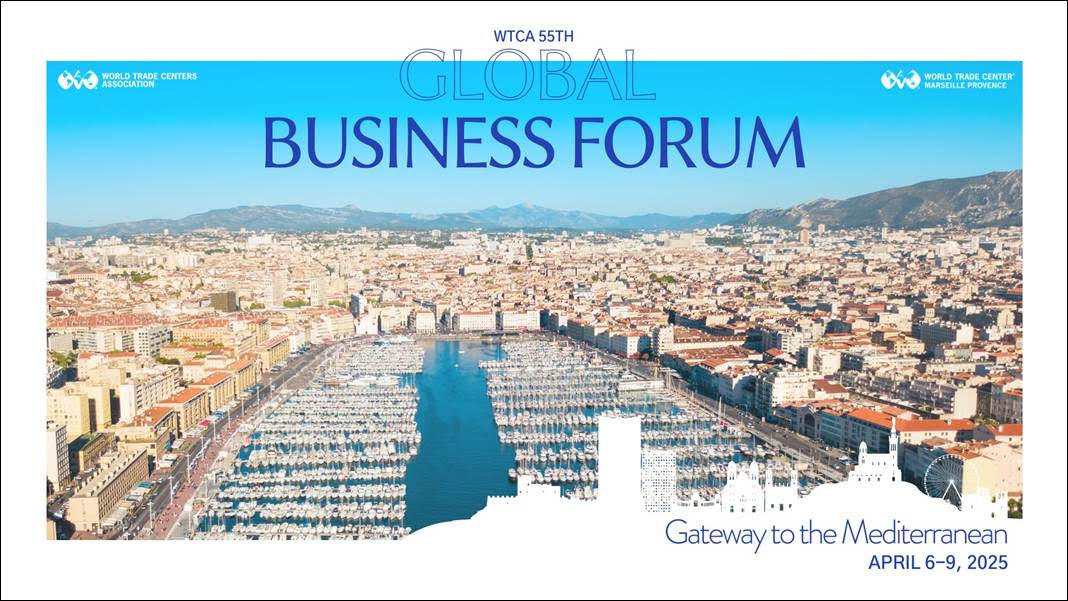
One major platform for fostering global trade connections is the 55th WTCA Global Business Forum (GBF), held April 6–9 in Marseille, France, hosted by WTC Marseille Provence.
With the theme “Gateway to the Mediterranean,” this year’s forum will gather over 300 participants from more than 50 countries—including WTCA members, business leaders, policymakers, academics, and international organizations—for discussions on trade, investment, and partnerships.
The Mediterranean region, a historical nexus of commerce, connects three continents and serves as a critical hub for maritime trade, logistics, tourism, energy, and technology. Marseille, in particular, is a thriving center of innovation and economic activity.
“Our region has always been a bridge for global trade,” said Benoit Vincent, CEO of WTC Marseille Provence. “With its strategic location and vibrant industries, Marseille is the perfect setting for this year’s forum—an event that will spark new opportunities across global markets.”
From shaping trade policy to guiding international expansion, women leaders across the WTCA network are proving that inclusive leadership drives better outcomes for everyone. Their voices, strategies, and collaborations are not only expanding markets—they’re reshaping the future of global business.