
MANILA – The Philippines concluded its chairship of the Association of Southeast Asian Nations (ASEAN) on Tuesday, with regional leaders reaffirming the importance of unity, cooperation, and collective action in addressing mounting geopolitical and economic challenges.
The 49th ASEAN Summit and Related Summits, hosted by the Philippines from Nov. 15 to 17, brought together leaders and representatives of the 11-member regional bloc and their dialogue partners to discuss pressing regional and global concerns.
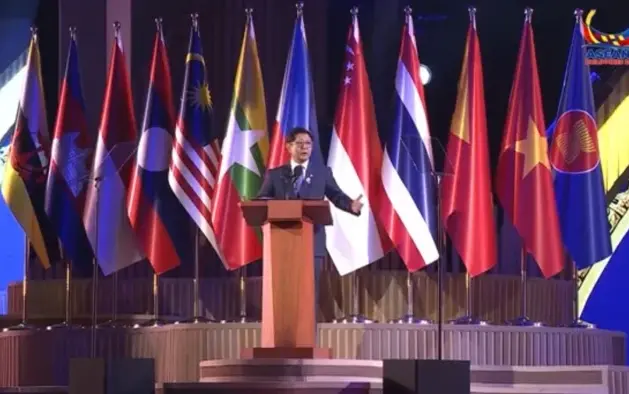
President Ferdinand R. Marcos Jr., who chaired the summit, emphasized the need for ASEAN to remain united and responsive amid geopolitical tensions, economic uncertainties, rapid technological developments, climate change, and transnational threats.
“Throughout our chairship, we have sought to give meaning to our theme, ‘Navigating our Future, Together,’ to be a compass that provides direction, to bring leadership, cohesion, and unity in all our actions,” he said in his closing remarks.
“This year showed us that changing course, when it is asked of us, is not the same as losing direction. For even as conditions shifted, we continued to strengthen peace and stability, bring our economies closer, and expand protections and opportunities for our peoples.”
Marcos stressed that solidarity among ASEAN member states is crucial in addressing the region’s increasingly complex challenges.
“Our institutions must therefore become as connected as the challenges are that we face, and ultimately every member state must be able to count on ASEAN, and ASEAN must be able to count on every member. That is certainly true in times of crisis, but it is equally true when peace and stability reign,” he said.
The summit tackled key issues affecting the region, including maritime security, energy security, economic integration, digital transformation, and stronger cooperation with external partners.
“As our economies, energy systems, technologies, institutions, and societies become more closely linked, we are better positioned to both benefit from and to add to the region’s strengths. The true measure of this work will be weighed long after we leave these halls,” Marcos said.
ASEAN leaders also engaged with their dialogue partners, including the United States, China, Japan, South Korea, Australia, India, and New Zealand.
The Philippines’ chairship was anchored on the theme “Navigating Our Future, Together,” guided by three strategic priorities: peace and security anchors, prosperity corridors, and people empowerment.
These priorities reflected the country’s push for a more peaceful, resilient, and inclusive ASEAN community.
The gathering also provided an opportunity for ASEAN leaders to assess progress in implementing the ASEAN Community Vision 2045 and advance cooperation on initiatives that would benefit the region.
The summit culminated in the formal turnover of the ASEAN chairship from the Philippines to Singapore, which will lead the regional bloc in 2027. (PNA)