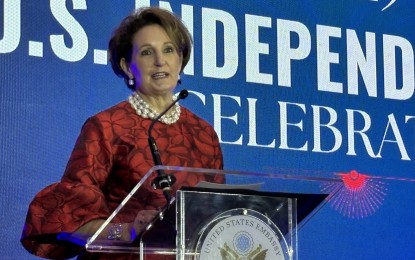

US Ambassador MaryKay Carlson (PNA file photo by Joyce Ann Rocamora)
The United States is looking at a recent collision between Chinese vessels as a possible turning point in the volatile West Philippine Sea.
On August 11, a China Coast Guard (CCG) ship chasing the Philippine Coast Guard’s BRP Suluan collided with a People’s Liberation Army Navy (PLAN) vessel near Bajo de Masinloc. The BRP Suluan was escorting a resupply mission for Filipino fisherfolk when the incident occurred.
“We’re very sorry for the collision and very hopeful that perhaps, this will be a watershed event that could lead to ratcheting down some of these aggressive actions out in the West Philippine Sea,” US Ambassador to the Philippines MaryKay Carlson said in a Friday night interview.
In the wake of the clash, the US Navy sent two warships to the region as part of its long-running freedom of navigation operations (FONOPs). Carlson stressed that these operations are not new, but a consistent demonstration of America’s resolve to defend international law at sea.
“The United States Navy has always made it very clear, and the United States military overall, that we will fly, sail, and operate anywhere that international law allows,” she said.
Carlson also praised the Philippine Coast Guard for its restraint and professionalism, noting how its crew offered assistance to the distressed CCG ship after the collision.
“The Philippine Coast Guard operates very professionally in the high seas and in waters where they enjoy sovereign rights. So, we were dismayed to see that illegal, coercive, and aggressive activities on the part of China continue to occur,” she added.