
Image: ChildHope Philippines
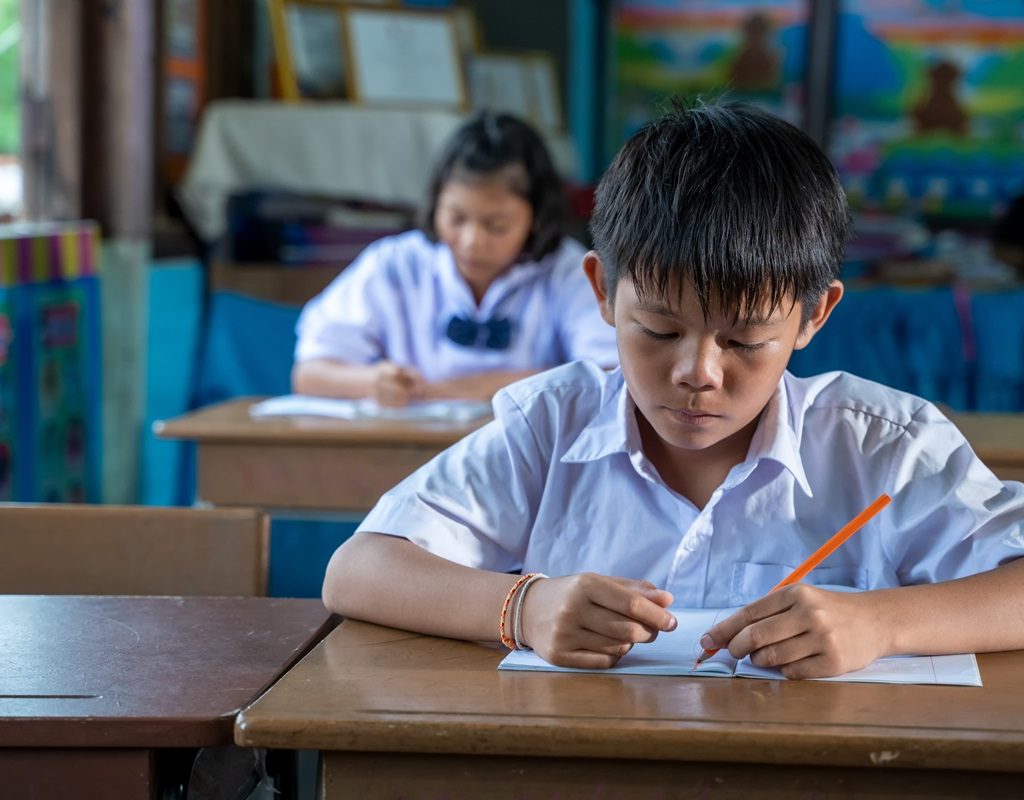
The learning crisis in the Philippines is not new, and it is not just a result of the COVID-19 pandemic, according to the United Nations Children’s Fund (UNICEF).
A 2019 study conducted by the agency revealed that 9 out of 10 Filipino children could not read at their expected grade level, while 8 out of 10 lacked basic proficiency in mathematics. This indicates that the country has long faced significant challenges in its education system, particularly in literacy and mathematics.
UNICEF Education chief Akihiro Fushimi emphasized that the learning crisis is “real and widespread” during a press conference held in Makati City.
Fushimi also pointed out that the two-year school closures during COVID-19 only worsened the problem, especially for children in disadvantaged communities and families who had limited access to alternative learning methods.
According to UNICEF, by Grade 4, Filipino children typically demonstrate literacy and numeracy skills equivalent to Grade 1 or 2, reflecting a two-year learning delay. The situation is even more pronounced in regions like the Bangsamoro Autonomous Region in Muslim Mindanao (BARMM), where education outcomes are significantly lower.
The Department of Education (DepEd) secretary Sonny Angara has fully acknowledged the worsening learning crisis, citing it as the driving force behind the launch of the Comprehensive Rapid Literacy Assessment (CRLA) for Grade 1 to Grade 3 students during the 2024-2025 school year.
The assessment revealed that 59,000 Grade 3 students struggled to read simple English texts. In response, DepEd implemented a summer literacy remediation program, resulting in a significant drop in the number of struggling students, from 59,000 to 1,616.
Undernourished and unprepared
Beyond classroom challenges, experts stress the critical link between nutrition and students’ academic performance.
The World Food Program (WFP) reports that 1.7 million public school children in the Philippines are malnourished, which has a direct impact on their learning capabilities. Deficiencies in essential nutrients like iron, vitamins, and zinc are particularly damaging to their cognitive development and overall health, according to WFP Deputy Country Director Dipayan Bhattacharyya.
Bhattacharyya added that while the current school feeding program addresses undernutrition, it does not adequately address other pressing nutritional issues, such as micronutrient deficiencies and obesity, which are increasingly prevalent in the country.
“If we choose the right kind of food, that will save the government’s money, which they otherwise would have to spend on addressing those public health concerns. That’s why we are talking about a way…that can really address malnutrition, not simply undernutrition,” He said, stressing the need for a more comprehensive school feeding program.
The WFP is now urging the government to revisit and amend Republic Act 11037, or the Masustansyang Pagkain para sa Batang Pilipino Act, which allows for the further launch of supplemental feeding programs under the Department of Education, the Department of Social Welfare and Development, and the National Nutrition Council.
Meanwhile, Fushimi stressed that natural disasters also contribute to the learning crisis. “100 percent of schools in the country are at risk of being affected positively and negatively by the natural disasters, including hurricanes, floods, local eruptions, earthquakes and so on,” he noted. “And that also adds up to this learning poverty, learning crisis.”
To address the crisis long-term, Fushimi called for investments in foundational learning. “From as early as three to four years old, before they enter kindergarten, we have to invest in their health, nutrition, education, and learning, and so on, to smoothly transition into private education and basic education,” he said.