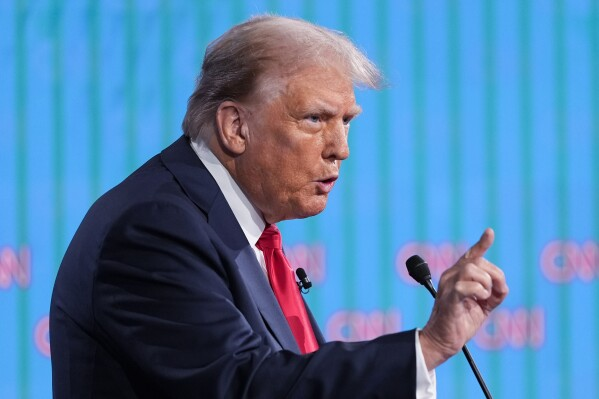

In the aftermath of Donald Trump’s election victory, there is a growing momentum in support of the president-elect’s commitment to conclude Russia’s two-year conflict in Ukraine upon assuming office.
This week, Russian President Vladimir Putin signaled his willingness to engage in negotiations. Concurrently, Ukraine’s President Volodymyr Zelenskyy has begun to express a more favorable disposition towards discussions. Last week, he stated that Ukraine must exert every effort to resolve the conflict through diplomatic means in the coming year.
Nevertheless, experts caution that any agreement may be tenuous unless Trump provides assurances regarding Ukrainian security. Paul Cormarie, a policy analyst at the RAND Corporation, emphasized, “Given its own track record in Ukraine, Russia has a history of taking ‘a crunch at a time.'”
In 2014, Russia annexed significant portions of eastern Ukraine and the Crimean peninsula. In 2022, it initiated a campaign aimed at further territorial acquisitions, currently occupying approximately 20% of Ukraine’s land.
“A sustainable agreement would necessarily require the reinforcement and maintenance of Ukraine’s defensive posture to effectively deter Russia from any future incursions,” Cormarie asserted.

Ukraine NATO deal in doubt
The specifics regarding a potential peace agreement proposed by Trump concerning Ukraine remain ambiguous; however, indications suggest that it is unlikely to encompass any form of support for Ukraine’s accession to the NATO alliance, which could provide the most robust security assurances.
President Putin has articulated that, as a prerequisite for any peace settlement, Ukraine must consent to maintain a neutral stance.
Additionally, statements made prior to the election by JD Vance, who is Trump’s running mate, imply that Trump may acquiesce to this demand. Vance noted that Russia would receive a “guarantee of neutrality” from Ukraine as a component of a probable agreement.
This plan may seemingly circumvent the underlying issue that some attribute as the motivation behind Russia’s invasion of Ukraine: the prevention of NATO’s eastward expansion.
Critics contend, however, that such a deal could further empower Putin and neglects the reality that the Russian president’s true objective is one of imperialist expansion.
In an article published in the Kyiv Independent in October, Timothy Ash, a fellow at the esteemed Chatham House think tank in London, remarked that Ukraine was effectively neutral prior to Russia’s initial invasion in 2014.
He stated, “Its military weakness and neutrality were a green light for Russian President Vladimir Putin to annex and invade Ukrainian territory.”
Ash further asserted, “It is difficult to envision how such a status would deter Putin from launching further attacks. The sole assurance against additional Russian aggression lies in a robust defense, ideally in collaboration with Western partners.”
What would a security deal look like?
If Trump takes Ukrainian NATO membership off the table, a different type of security deal could still be negotiated, said Cormarie.
Ukraine’s European allies could take a leading role in helping defend the country.
Margus Tsahkna, Estonia’s foreign minister, told the Financial Times this week that troops from Ukraine’s European allies could be deployed to the country to deter Russian attacks as part of a Trump-brokered deal.
Cormarie said another option would be to massively boost Ukraine’s capacity to defend itself from attack through a US foreign military financing program.
Since 2014, Ukraine has overhauled its military, and now has an expanding military industrial sector, producing equipment ranging from missiles to sophisticated drones.
But it’s a weak substitute for support from the world’s most powerful military alliance.
A truce containing a watered-down security deal for Ukraine would likely only mean a pause in the war while Russia regathers its strength.
“The less strong these commitments are, the more likely this agreement would only be a truce before Moscow takes another ‘bite’ in the eyes of Kyiv,” Cormarie added.