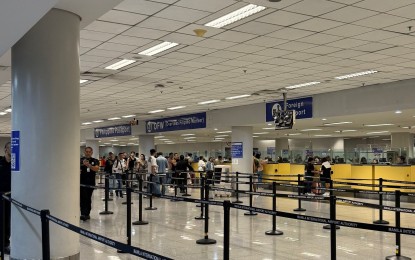
President Ferdinand R. Marcos Jr. has officially included the abolition of the travel tax in his administration’s list of 21 priority legislative measures, Malacañang announced Tuesday.
The proposal was approved during a meeting of the Legislative-Executive Development Advisory Council (LEDAC), where the President emphasized the need to reduce the financial burden on Filipinos traveling for work, emergencies, and leisure.
Palace Press Officer Claire Castro said that while travel tax revenue is currently split between tourism infrastructure, education grants, and heritage promotion, the government is prepared to subsidize these sectors through the General Appropriations Act once the tax is removed.
Castro noted that economic managers are currently reviewing the potential revenue impact, but the administration remains committed to filling the funding gap through the national budget.
The President’s updated legislative agenda also highlights several key social and governance reforms.
This includes an accelerated push for an anti-political dynasty law and reforms to the party-list system to enhance government accountability.
Regarding the anti-dynasty measure, Senator Risa Hontiveros confirmed that the Senate has launched nationwide public consultations, while House Speaker Faustino “Bojie” Dy III committed to similar efforts across the country.
Additionally, the priority list features the Expanded Anti-Online Sexual Abuse or Exploitation of Children Act of 2026 and new legislation targeting fake news and digital disinformation.
Other major measures include the Citizen Access and Disclosure of Expenditures for National Accountability (CADENA) Act, the Independent People’s Commission Act, and legislation finalized for the Bangsamoro Autonomous Region in Muslim Mindanao elections.
The 21 bills are expected to be fast-tracked for congressional approval to support the administration’s socio-economic and transparency goals.