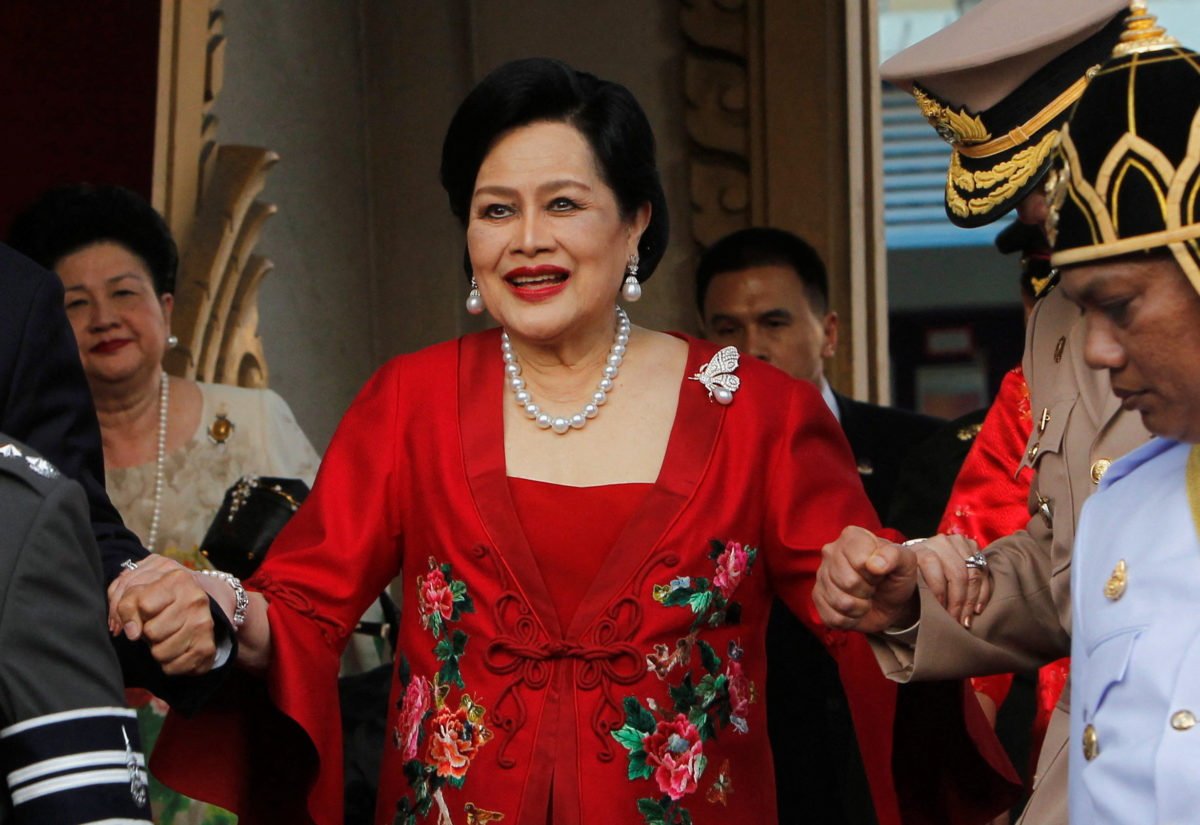

Thailand awoke in mourning on Saturday as the Royal Household Bureau confirmed the passing of Queen Mother Sirikit, a towering figure of grace, influence, and devotion who shaped the image of Thai royalty for more than seven decades. She was 93.
For most Thais, Queen Sirikit was more than a royal consort—she was a living embodiment of national femininity, compassion, and cultural pride. Her reign as Queen alongside King Bhumibol Adulyadej, and later her years as Queen Mother, spanned the nation’s transformation from a war-torn monarchy into a modern constitutional kingdom that revered her as both mother and muse.
Born in 1932 into an aristocratic family, Sirikit Kitiyakara was the daughter of Thailand’s ambassador to France and grew up surrounded by diplomacy and refinement. Her life changed forever in Paris when she met the young King Bhumibol, who was then studying in Switzerland.
Their courtship began awkwardly—Sirikit once joked in a BBC interview that it was “hate at first sight”—but soon blossomed into a lifelong partnership that defined Thai royalty. They married in 1950, shortly before Bhumibol’s coronation, and her poise quickly captivated both domestic audiences and the international press.
Dubbed the “Grace Kelly of Asia,” Sirikit became a fashion icon, working with French designer Pierre Balmain to craft elegant silhouettes from traditional Thai silk. Her commitment to supporting local weavers helped revive a struggling national industry, transforming Thai silk into a global luxury material.
Beyond the glamour, Sirikit was often seen traveling with King Bhumibol to rural provinces, visiting farmers, tribal communities, and flood victims. These televised visits—beamed into Thai homes nightly—cemented her image as the compassionate “Mother of the Nation.”
Her initiatives under the Support Foundation, launched in the 1970s, provided livelihood projects for women in remote areas and helped sustain traditional crafts through modern markets.
In 1976, the Thai government officially declared her birthday, August 12, as Mother’s Day, a national holiday that endures to this day.
Though the Thai monarchy is constitutionally above politics, Sirikit’s influence often transcended that boundary. In 1998, she used her birthday address to rally public support for Prime Minister Chuan Leekpai amid political turmoil, a move seen as a rare royal endorsement.
Later, her presence at the funeral of a protester aligned with the royalist People’s Alliance for Democracy in 2008 was interpreted as tacit support for the movement that helped unseat a pro-Thaksin Shinawatra government. To critics, it blurred the monarchy’s political neutrality; to loyalists, it underscored her sense of national duty.
The final years of a quiet queen
Sirikit withdrew from public life after suffering a stroke in 2012. When King Bhumibol died in 2016, her only son, King Maha Vajiralongkorn (Rama X), ascended the throne and granted her the formal title of Queen Mother upon his coronation in 2019.
Though seldom seen, her legacy remained deeply woven into the national consciousness—a blend of elegance, motherhood, and faith. Her death marks the end of an era for Thailand’s Chakri dynasty, closing the chapter on the royal couple who steered the country through decades of transformation and upheaval.
She is survived by King Maha Vajiralongkorn and three daughters: Princess Ubolratana, Princess Maha Chakri Sirindhorn, and Princess Chulabhorn.
As the kingdom prepares for an extended mourning period, Bangkok’s temples are expected to fill with flowers and portraits of the Queen Mother—a reminder of the woman who redefined royal grace and became, to millions, the eternal mother of the Thai nation.