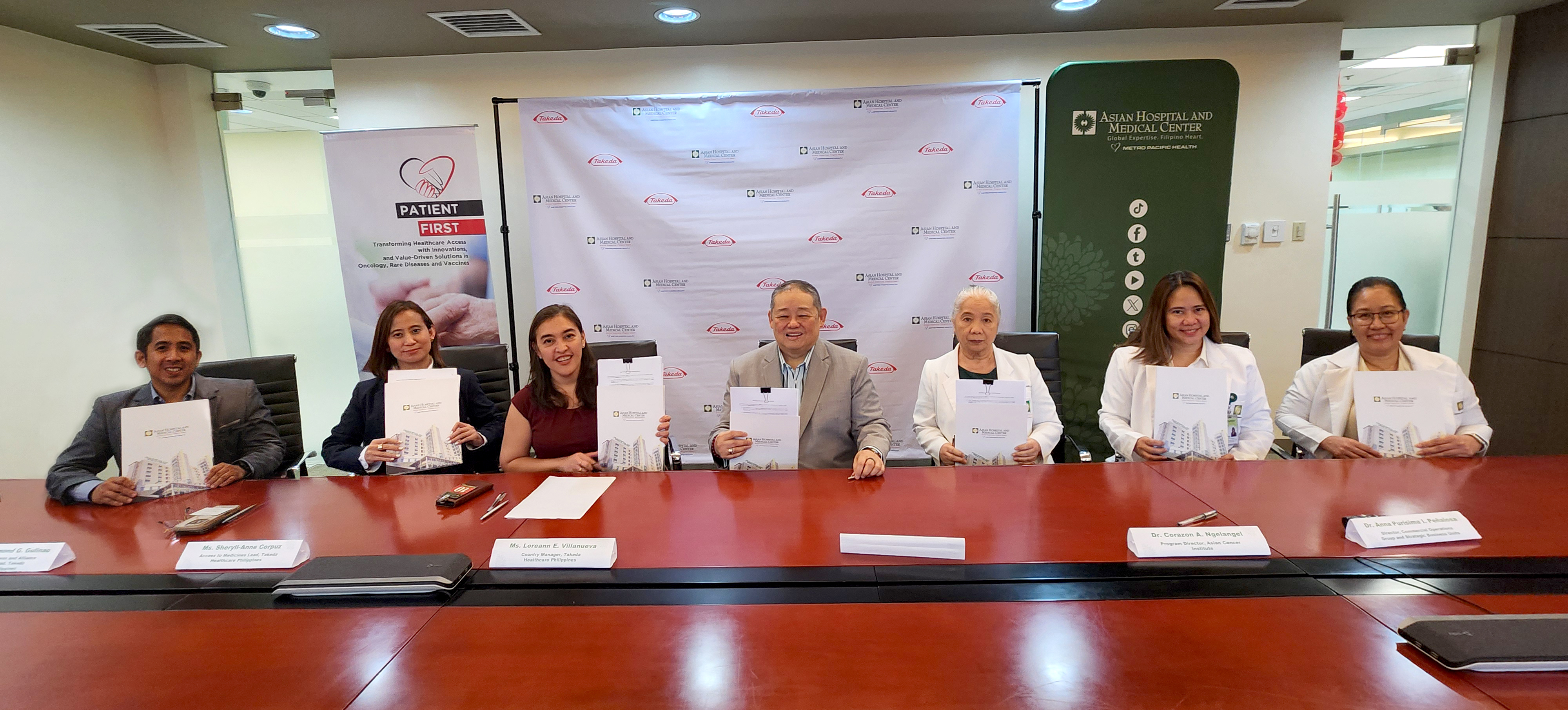

In a bold push to make advanced treatments more accessible to Filipino patients, Takeda Healthcare Philippines has forged a landmark partnership with the Asian Hospital and Medical Center (AHMC) to deliver life-saving therapies for rare and hard-to-treat diseases.
Through a newly signed memorandum of understanding, Takeda will extend its patient assistance programs to AHMC, marking the start of a shared mission to break down the financial and logistical barriers that keep many Filipinos from getting the care they need.
At the heart of this collaboration are rare blood cancers like Hodgkin lymphoma and multiple myeloma, as well as complex gastrointestinal conditions such as inflammatory bowel disease (IBD). Under an innovative cost-sharing model, eligible patients will gain access to cutting-edge medicines regardless of their financial capacity—helping ensure that treatment decisions are driven by medical need, not monetary means.
Beyond lowering costs, the program aims to smooth the treatment journey for patients battling life-threatening illnesses. By bringing support closer to the point of care, it seeks to minimize out-of-pocket spending while ensuring that vital therapies are delivered on time and in line with treatment plans.
The ceremonial signing was led by Takeda Philippines Country Manager Loreann Villanueva, AHMC President and CEO Dr. Beaver Tamesis, and Asian Cancer Institute Clinical Director Dr. Corazon Ngelangel, together with senior executives from both institutions.
“Cancer is not just a disease—it’s a burden that reshapes families, communities, and even health systems,” said AHMC’s Christina Liza Sta. Maria. “Through this partnership, we are making treatment not only available but truly accessible. Together, we are building a future where cancer care is inclusive, responsive, and centered on the patient.”
Dr. Tamesis highlighted the importance of making these therapies available to AHMC patients, stressing that such conditions are more common than many assume. “There are quite a number of patients, and it’s really important that these products be made available,” he said.
Villanueva underscored Takeda’s belief that access to medicines should never depend on a patient’s financial means. “Rare conditions like multiple myeloma, Hodgkin lymphoma, and IBD often go unnoticed, and these patients deserve not just our attention but our unwavering support,” she said.
Takeda’s Access to Medicines program reflects the company’s global drive to foster equity in healthcare—by forging partnerships that strengthen health systems, align with national priorities, and reach underserved communities. It also advocates long-term policy reforms to close gaps in screening, diagnosis, and treatment across low- and middle-income countries, where around 2 billion people still lack access to essential medicines.
According to the Global Cancer Observatory, 602 new cases of Hodgkin lymphoma and 931 new cases of multiple myeloma were recorded in the Philippines in 2022. Colorectal and liver cancer, both gastrointestinal cancers, are among the country’s five most common cancers, with 20,736 and 12,544 new cases, respectively. While national data on IBD remain unavailable, regional studies point to rising incidence in the coming years.
Takeda Philippines already partners with Makati Medical Center and the Healthway Cancer Care Hospital for its patient access programs. With AHMC now on board, the company hopes to widen its reach and bring transformative treatments to more Filipino patients who need them most.