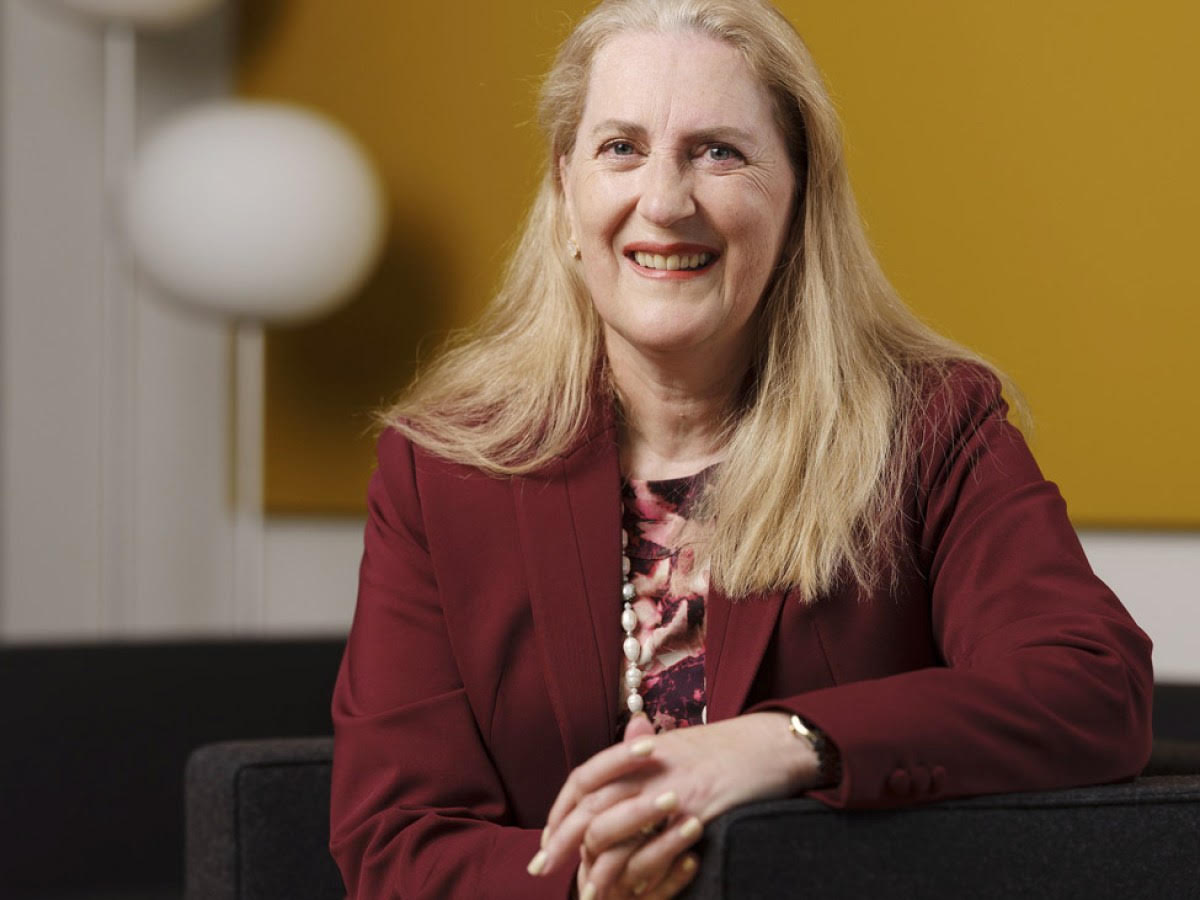

Swiss state secretary for economic affairs Helene Budliger Artieda. (Photo from Swissinfo)
Recognizing the Philippines’ role in connecting the global economy in a rapidly changing world of technology, Swiss state secretary for economic affairs Helene Budliger Artieda has pointed to artificial intelligence, innovation, academia and rules-based trade as areas where there can be deeper cooperation and support.
Secretary Budliger Artieda highlighted that the Philippines has strong human capital and an important position in the region so it would be to the best interest of Bern and Manila to join hands in enhancing AI and innovative technology not only in ASEAN but throughout the world.
However, the Swiss official also stressed the need for the Philippines to continue improving its interconnectivity and access to opportunities in the ASEAN and global markets.
“You are on a good path, but you can do better,” she asserted while citing that one of the major changes confronting ASEAN and its economies is the rapid development of artificial intelligence.
“I think it’s interconnectivity, I think it’s dealing with new topics such as AI, which is a big, big issue,” she opined.
“We’re still digitalization, digitalization of economy is still a topic, but now we already have the next massive technology revolution coming our way,” she added.
Thus in pushing for partnership, Budliger Artieda noted thzt Switzerland’s approach to innovation could provide an avenue for cooperation with the Philippines, particularly through universities, research institutions and the private sector.
“Switzerland is highly decentralized and does not operate through a single top-down innovation strategy. (So), if the Philippines is interested to collaborate with Switzerland on the AI, we have to connect at the proper level and that would be university—that would be really the academy,” she enthused.
The Swiss state secretary mentioned Switzerland’s technical universities and their long history in areas such as information technology, big data, robotics and automation, which helped position Switzerland at the forefront of AI.
Still, she shared that innovation is not only about fundamental research.
“It’s great if you create a large language model, but then if it never gets into market, you really need to have the capacity to go from lab into the market,” she reminded even as she noted that for the Philippines, cooperation could take place directly between academic institutions and private companies, with the Swiss Embassy helping in facilitating connections.
Currently, Switzerland is already maintaining a sectoral dialogue with ASEAN and has also started an EFTA-ASEAN dialogue, but there is room to bring Swiss businesses more directly into discussions.
“We firmly believe as government that we’re strongest when we show up as Team Switzerland, and Team Switzerland is the government, private sector and civil society,” she said.
The idea, she explained, is to bring the Swiss private sector more actively into ASEAN engagements, building on a format Switzerland had already tested during the coronavirus pandemic period.
In ending Budliger Artieda focused on the objective being locked on ultimately coming down to jobs and business.
“In order for our population to succeed, they need jobs. And in order to create jobs, businesses need business. That’s what it’s all about,” the Swiss official concluded.