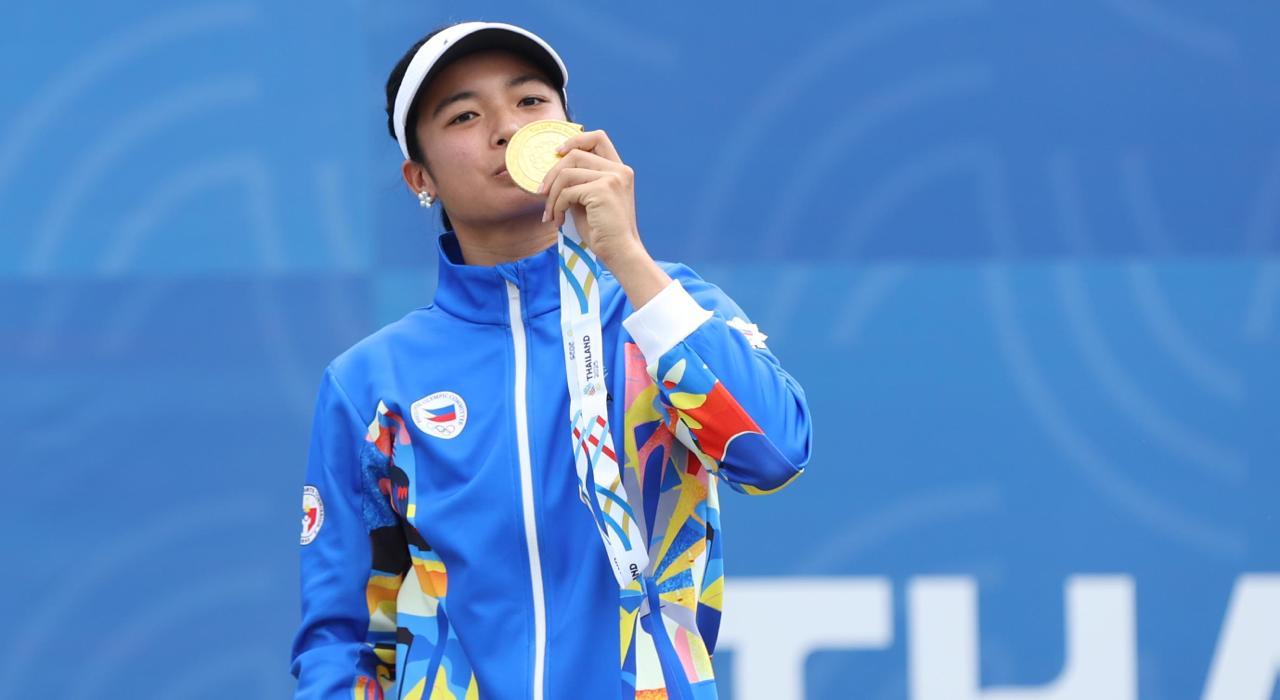
NAGOYA, Japan — The 20th Asian Games will open Saturday under the threat of severe weather and lingering logistical problems, but a wave of young talent led by Filipina tennis ace Alex Eala is poised to shift attention back to the action.
Eala is among the rising Asian athletes expected to command the spotlight during the continental showpiece, which will bring together about 17,000 participants—an athlete population larger than that of the Olympics.
Joining her in the youth revolution are 15-year-old Indian cricket prodigy Vaibhav Sooryavanshi and 13-year-old Chinese swimmer Yu Zidi. Yu will plunge immediately into competition Sunday in the heats of the women’s 200-meter butterfly.
For Eala, the Games offer another major international stage to reinforce her status as one of the Philippines’ brightest sporting stars. She enters a field filled with Olympic champions, global contenders and emerging talents eager to become household names.
The opening ceremony will launch a packed program featuring 469 gold medals across 45 sports. Competition will run until Oct. 4, with the men’s individual triathlon expected to deliver the first champion Sunday morning.
Several events will carry added importance because qualification places for the 2028 Los Angeles Olympics are available. Cricket’s presence is particularly significant as the sport prepares to return to the Olympic program after 128 years.
The Asian Games will combine traditional Olympic disciplines—including athletics, swimming, basketball and gymnastics—with regional favorites such as sepak takraw and kabaddi.
Organizers are also betting on newer events to attract a younger audience. ESports, breakdancing and BMX cycling are part of the schedule, while padel and mixed martial arts will make their Asian Games debuts.
But the road to opening day has been anything but smooth.
Heavy rain recently flooded parts of Nagoya, while a typhoon forecast to approach Japan’s main island on Sunday or Monday threatens further disruption. Basketball, football and cricket have already begun, although outdoor competitions could be vulnerable if conditions worsen.
The enormous number of participants also strained organizers’ accommodation plans. With no traditional athletes’ village, delegations were placed in hotels, temporary container-style units and aboard the cruise ship Costa Serena.
Some athletes complained about the temporary rooms, including beds reportedly too short for taller competitors. Transportation failures also left several arrivals stranded at the airport.
Even with those setbacks, organizers are promising a spectacular celebration of Asian sport.
Japan will rely on homegrown Olympic champions such as gymnast Shinnosuke Oka and javelin thrower Haruka Kitaguchi. Taiwan’s Lin Yu-ting, who won Olympic boxing gold in Paris amid questions surrounding her eligibility, will also compete.
North Korea is fielding more than 100 athletes in 14 sports. Defending regional powerhouse China, meanwhile, has assembled a delegation of more than 800 athletes, including 36 Olympic champions.
China remains the favorite to rule the medal standings after collecting 201 golds and 383 total medals at the pandemic-delayed Hangzhou Games in 2023.
Cricket could produce one of the competition’s most explosive rivalries if India and Pakistan reach the final at Nagoya’s newly constructed venue. Sooryavanshi will be among the young Indian players carrying expectations into the tournament.
For the Philippines, however, much of the attention will follow Eala as she attempts to turn her growing international reputation into Asian Games success.
The build-up may have been dominated by storms, flooded streets and accommodation complaints. Once competition intensifies, Eala and Asia’s fearless young prodigies could give the Games the headline-making spectacle organizers have been waiting for.