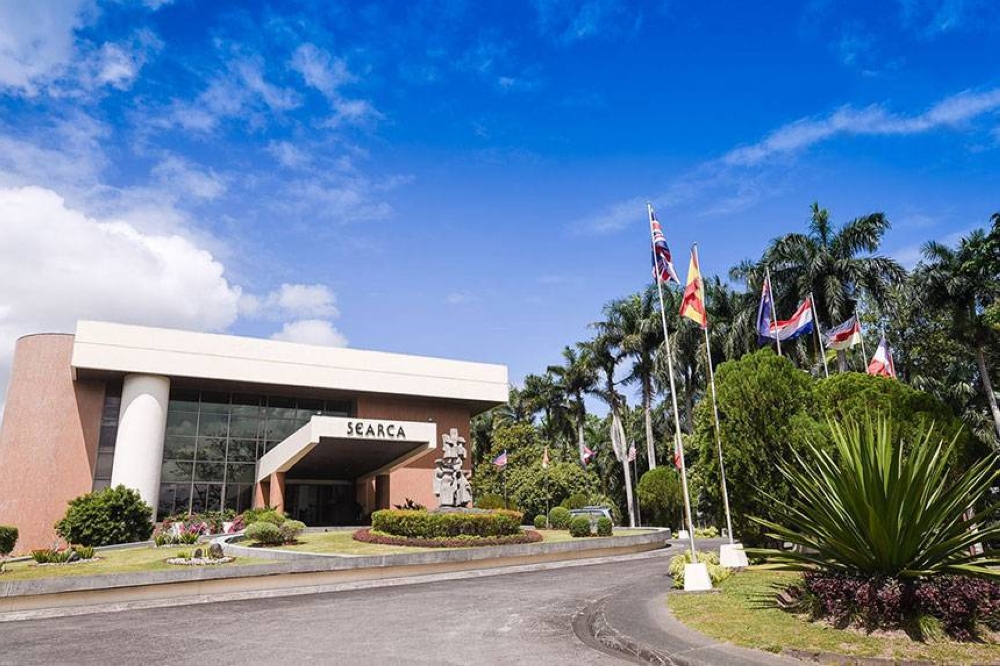

(Photo courtesy of PIA)
LOS BAÑOS, Laguna – The Southeast Asian Regional Center for Graduate Study and Research in Agriculture (SEARCA) is strengthening scientific research and regional cooperation to help Southeast Asian countries address climate change, improve agricultural productivity, and achieve food security.
SEARCA Center Director Dr. Mercedita Sombilla said the organization is developing technologies and research-based solutions to help farmers adapt to changing weather patterns, declining natural resources, and other threats to agricultural production.
Through its network of scholars, universities, and research institutions across the 11 ASEAN member states, SEARCA aims to provide governments with scientific findings that can guide agricultural policies and climate adaptation programs.
“We are doing a lot of things in terms of responding [to climate change]. What we really need to do is go to the communities, go to the farmers,” Sombilla said during SEARCA’s 60th anniversary celebration and Outstanding Alumni induction on October 20.
She emphasized the importance of preparing farming communities for extreme weather events, including the possible effects of a very strong El Niño, through accessible agricultural technologies and timely interventions.
Beyond climate-related threats, Sombilla warned that geopolitical tensions, particularly conflicts in the Middle East, could worsen food insecurity by driving up commodity prices.
She explained that rising food costs could force families to reduce spending on nutritious meals, aggravating existing problems involving malnutrition, stunting, and wasting.
SEARCA research also identified population growth, rapid urbanization, changing dietary patterns, and pressure on natural resources as major factors affecting Southeast Asia’s food systems.
To address these challenges, the center continues to study ways to make nutritious food more affordable while strengthening agricultural supply chains and promoting sustainable farming practices.
Sombilla said research findings would also help governments assess existing agricultural programs and develop more effective policies.
“We want to learn and to provide some policy recommendations that can help countries review, evaluate their programs and policies,” she said.
Meanwhile, SEARCA is encouraging more young people to pursue careers in agriculture through scholarships, university partnerships, and exposure to emerging farming technologies.
Sombilla noted that innovations such as farming methods that do not require conventional soil cultivation could attract younger generations to agriculture.
She expressed optimism that young researchers and future agricultural professionals would help transform scientific knowledge into practical solutions for farming, food processing, logistics, and nutrition.
SEARCA reaffirmed its commitment to advancing education, research, and regional partnerships to build a more resilient and food-secure Southeast Asia.