
Subic Bay Freeport Zone – In a major step toward sustainability, the Subic Bay Metropolitan Authority (SBMA) is set to roll out pure battery electric buses (PBEBs) within the year, aligning with its ambitious goal of making the Subic Bay Freeport the country’s first carbon-neutral economic zone.
SBMA Chairman and Administrator Eduardo Jose L. Aliño confirmed the forthcoming launch, noting that the initiative is part of the agency’s broader “Race to Carbon Neutrality” campaign.
As part of the project, fast-charging electric vehicle stations will be constructed at the SBMA Maintenance and Transportation Department motorpool. An additional charging station—donated by the Department of Energy (DOE)—will be installed along Argonaut Highway to support the PBEB fleet.
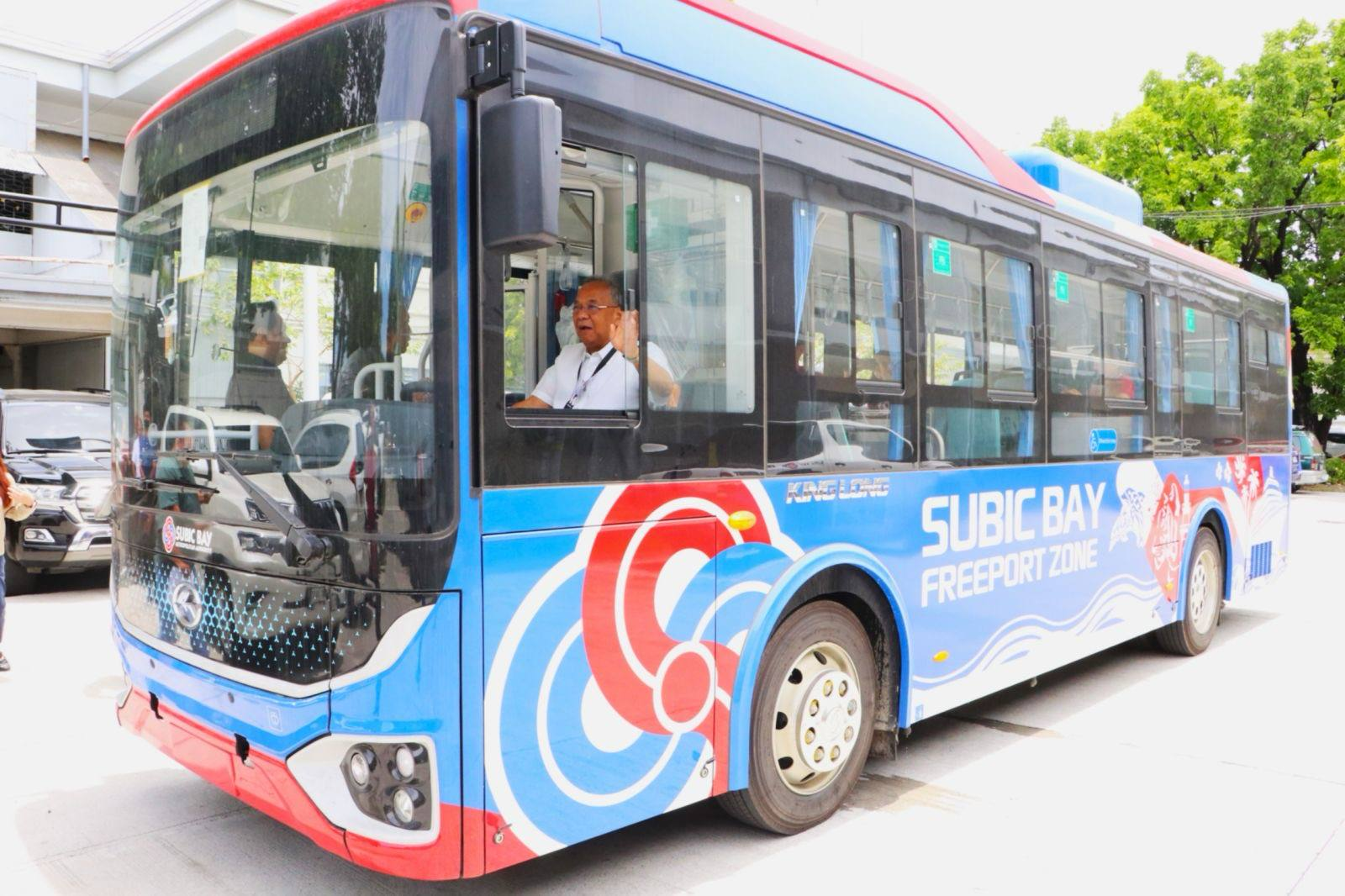
A total of 10 PBEB units arrived in the Freeport on May 13. One of the buses underwent a successful road test on May 27 with members of the SBMA Board. According to Aliño, the buses offer a smooth and comfortable ride, complete with features that cater to persons with disabilities.

To support the new transport system, SBMA is allocating ₱10 million for the construction of new bus stops and the rehabilitation of existing ones, with completion targeted for December 2025. Renovation works are also underway at the Kalaklan Gate Terminal, a key entry point into the Freeport from Zambales.
The transport network will include 58 bus stops strategically located throughout the zone: eight in the Central Business District, 16 in the Cubi Area, six near theme parks, 18 in the Binictican Housing area, and 10 in Kalayaan Housing.
The PBEBs were sourced through Golden Asia Automotive Builders, Inc., and built by China-based Xiamen King Long United Automotive Industry Co. Ltd., a manufacturer with more than 30 years of experience in bus production.
This initiative is part of SBMA’s broader sustainability agenda, which includes the ₱250-million Carbon Neutral Port project. The project features shore power systems that allow docked ships to connect to land-based electricity, significantly reducing emissions.
SBMA aims to cut carbon emissions by 30 percent by 2030 and reach net-zero by 2040, setting a new benchmark for eco-friendly development in Philippine economic zones.