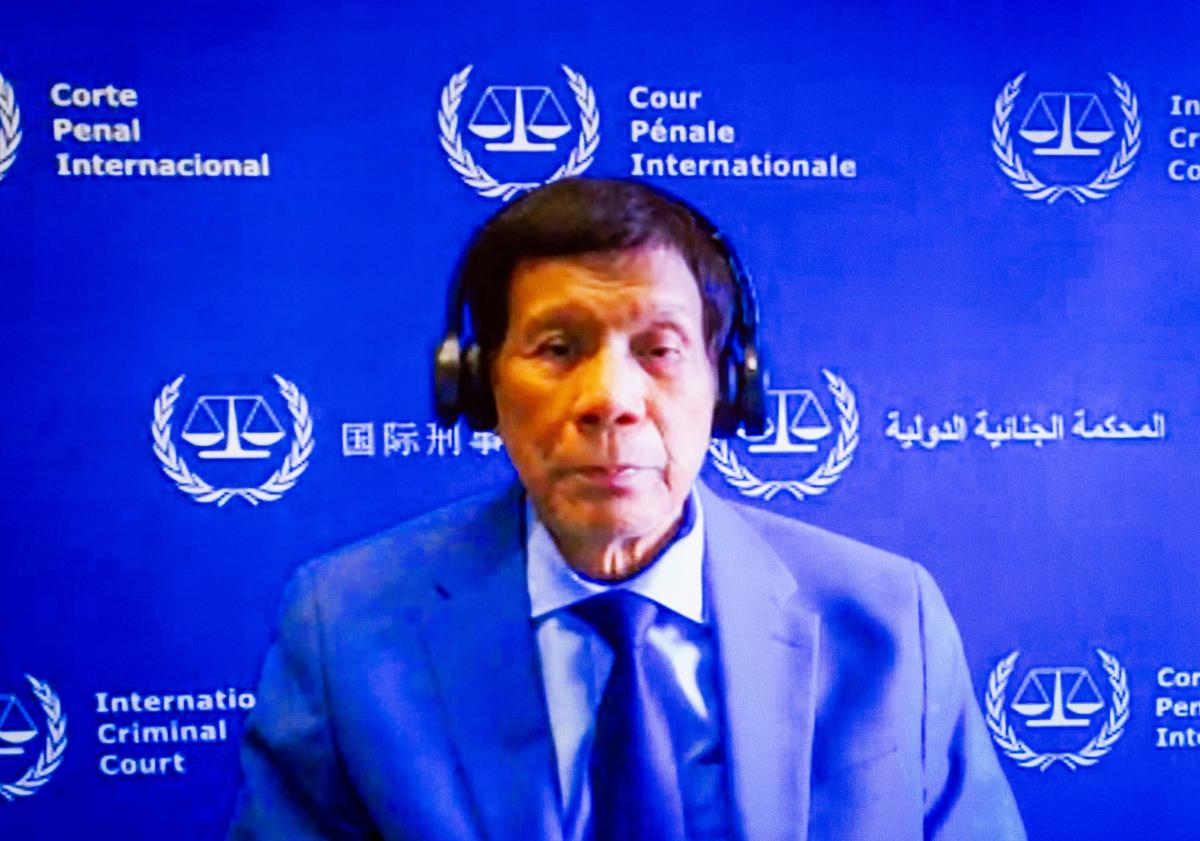

Vice President Sara Duterte erupted in anger after learning that officials from the Philippine Embassy in The Hague visited her father, former president Rodrigo Duterte, in his detention cell at the International Criminal Court (ICC). What was billed as a simple “welfare check” quickly became, in her eyes, a sinister maneuver orchestrated by Malacañang.
In a fiery statement, Sara accused President Ferdinand Marcos Jr. of hiding behind diplomatic protocols to intrude upon her father’s detention. She claimed the embassy officials entered under the guise of consular duties but were in fact carrying out direct orders from the Palace.
“These so-called welfare checks are nothing but Malacañang’s instructions disguised as consular functions. My father does not need you. Our family has been taking care of him every single day since March,” she declared, painting the embassy visit as a betrayal.
A cloud of suspicion
Sara’s words betrayed not only anger but a deep-seated paranoia. She alleged that reports about the elder Duterte were being compiled and handed directly to Marcos Jr., warning that such surveillance placed her father “in imminent danger.” She went as far as to suggest that if harm were to come to the former president, both the ICC and the Philippine government would be accountable.
Her reaction underscored an almost obsessive distrust—not just of the Marcos administration, but of the very institutions tasked with safeguarding the welfare of detainees abroad. To Sara, the welfare check was not an act of concern but a breach, a dangerous opening that exposed her father to unseen threats.
The Vice President also lashed out at the government’s priorities, suggesting that Marcos Jr. should redirect attention toward “detained, distressed, abandoned or neglected” overseas Filipinos who have never once received such checks. This attempt to reframe the issue, however, only deepened the perception that her fears stemmed less from diplomatic overreach and more from a siege mentality—an instinct to treat every action as part of a plot.
Family control versus state oversight
At the heart of Sara’s protest is a belief that the Duterte family alone should dictate access to the former president. She insisted that family members have been present daily to ensure his well-being, implying that official visits are not only unnecessary but dangerous.
Yet this position places the Duterte family in direct conflict with international and state norms. Consular welfare checks are standard practice, meant to ensure that citizens in custody are being treated properly. By framing these as threats, Sara casts a dark shadow of suspicion over even the most routine diplomatic gestures.
The Vice President’s outburst speaks volumes about her political posture: defiance against Marcos Jr., hostility toward the ICC, and a deep distrust of institutions beyond her control. What for most would be a matter-of-course consular visit has, in Sara’s telling, become proof of conspiracy.
In the end, Sara Duterte’s rejection of the embassy’s welfare check is less about diplomacy and more about control. It reveals a paranoid determination to shield her father from any influence or oversight that does not come directly from the family—a stance that may resonate with loyal supporters but raises troubling questions about the Philippines’ role in protecting its own citizens abroad, even those in the most controversial circumstances.