Leyte 1st District Representative Ferdinand Martin Romualdez pledged on Tuesday that the House of Representatives will fully support President Ferdinand R. Marcos Jr.’s Walang Gutom Program (WGP), including ensuring adequate funding in the proposed 2026 national budget.
In a statement, Romualdez, who is anticipated to be re-elected as House Speaker in the 20th Congress, emphasized that “no Filipino should go hungry in a nation full of promise and potential.” He remarked, “This is not just a project of our President Bongbong Marcos. His vision of a hunger-free Philippines under the Walang Gutom program is a promise of dignity, a pledge of compassion, and a commitment to bring real change to every Filipino family struggling to put food on the table.”
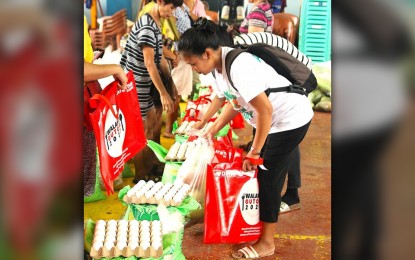
His comments followed the Department of Social Welfare and Development (DSWD) announcing plans to expand the Walang Gutom program from its current reach of 300,000 households to 750,000 food-poor families by next year. The program provides PHP 3,000 worth of monthly food credits through an electronic benefit transfer (EBT) card, which beneficiaries can use to purchase select food items from accredited merchants. Additionally, beneficiaries are required to attend monthly nutrition education sessions to promote healthy food practices and productivity enhancement sessions.
Romualdez praised President Marcos for prioritizing hunger eradication as a key component of the Bagong Pilipinas vision. “You can see the heart of our President in this program. The fight against hunger is not just a policy but his personal mission. No Filipino family should be left in the margins of society,” he stated.
He also highlighted the essential collaboration between the DSWD and the Department of Agriculture (DA) in implementing the complementary “Benteng Bigas, Meron Na!” program, which offers PHP 20 per kg of rice at selected Kadiwa stores and partner retailers, primarily benefiting Walang Gutom participants and vulnerable sectors.
Romualdez noted that expanding the Walang Gutom program means investing not only in subsidies but also in the entire value chain—from supporting farmers to providing nutrition education. He urged fellow lawmakers to support the 2026 General Appropriations Bill (GAB) to equip both the DSWD and DA with the necessary resources to achieve the program’s ambitious goals.
“If we want to end hunger, we need to support farmers in production, consumers with affordable goods, and every family with relevant skills and livelihood. Aid is not enough; it must be a bridge to development,” he concluded.