Rainwater harvesting helps address water needs in Iloilo City housing community
ILOILO CITY – Rainwater harvesting has helped address the water needs of a housing community in Barangay Calumpang in the city’s Molo District, while allowing residents to prepare for a forecast strong to very strong El Niño phenomenon.
Sonia Cadornigara, regional coordinator of the Homeless People’s Federation Philippines, Inc. (HPFI), said Thursday that the beneficiaries are members of the Kapisanan Bayanihan Laban sa Kahirapan Homeowners Association.
The residents previously faced eviction threats while living on private property in Barangays Santo Niño Norte, Santo Niño Sur, and Calumpang. Through community savings and the assistance of Vincentian priests, they eventually acquired a foreclosed property where they could build their homes, Cadornigara said.
More than 30 members have since established homes on the property. Before the rainwater harvesting project, they relied on deep wells because they had no access to other water sources.
During summer, however, the well water becomes salty because the community is near the Batiano River.
Cadornigara said HPFI’s engagement with various nongovernmental organizations led the group to the Iloilo Water Resilience Initiative, supported by the Coca-Cola Foundation and implemented by the Catholic Relief Services (CRS).
The HPFI helped implement the project at the community level, with technical assistance from architects of the Technical Assistance Movement for People and Environment, Inc. (TAMPEI).
As part of their contribution, residents were required to rehabilitate their roofs and stop drawing water from deep wells.
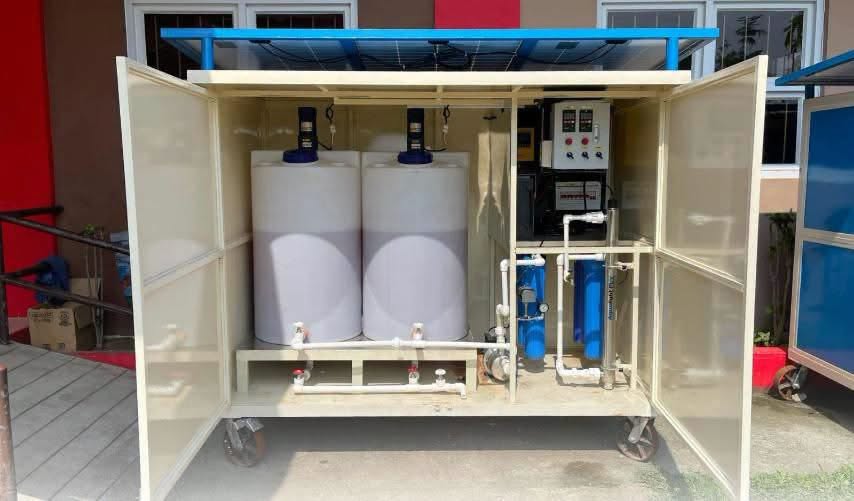
The CRS and the Coca-Cola Foundation provided 27 water tanks equipped with filters, each with a storage capacity of 1,000 liters.
“They are already using it. They no longer extract water from the ground,” Cadornigara said.
She said the tanks will provide a reserve during possible water rationing by the city government amid the forecast El Niño conditions.
Cadornigara added that initiatives like the project could help communities conserve water when properly guided and supported.
“If this becomes a norm, where we save water, we can really feel that we can contribute to saving water in our own little way,” she said. (PNA)