
(Photo courtesy of PIA)
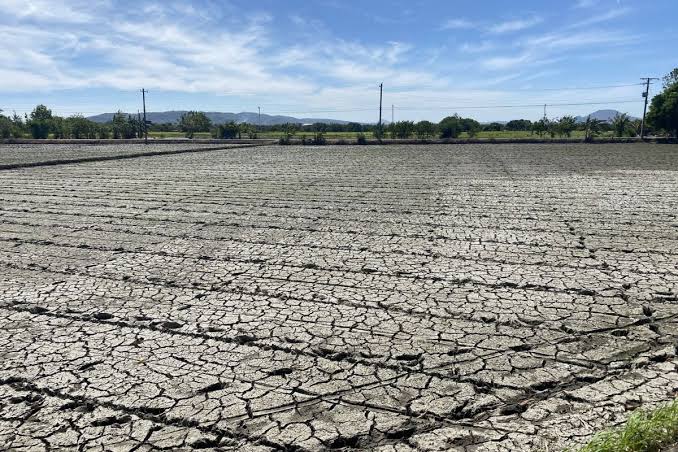
LUCENA CITY, Quezon – The Quezon provincial government is intensifying measures to protect farmers and agricultural production after nearly 6,800 hectares of farmland were affected by dry conditions linked to the El Niño phenomenon.
Provincial officials warned that drought conditions could persist or worsen until April 2027, raising concerns over possible crop losses, water shortages, and threats to farmers’ livelihoods.
The situation was assessed during the Provincial Disaster Risk Assessment (PDRA) and Provincial Disaster Risk Reduction and Management Council (PDRRMC) Full Council Meeting on October 20.
Ferdie Valdeavilla of the Department of Science and Technology–Philippine Atmospheric, Geophysical and Astronomical Services Administration (DOST-PAGASA) presented climate projections based on rainfall observations from April to September 2026 and forecasts covering October 2026 to March 2027.
According to the Provincial Agriculture Office, approximately 6,130 hectares of rice fields, 200 hectares of corn plantations, and 436 hectares planted with vegetables and other crops have been affected.
Provincial Agriculture Office representative Dr. Liza Mariano identified several affected municipalities, including Tagkawayan, Polillo, Mulanay, Catanauan, San Narciso, General Luna, Jomalig, and Alabat.
Governor Helen Tan has directed local government units to submit updated situation reports to help identify affected communities and determine appropriate assistance for farmers.
The Provincial Agriculture Office is coordinating with municipal agriculture offices to promote water storage in farm reservoirs, prepare supplies of seeds and fertilizers, and encourage climate-smart farming practices.
Agricultural authorities are also strengthening surveillance against pest infestations and crop diseases that could worsen during prolonged dry conditions.
Meanwhile, the PDRRMC is maintaining round-the-clock Emergency Operations Center operations, monitoring PAGASA advisories, and coordinating early warning measures with local governments and emergency response agencies.
Dr. Melchor Abenilla of the PDRRMC said preparations include coordinating with water service providers to deploy water tankers to communities at risk of shortages, particularly areas where wells may run dry.
The provincial government is also reinforcing public health measures, including drinking water testing, proper water treatment and storage, monitoring of heat-related illnesses, and the establishment of hydration and oral rehydration stations.
Health Emergency Response Teams and sanitary inspectors are being prepared to address water, sanitation, and hygiene concerns during emergencies.
Authorities are also checking backup generators and fuel reserves to maintain essential services during possible disruptions.
For long-term agricultural resilience, the province is promoting solar-powered irrigation systems, diversified crop production, integrated farming, farmer training, and drone-assisted mapping of agricultural lands and watersheds.
The provincial government said these coordinated interventions aim to reduce agricultural losses, secure water supplies, and help farming communities withstand the prolonged effects of El Niño.