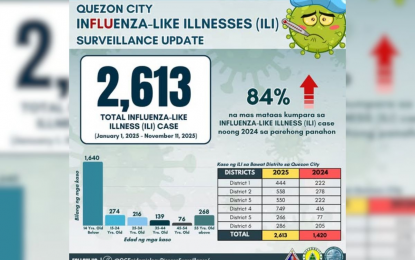

Quezon City has recorded an 84-percent increase in influenza-like illness from Jan. 1 to Nov. 11, 2025. The Quezon City Epidemiology and Surveillance Division on Thursday (Nov. 13) urged residents to immediately seek medical consultation once they experience flu-like symptoms. (Photo courtesy of QCESD)
Quezon City is ramping up its flu prevention measures amid a sharp rise in influenza-like illness (ILI) cases, urging residents to take symptoms seriously and seek medical care without delay.
Data from the QC Epidemiology and Surveillance Division (QCESD) showed that from January 1 to November 11, the city recorded 2,613 ILI cases — an 84 percent jump from the 1,420 cases logged during the same period last year. Health officials said the spike underscores the need for heightened vigilance, especially among vulnerable sectors.
The QCESD noted that children aged 14 and below remain the most affected, accounting for 1,640 cases, while senior citizens aged 55 and above recorded 268 cases. District 4 registered the highest number of infections with 749 cases, prompting intensified monitoring in the area.
City health authorities have expanded their information campaign to remind residents of basic but critical preventive measures: frequent handwashing, wearing masks when experiencing symptoms, disinfecting living spaces, and limiting exposure to crowded places. The city also encourages parents and guardians to closely monitor children showing early signs of illness.
With cases climbing, all city health centers have been placed on heightened alert. Clinics are operating from Monday to Friday, 7 a.m. to 5 p.m., and are ready to assist residents experiencing flu-like symptoms or any form of respiratory distress.
Officials stressed that early consultation remains the strongest line of defense, especially with infections expected to rise during the colder season. “Residents should not ignore symptoms. Immediate consultation helps prevent complications and protects families and communities,” the QCESD said.