
(Photo courtesy of Senate)
MANILA – The Department of Agriculture (DA) is stepping up irrigation development, financial assistance and interagency coordination to protect farmers and fisherfolk from a potentially severe El Niño expected to peak in early 2027.
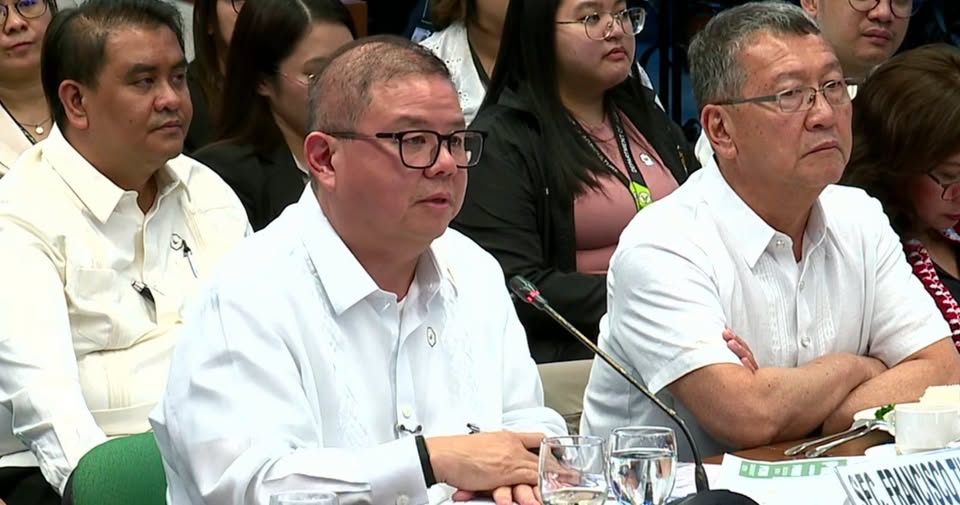
During a Senate budget hearing Wednesday, October 21, Agriculture Secretary Francisco Tiu Laurel Jr. said the department is working with other government agencies to consolidate resources and deliver immediate assistance to communities vulnerable to prolonged drought.
“We’re pooling now our funds,” Tiu Laurel said, referring to coordination with the Department of Social Welfare and Development (DSWD) and Department of Labor and Employment (DOLE).
Under the proposed arrangement, affected farmers and fisherfolk may receive cash assistance, food packs and temporary employment through government programs, including canal construction and land preparation.
The DA is also coordinating with the Department of Health and Office of Civil Defense to strengthen disaster preparedness and response.
Tiu Laurel cited assistance provided by the DSWD to El Niño-affected communities in Camarines Norte as an example of how agencies can mobilize existing resources without waiting for additional agricultural funding.
Irrigation, production support prioritized
To address water shortages, the DA is accelerating the installation of solar-powered irrigation systems, backed by a Php 1.6-billion allocation this year, with additional funding being considered for 2027.
The department is also preparing solar-powered paddle wheels to maintain oxygen levels in fishponds and lakes during extreme heat and help prevent fish kills.
“Water management is critical,” Tiu Laurel emphasized.
Working with the National Irrigation Administration, the DA plans to expand the use of alternate wetting and drying techniques to conserve irrigation water while maintaining crop production.
Tiu Laurel also proposed additional fertilizer vouchers and cash assistance to help farmers cope with rising production costs.
He warned that some farmers could reduce fertilizer application from 10 bags to five bags per hectare because of higher prices, potentially lowering crop yields even in areas with sufficient irrigation.
The DA intends to prioritize production assistance in areas with adequate water supplies to compensate for possible harvest losses in drought-affected provinces.
Other planned interventions include small water impounding facilities, fuel subsidies, seed distribution and logistical assistance.
Up to 4.6 million farmers, fisherfolk at risk
Senate President Sherwin Gatchalian urged the DA to submit a comprehensive preparedness plan outlining projected agricultural losses, available funding and additional measures needed before El Niño reaches its peak.
According to the latest forecast cited by Tiu Laurel, the strongest effects of El Niño are expected between January and April 2027, later than the earlier projection of November 2026.
Under the DA’s worst-case scenario, as many as 4.6 million farmers and fisherfolk could be affected, with agricultural damage potentially reaching Php 20 billion across approximately 350,000 hectares of farmland.
Gatchalian stressed the importance of preparing for disruptions to agricultural production, employment and food supply.
“We really need to make sure na ang gobyerno ay handa,” he said.
The DA is also banking on the Php 10-billion Presidential Assistance to Farmers and Fisherfolk allocation under the House-approved 2027 national budget to provide direct financial assistance to affected agricultural workers.
However, Tiu Laurel acknowledged that the allocation would not be enough to cover projected needs under the worst-case scenario, making support from other government agencies essential.
Gatchalian said the Senate’s special committee on economic recovery would review the government’s El Niño response and examine whether additional congressional support is necessary.
He directed the DA to submit a detailed readiness plan identifying existing allocations, proposed interventions and possible funding gaps.
Tiu Laurel committed to providing the requested information, stressing that investments in irrigation infrastructure and agricultural assistance would also improve the sector’s resilience against future droughts.