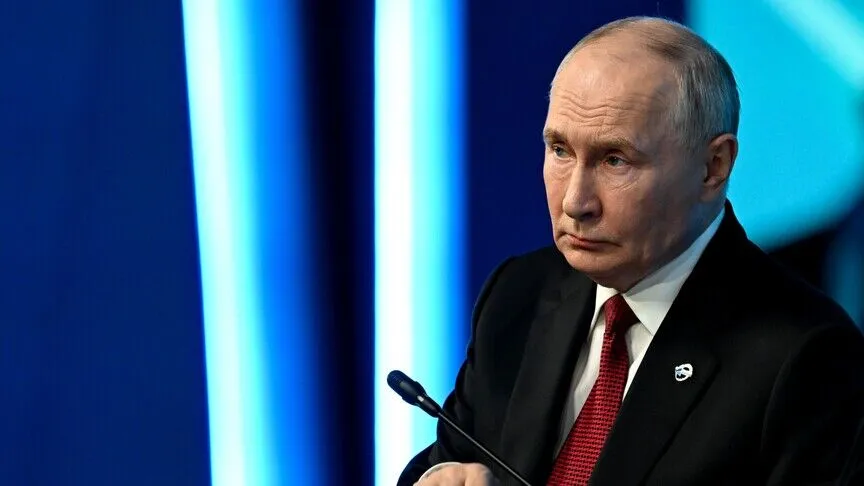

(Photo by Anadolu)
MOSCOW – Russian President Vladimir Putin said Friday, October 9, that supplying Russian diesel and other petroleum products to the United States and international markets could help support the global economy following talks with US President Donald Trump.
According to a statement released by the Kremlin, the two leaders discussed global energy developments, efforts to resolve the war in Ukraine, the situation involving Iran, and bilateral relations between Moscow and Washington.
Putin reiterated Russia’s willingness to supply oil and refined petroleum products to international markets, including the United States.
“In discussing the state of the global energy sector, the Russian side reaffirmed its readiness to supply oil and petroleum products to the US and global markets. I am confident that this will have a positive impact on the global economy as a whole,” Putin said.
The Kremlin said the telephone conversation also focused heavily on possible diplomatic efforts to end the ongoing conflict in Ukraine.
Both leaders agreed to maintain direct communication and continue coordination between their respective presidential administrations, intelligence agencies, and other government institutions.
The discussion followed Trump’s announcement that he had held what he described as a “highly successful discussion” with the Russian president.
In a post on his Truth Social platform, Trump claimed that Russia had agreed to immediately provide more than 300,000 tons of diesel fuel to the United States and global markets.
He said the agreement also included an additional 500,000 tons of diesel in November, followed by another 1 million tons shortly afterward.
Trump added that Russia could supply another 3 million tons within a short period, depending on the operational condition and production capacity of Russian diesel refineries.
The proposed deliveries would represent a significant volume of Russian fuel entering international markets amid continuing concerns over global energy supplies.
However, the statements did not provide specific details on delivery schedules, pricing arrangements, or the destinations of the shipments.
The reported agreement comes as Moscow and Washington continue discussions on energy cooperation and possible diplomatic approaches to resolving international conflicts, including the war in Ukraine.