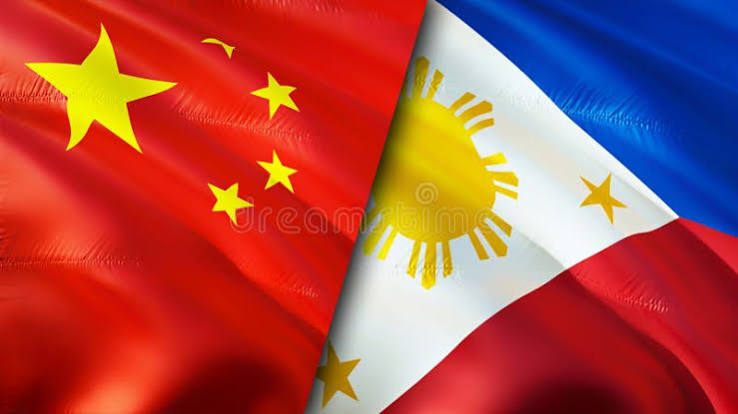

Before the discovery of the islands in the Pacific by Spain, the inhabitants of what is now the Philippines mere ruled by village chieftains called datus. Chinese merchants came to the islands and traded silk, porcelain and other Chinese items. The datus collected tributes from these Chinese merchants.
After Spain colonized the islands, trading continued and the first port of entry under Spanish rule was established in Cebu. The head of the port was called “Capitan del Puerto” (Captain of the Port). In 1891, the Spanish Tariff Law was enacted, which was also enforced in what was known as the Islas Filipinas (Philippine Islands).
In 1898, Spain ceded the Philippines to the Americans in exchange for twenty million US dollars (US$20 million). Under American rule, the Tariff Revision Law was passed, and the title Capitan del Puerto was changed to Collector of Customs. There were Collectors of Customs in various ports of entry — Cebu, Iloilo and Manila. The Collector of the Port of Manila was also the national Head of Customs.
The first national Collector of Customs was an American. In 1902, the Philippines Customs Service (patterned after the US Customs Service) was established. US Customs Law was enforced. However, importation into the Philippines from the United States was exempt from customs duties, while importations from the Philippines to the US were subject to Customs duties. In 1903, the Philippines Customs Service was renamed to Bureau of Customs and Immigration under the Department of Finance and Justice. The title of national Collector of Customs was changed to Commissioner of Customs.
The Philippines gained its independence from the United States on July 4, 1946. It was only in 1957 that the Philippine legislature passed the Tariff and Customs Code of the Philippines (TCCP). The TCCP was the first expression of an independent Customs and Tariff policy. Among the most notable former Commissioners of Customs is the current Presidential Legal Counsel and former Senate President, Juan Ponce Enrile, who also served as Secretary of Finance. Another prominent former Commissioner was Rolando E. Geotina, who served the BOC as Commissioner for 9 years. The first military officer appointed as Commissioner of Customs was Major General Ramon J. Farolan. He was appointed by former President Ferdinand E. Marcos, Sr., during the country’s period under martial law. Farolan was known to be strict yet “mabait”. He was able to suppress rampant smuggling and served BOC for more than nine (9) years until the EDSA revolution in 1986.
Two succeeding Customs Commissioners under former President Corazon Aquino served only six (6) months, while the other two served for 2-3 years. The first Customs Commissioner appointee of President Joseph Ejercito Estrada was Pedro Mendoza, who was allegedly appointed because he was Estrada’s “kababata”. Mendoza landed in the headline of The Philippine Daily Inquirer, Philippine Star, and other major newspapers when he became “Customs Commissioner went ballistic” because he pointed his gun at Manila Hotel guests when he got intoxicated. He was fired on the same day.
Commissioner Guillermo Parayno was the only Customs Chief appointee by former President Fidel V. Ramos. During his reign, the Philippine Bureau of Customs was adjudged by the World Customs Organization (WCO) officials as the world’s most improved customs administration. That was BOC’s proudest moment.
Former Gloria Macapagal Arroyo’s tenure as President lasted for nine (9) years, but her Customs Commissioners only served for an average of six (6) months to one (1) year each, except for Napoleon “Boy” Morales, who was in office for four (4) years. Boy Morales was well-loved by Customs employees. Importers and Customs brokers appreciated his service.
Former President Benigno Aquino had four (4) Customs Commissioners who succeeded each other, serving an average of 1 ½ years each. None of them hit their annual collection target. Further, the IMF-World Bank published a report stating that the most significant amount of smuggled goods entered the Philippines during Aquino’s presidency, amounting to 19 billion dollars in three (3) years.
International Criminal Court detainee, former President Rodrigo R. Duterte appointed four (4) commissioners with two (2) of them serving for 1 ½ years each, and they were implicated in shabu smuggling (Nicanor Faeldon and Isidro Lapeña). Commissioner Rey Leonardo Guerrero served BOC for three (3) years and transformed the BOC into an “Island of Good Governance.”
I have served under twenty Commissioners of Customs, and the average tenure of each has been 1.5 years. Why is that? For the following reasons: failure to hit collection targets, rampant smuggling, corruption, drug smuggling, incompetence, disagreement with the President. The Bureau of Customs is the most complex and most complicated agency in the entire Philippine bureaucracy. Customs officers take many roles: 1. Collection of duties and taxes; 2. Enforcement of anti-smuggling laws 3. Facilitation of international trade; 4. Controlling the borders; 5. Regulate customs bonded warehouses, customs brokers, entities dealing with importations. 6. Prosecution of smugglers.
The BOC is also the most politicized of the agencies. Senators and members of Congress dip their fingers into Customs — demanding appointments and designations for their proteges, asking favors for their importations, and seeking special treatment for their brokerage firms connected to them. If the commissioner refused their requests, the lawmaker would deliver a privilege speech and file a resolution to investigate transactions. Thus, Commissioners were frequently replaced.
The BOC has traditionally been used as a source of campaign funds obtained from the protection money/extortion money/bribe money given to Customs officers. Thus, smuggling became rampant. It was public in BOC from 2016 to 2022; the Davao group was involved in smuggling. This was testified to during the QuadCom hearings by former Customs Intelligence Officer Jimmy Gubban and corroborated by fixer Mark Taguba.
In 2017 and 2018, during the tenure of Commissioner Nicanor Faeldon and Isidro Lapeña, shipments of methamphetamine hydrochloride (shabu) were apprehended due to information provided by the Chinese Customs and the Philippine Drug Enforcement Agency (PDEA). The contraband was concealed in a metal cylinder and magnetic lifters. Both Faeldon and Lapeña were dragged into the controversy for their alleged negligence, incompetence, or collusion. It is worth noting that Commissioner Nepomuceno, who was then Assistant Commissioner, resigned from the BOC before the scandal.
President Ferdinand R. Marcos recently appointed the current Customs Commissioner, Jr. Nepomuceno, a magna cum laude AB History graduate of the University of the Philippines in Diliman. He was awarded the Most Outstanding Graduate of the UP College of Social Sciences in 1986 and was a Presidential Scholarship Awardee from 1989 to 1990. He was a Philippine Military Academy cadet and attended the Asian Institute of Management for his Master’s in Business Management course before becoming Commissioner of Customs. Previously, he served as Administrator of the Office of Civil Defense (OCD) and Undersecretary of the Department of National Defense. He was the Executive Director of the National Disaster Risk Reduction and Management Council (NDRRMC). This is not his first employment in the BOC. He was a Deputy Commissioner of Enforcement in 2013 and later served as Assistant Commissioner for the Post-Clearance Audit Group in 2017.
As I have previously pointed out, the BOC is the most complex government agency with diverse functions. For this reason, many previous Commissioners have failed and sometimes been embroiled in controversy and infamy.
Commissioner Nepomuceno has just taken the reins of the BOC three weeks ago, but he has already made earth-shaking actions to eliminate corruption and malpractices. First, he suspended the issuance and implementation of Letters of Authority (LOA). An LOA is a document issued by the Commissioner of Customs, addressed to the owner of a shop or warehouse where imported goods are being sold or stored, demanding the presentation of proof of payment of duties and taxes, as per Section 224 of the Customs Modernization and Tariff Act (CMTA). This is equivalent to a lawful raid (in layman’s terms). Failure to produce evidence of payment of duties and taxes shall result in the seizure of the goods found in the shop or warehouses. Before Commissioner Nepomuceno assumed the Customs post, there had been complaints from businessmen that the LOA was being used for extortion. According to reports, these complaints reached the President, which may have been one of the reasons for the removal of top officials in the BOC.
The Commissioner’s next earth-shaking act was the issuance of a Memorandum to all Customs employees prohibiting them and their relatives from engaging in the Customs brokerage business or any transaction with the BOC. Republic Act No. 6713, also known as the Code of Conduct and Ethical Standards for Public Officials and Employees, prohibits government employees and their relatives from engaging in transactions with the public office where they are employed. While some Customs employees were shocked and displeased, the officers and members of the Philippine Chamber of Customs Brokers, Inc. thanked Commissioner Nepomuceno.
The latest commendable act of the Commissioner in his directive to amend Customs Administrative (CAO) Order 07-2022 on the Accreditation of Importers. In response to stakeholders’ sentiments and to improve ease of doing business, he ordered the amendment of the CAO to extend the validity of the accreditation from one (1) year to three (3) years.
With his academic credentials and management experience, I am confident that Commissioner Nepomuceno will be able to successfully steer the Bureau of Customs in fulfilling its mission of strengthening border control, enhancing trade facilitation, and improving revenue collection. I am also optimistic that under his leadership, the BOC will attain its vision of becoming a “Modernized and credible Customs administration that is among the world’s best”.