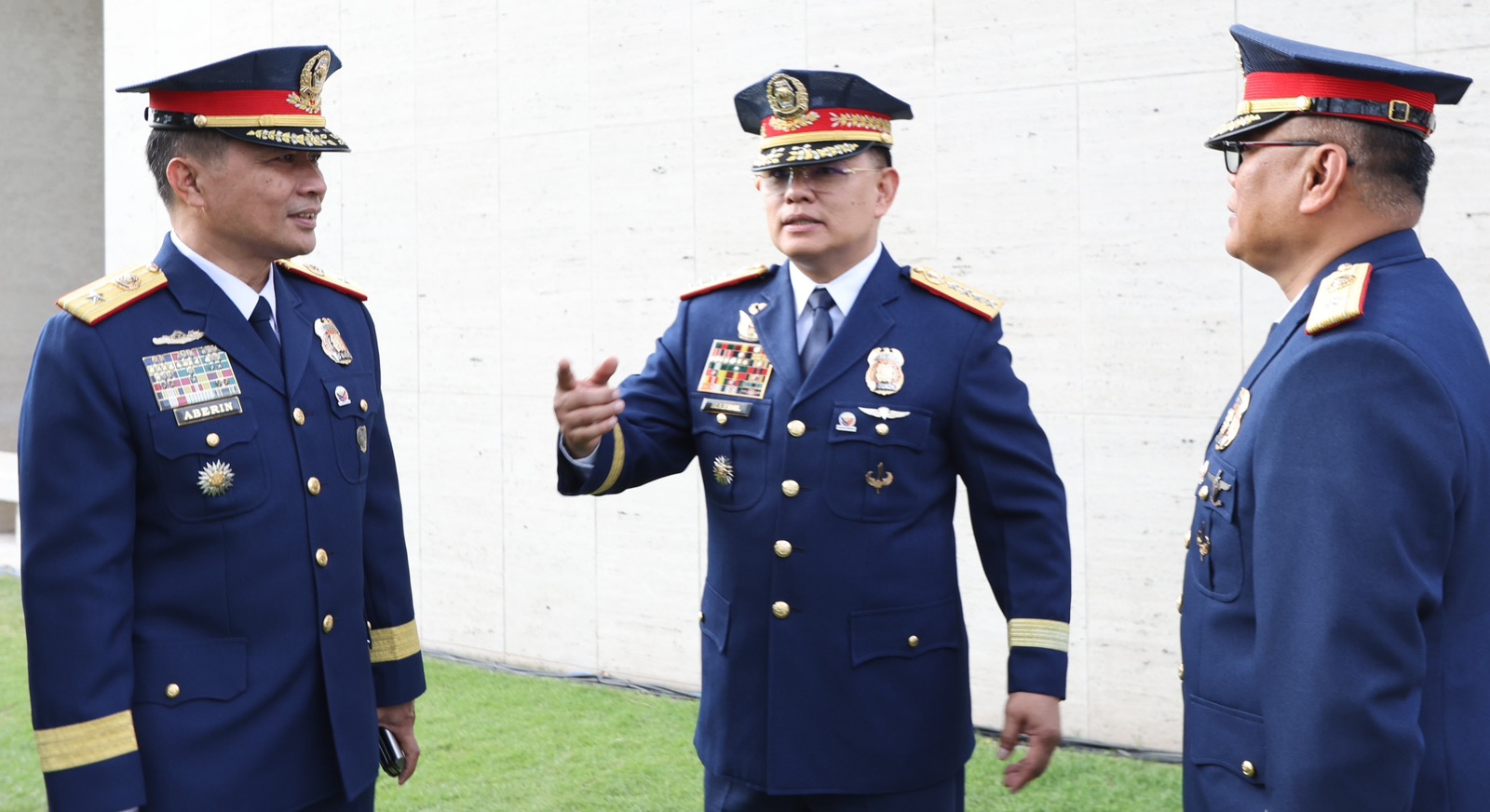

PNP chief Police General Rommel Marbil
A recent incident involving a Philippine National Police (PNP) convoy using the EDSA busway has ignited discussions on law enforcement transparency and accountability.
The event, which occurred Tuesday evening, involved high-ranking officers reportedly heading to an emergency meeting at Camp Crame. The situation has prompted both public scrutiny and official justifications from the PNP.
Emergency or overreach?
PNP Chief Police General Rommel Marbil confirmed in an interview that senior officers had to convene for an urgent closed-door meeting, necessitating the use of the exclusive bus lane.
However, the lack of specific details surrounding the nature of the emergency has left many questioning whether the move was justified or an abuse of privilege.
“We had an emergency and an issue to resolve, which is why the Secretary of the Interior and Local Government (SILG) will announce the operation’s accomplishments. Our senior officers needed to be present,” Marbil stated.
Despite citing an emergency, Marbil did not confirm whether his vehicle was part of the convoy, citing security concerns after plate numbers were made public.
Public backlash and justifications
There are videos online that capture the Department of Transportation-Special Action and Intelligence Committee for Transportation (DOTr-SAICT) stopping the convoy. In the footage, an officer from the convoy can be heard requesting passage due to the emergency.
This raised questions about whether police officials were exploiting special access routes at the expense of the commuting public. The EDSA busway is strictly designated for authorized buses and emergency responders, and only a limited list of government officials are permitted to use the lane.
PNP spokesperson Police Brigadier General Jean Fajardo defended the convoy’s actions, stating that police officers can use the busway in urgent and emergency situations.
“There is a provision in the guidelines that allows PNP officers to use the EDSA busway in emergencies,” Fajardo explained. “The convoy did not argue with authorities and returned to claim the ticket for the supposed violation.”
However, critics argue that the definition of an “emergency” remains unclear, and the lack of transparency regarding the meeting’s urgency has only fueled skepticism.
Balancing security and accountability
The PNP’s reluctance to disclose the senior officers’ identities has also drawn mixed reactions. While officials cite security concerns, some view this as an attempt to evade accountability.
“For security reasons, we will not reveal the identities of those in the convoy. However, we confirm that these senior officers hold sensitive positions,” Fajardo added.
The controversy highlights a broader debate on how law enforcement agencies balance operational security with public accountability. While emergencies may warrant special considerations, the lack of clear communication regarding the incident has left many questioning whether such privileges were misused.
What’s next?
As the public awaits further clarification from Interior Secretary Jonvic Remulla, the incident underscores the need for a clearer policy on mobility privileges in law enforcement.
Striking a balance between operational efficiency and public trust will ensure that emergency protocols do not erode confidence in the institutions meant to serve and protect the people.
For now, the incident serves as a reminder that even those tasked with enforcing the law must be held accountable for how they navigate the very systems they govern.