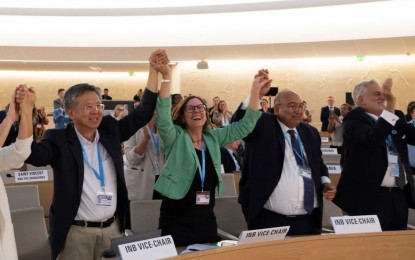
The Philippine government has welcomed the adoption of the historic United Nations Pandemic Agreement, which outlines global strategies for pandemic prevention, preparedness, and response.
The accord was approved during the 78th World Health Assembly in Switzerland after three years of negotiations prompted by gaps in the COVID-19 response from 2020 to 2023.
“Starting during the height of the Covid-19 pandemic, governments from all corners of the world acted with great purpose, dedication and urgency, and in doing so exercising their national sovereignty, to negotiate the historic WHO Pandemic Agreement that has been adopted today,” said Department of Health Secretary and World Health Assembly president Teodoro Herbosa.
“Now that the Agreement has been brought to life, we must all act with the same urgency to implement its critical elements, including systems to ensure equitable access to life-saving pandemic-related health products,” he added.
The agreement enables countries to draw on lessons from the pandemic to better protect future generations from emerging health threats.
In a statement, the Department of Foreign Affairs called the accord a “historic milestone for multilateralism and a reaffirmation of the collective resolve of the international community to strengthen global cooperation in health.”
The Philippines played an active role in negotiations, co-facilitating several articles and advocating for the interests of developing nations through the Group for Equity, composed of over 30 member states. It also championed the protection of healthcare workers’ rights.
The agreement includes commitments on pandemic prevention and surveillance, Pathogen Access and Benefits Sharing (PABS), access to health products, technology transfer, and research and development. An annex on PABS is still under negotiation and expected to be finalized next year.
Once adopted, the agreement will open for signature and ratification and will enter into force after 60 countries have ratified it.
The World Health Organization noted that pharmaceutical companies participating in the PABS system would provide 20% of their real-time production of vaccines, therapeutics, and diagnostics during a pandemic emergency. Distribution will prioritize public health risk and the needs of developing countries.
The accord was adopted with 124 countries voting in favor, none opposing, and 11 abstaining.