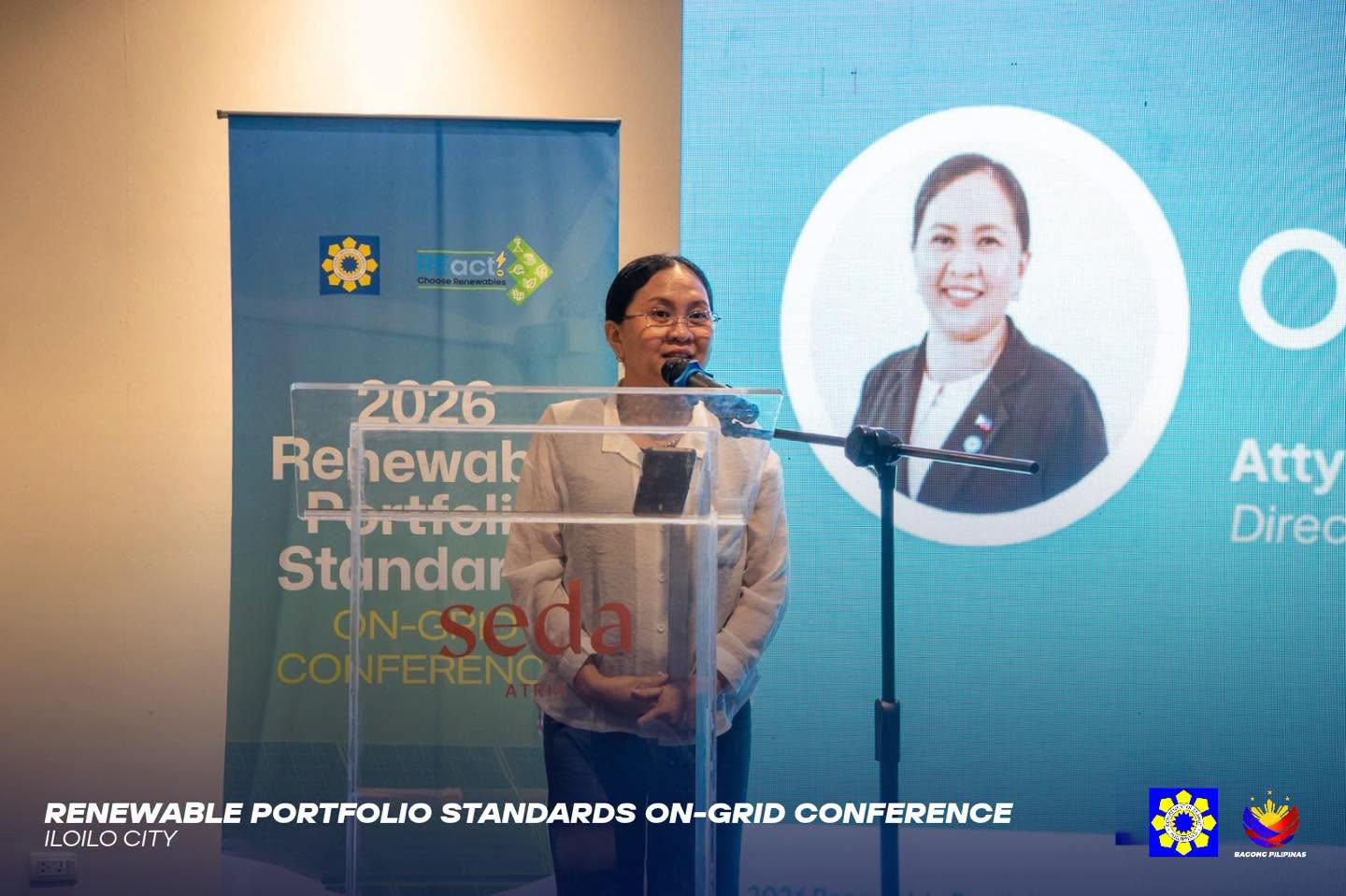

MANILA, Philippines — The Department of Energy (DOE) has intensified efforts to strengthen compliance with the Renewable Portfolio Standards (RPS), bringing together more than 300 representatives from the power industry nationwide to address regulatory concerns and accelerate the country’s transition toward cleaner energy sources.
Through its Renewable Energy Management Bureau (REMB), the DOE conducted the 2026 RPS On-Grid Conference in Baguio, Iloilo, Zamboanga, and Legazpi cities from September to October.
The four-leg conference gathered representatives from distribution utilities (DUs), retail electricity suppliers (RES), and generation companies (GenCos) serving directly connected customers to discuss compliance requirements, renewable energy market developments, and proposed policy adjustments.
Established under Republic Act No. 9513, or the Renewable Energy Act of 2008, the RPS requires mandated electricity suppliers to source a prescribed percentage of their electricity requirements from eligible renewable energy resources.
For 2026, the required renewable energy share stands at 16.42%, with the annual requirement increasing in succeeding years as the government seeks to expand renewable energy’s contribution to the country’s electricity supply.
The DOE warned that failure to comply with RPS obligations could result in administrative or criminal liabilities under applicable regulations.
DOE-REMB Director Marissa Cerezo emphasized that achieving renewable energy targets requires cooperation among government regulators, electricity suppliers, and other industry participants.
“Effective RPS implementation rests on the shared responsibility and active participation of all mandated stakeholders. Through this annual conference, we strengthen our collective commitment to meeting our renewable energy obligations and advancing the country’s clean energy goals,” Cerezo said during the Iloilo City conference.
The discussions featured technical presentations from the DOE-REMB, Independent Electricity Market Operator of the Philippines (IEMOP), and Energy Regulatory Commission (ERC).
These covered the RPS Compliance Report for calendar years 2020 to 2040, developments in the renewable energy market, and regulatory mechanisms supporting compliance with renewable energy obligations.
The National Transmission Corporation (TransCo) also participated in discussions concerning the Feed-in Tariff (FIT) System and the Green Energy Auction Program (GEAP), which support renewable energy development and investment.
One of the major issues raised during the conference was the proposed revision of the RPS compliance timeline.
Industry participants discussed overlapping schedules involving annual renewable energy obligations and the issuance of Renewable Energy Certificates (RECs), which are used to demonstrate compliance with RPS requirements.
The consultations allowed stakeholders to clarify regulatory concerns and submit recommendations on possible adjustments to compliance procedures.
The proposed changes are intended to address implementation challenges and improve coordination between renewable energy certificate issuance and compliance reporting.
DOE-REMB Technical Services Management Division Chief Liza Pangilinan stressed that the success of the RPS should extend beyond meeting regulatory targets.
“The success of the RPS should not be measured by compliance figures alone. Its true value lies in our collective ability to translate policy commitments into tangible progress and sustained growth in renewable energy development,” Pangilinan said during the Zamboanga City conference.
The conference also introduced the Simplified Power Portfolio Assessment and Risk Calculator (SPARC), a decision-support tool developed by the Institute for Climate and Sustainable Cities (ICSC).
SPARC enables power supply planners to evaluate the costs and risks of different electricity supply options under varying fuel price scenarios and renewable energy targets.
The tool is intended to help electricity suppliers make informed decisions when preparing their power supply portfolios, particularly as renewable energy requirements increase.
The conference concluded with participants submitting their individual 2027 RPS Compliance Plans, outlining preparations to meet renewable energy obligations for the coming year.
These plans are expected to guide mandated entities in managing electricity supply portfolios and identifying renewable energy requirements ahead of the next compliance period.
The initiative forms part of the government’s broader efforts to diversify the country’s energy mix, reduce dependence on conventional fuel sources, and encourage greater investment in renewable energy development.
By strengthening regulatory coordination and providing technical guidance to industry stakeholders, the DOE aims to improve RPS implementation and support the long-term expansion of renewable energy in the Philippine power sector.