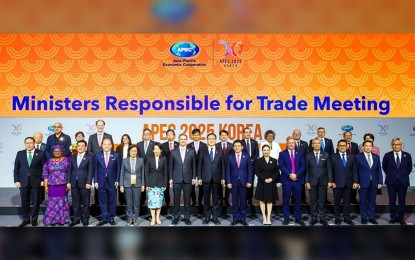

Asia Pacific Economic Cooperation economies, observers and guests at the APEC Ministers Responsible for Trade Meeting held in Jeju, South Korea on May 15, 2025. Trade Secretary Ma. Cristina Roque (6th from right, front row) represented the Philippines. (Photo courtesy of DTI)
During the recent Asia Pacific Economic Cooperation (APEC) Ministers Responsible for Trade (MRT) Meeting held in Jeju, South Korea, the Philippines called on regional partners to champion digital innovation, open trade, and sustainable economic growth.
In a statement on Monday, the Department of Trade and Industry (DTI) reported that Trade Secretary Ma. Cristina Roque underscored the country’s commitment to a fair and transparent global trading system grounded in rules-based multilateralism.
“The Philippines remains steadfast in advocating for an open, rules-based global trading system that promotes fairness, transparency, and inclusivity—essential pillars for building resilient and inclusive economies,” Roque said. “We are increasingly concerned about actions that disrupt global supply chains, raise trade costs, and undermine confidence in multilateral systems.”
Roque also emphasized the transformative power of artificial intelligence and other emerging technologies in shaping the future of global trade. She highlighted the Philippines’ investments in digital and creative industries, backed by key legislation and workforce development initiatives.
“AI and emerging technologies present unprecedented opportunities to redefine how trade operates globally,” she noted. “We must foster a digital environment that is secure, inclusive, and conducive to prosperity.”
The DTI chief also called for enhanced regional collaboration to address pressing issues in the digital space, including the digital divide, data privacy, cybersecurity threats, and fragmented regulations.
During discussions on the multilateral trading system, Roque pushed for reforms in the World Trade Organization’s dispute settlement mechanism and stressed the importance of continued negotiations on agricultural and fisheries subsidies.
She also encouraged APEC economies to integrate environmental and social considerations into trade policies, urging a whole-of-nation approach to achieving sustainable and resilient growth.
“Broad engagement with stakeholders—including businesses, civil society, and the scientific community—is vital to ensure trade policies reflect current knowledge and best practices,” Roque added.
Roque outlined the Philippines’ ongoing regulatory reforms and infrastructure investments aimed at reducing logistics costs and improving trade efficiency.
She concluded by affirming the Marcos administration’s commitment to building a more inclusive, innovative, and sustainable trade environment through active regional and global partnerships—aligned with APEC’s principles of cooperation, openness, and shared prosperity.