
The Philippines is reigniting its upstream energy exploration, with seven petroleum service contracts (SCs) cleared for renewed activity — a move seen as a major step toward boosting the country’s energy independence and diversifying its resource portfolio.
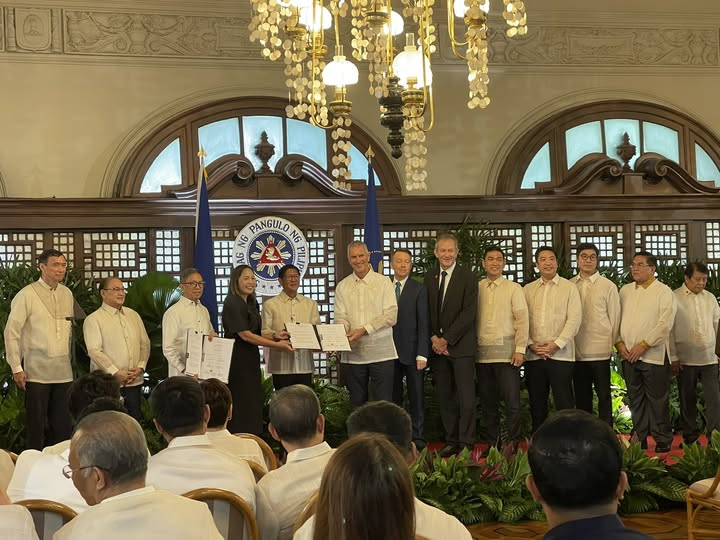
According to the Presidential Communications Office (PCO), two of these contracts — SC 80 and SC 81 — will resume exploration in the southern portion of the Sulu Sea. What makes this development historic is the shared governance: both the national government and the Bangsamoro Autonomous Region in Muslim Mindanao (BARMM) will jointly manage the exploration, marking one of the first energy ventures co-supervised by the BARMM and the Department of Energy (DOE).
Energy Secretary Raphael Lotilla described the decision as “a testament to the government’s renewed confidence in unlocking local energy potential while honoring regional autonomy and peace-driven collaboration.”
Exploring new frontiers
Beyond the Sulu Sea, exploration activities will also expand to other promising zones. Three contracts — SC 82, 85, and 86 — have been awarded for exploratory drilling in Cagayan, Cebu, and Northwest Palawan. These areas are known for their untapped potential in natural gas and petroleum, with Palawan already housing existing production under the Malampaya project.
The DOE said these contracts could help bridge the expected gap in energy supply as the Malampaya gas field nears depletion. The exploration programs, it added, could also attract fresh foreign investment and generate local jobs, particularly in host provinces.
Pioneering the hydrogen horizon
Perhaps the most groundbreaking among the new ventures are SC 83 and SC 84, which authorize the exploration of native or natural hydrogen gas deposits in Central Luzon.
Energy Undersecretary Alessandro Sales confirmed that the Philippines is entering uncharted territory — not just for the country, but globally.
“This is the world’s first competitive bid for native hydrogen,” said Department of Energy Assistant Secretary Mylene Garin. “The Philippines is positioning itself as a pioneer in this field, testing new frontiers in clean energy exploration.”
Native hydrogen — sometimes called “white hydrogen” — is a naturally occurring form of hydrogen found underground, offering a potentially zero-emission energy source. Unlike industrially produced hydrogen, it doesn’t require fossil fuels or electrolysis, making it a cleaner and more sustainable alternative.
Energy independence and innovation
The government’s renewed push for exploration comes at a critical time, as the Philippines seeks to reduce dependence on imported energy and enhance its resilience amid rising global fuel prices.
The DOE said these contracts, once operational, could collectively help secure future energy supply, promote regional investment, and set the stage for the Philippines’ entry into the global hydrogen economy.
“These exploration activities reflect a strategic balance — sustaining our traditional energy sector while boldly moving toward cleaner technologies,” the PCO statement read.
If successful, the program could mark not just a return to the country’s exploration era but a leap into the next generation of sustainable energy innovation.