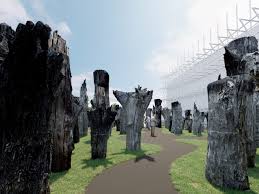

OSAKA, JAPAN — The Philippines has found its place in the heart of Expo 2025 Osaka through a breathtaking symbol of heritage and unity: a 6,500-year-old oak tree dedicated to the nation at the Forest of Civilizations, one of the Expo’s largest and most visionary installations.
On July 22, 2025, Maria Margarita Montemayor Nograles, Chief Operating Officer of the Tourism Promotions Board (TPB) and Secretary General of the Philippine Organizing Committee, led the ceremonial tree naming that officially marked the Philippines’ presence in this global celebration of culture and sustainability.
The Forest of Civilizations brings together 133 ancient oak trees, each recovered from subfossil deposits and digitally preserved. Every tree represents a participating nation, creating a powerful tribute to humanity’s shared history and collective future. The installation is even being considered for recognition by the Guinness World Records.
The tree bearing the name Philippines now stands with a metal QR marker inscribed: “This tree stands here in honour of the Philippines.” When scanned, visitors are greeted by a message from the Philippine Pavilion, available in English, Japanese, and Filipino, enhanced by VoxTox AI technology.
“For us, this tree represents more than just our roots—it mirrors the spirit of the Philippine Pavilion, which invites visitors to pause, reflect, and reconnect,” Nograles shared. “It carries the imprint of our people—their creativity, resilience, and hope for a future where humanity is more meaningfully intertwined.”
The Philippines joins a diverse group of nations, including Belgium, Armenia, the Czech Republic, and the United States, in forming what organizers describe as a living “root system” of global cooperation, cultural identity, and environmental awareness.
As one of Expo 2025’s most innovative showcases, the Forest of Civilizations is designed to outlive the Expo itself, extending its story long after 2026 as a symbol of unity across borders.
For the Philippines, the dedication of this tree is more than a cultural gesture—it is a commitment to sustainability, dialogue, and its role in shaping a future where nations grow stronger together.