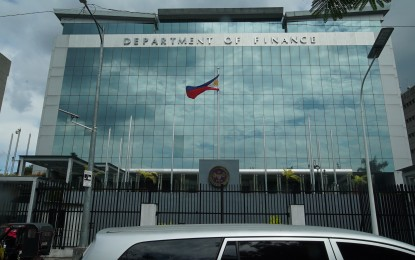

Department of Finance facade (File photo)
The Philippines and Singapore have officially launched negotiations to update their nearly five-decade-old Double Taxation Agreement (DTA), the Department of Finance (DOF) announced Thursday.
The revised pact seeks to align tax provisions with the needs of today’s global economy, while also strengthening bilateral trade and investment ties that could generate more jobs for Filipinos.
The first round of talks on the Elimination of Double Taxation with Respect to Taxes on Income and the Prevention of Tax Evasion and Avoidance took place in Manila from September 2 to 4.
Singapore Ambassador to the Philippines Constance See underscored the importance of the negotiations, noting that an updated DTA would encourage cross-border activity and reassure the business community of both governments’ commitment to deeper economic cooperation. She also highlighted that Singapore’s foreign direct investments in the Philippines have grown by 14 percent over the past five years, a reflection of continuing investor confidence in the country.
The discussions come on the heels of the 55th anniversary of diplomatic ties between the two nations last year, marking a partnership that extends across trade, security, cultural exchanges, and people-to-people links.
The Philippine delegation was led by DOF Assistant Secretary Dakila Elteen Napao, joined by Assistant Secretary Euvimil Nina Asuncion, Bureau of Internal Revenue Deputy Commissioner Larry Barcelo, and International Tax Affairs Division Chief Robbie Bañaga. Singapore’s side was headed by Inland Revenue Authority Assistant Commissioner Angela Ang.
Finance Secretary Ralph Recto emphasized the timeliness of the review, saying the existing 1977 agreement no longer reflects the realities of international taxation or the dynamic economic relations between the two countries.
“The DTA has been in place for almost 50 years. It’s high time we recalibrate the terms to keep pace with a rapidly shifting global economy,” Recto said, citing robust bilateral trade and the presence of over 200,000 Filipinos in Singapore as additional drivers for modernization.