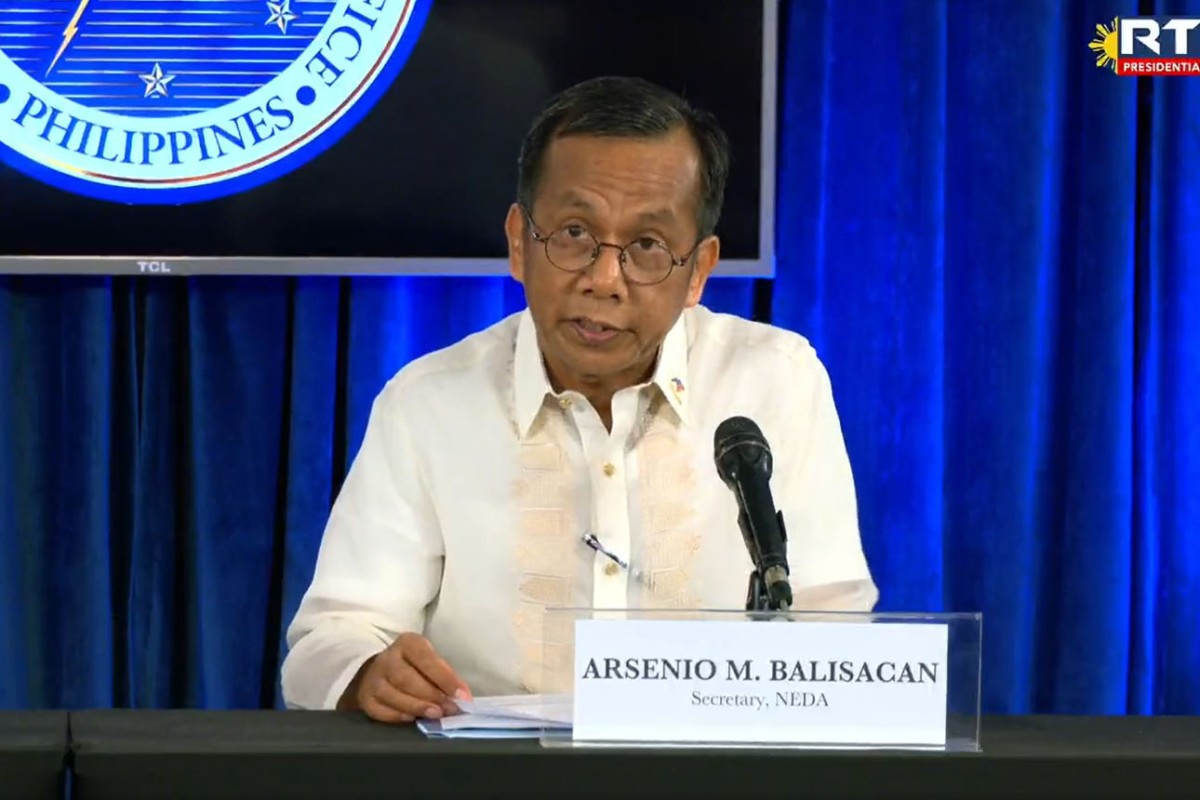

National Economic and Development Authority (NEDA) Secretary Arsenio Balisacan announced during a year-end press conference in Mandaluyong City on Friday that the Philippines is poised to graduate to an upper-middle-income economy by 2025.
“We have a good chance of attaining upper-middle-income country status in 2025,” Balisacan said, expressing optimism about the nation’s economic trajectory despite lingering challenges.
Current economic standing
According to the World Bank’s classification, the Philippines remains a lower-middle-income economy, with a gross national income (GNI) per capita of $3,950 in 2022. The threshold for upper-middle-income economies is a GNI per capita between $4,466 and $13,845, while lower-middle-income economies fall within the $1,136 to $4,465 range.
The Philippines shares its current classification with regional peers like Vietnam ($4,010 GNI per capita), Laos ($2,360), Cambodia ($1,700), and Myanmar ($1,210). However, it trails behind neighboring upper-middle-income nations such as Malaysia ($11,780), Thailand ($7,230), and Indonesia, which recently advanced to upper-middle-income status with a GNI per capita of $4,580.
High-income economies in the region include Singapore ($67,200) and Brunei ($31,410).
Key growth targets
Balisacan emphasized that achieving upper-middle-income status hinges on several factors:
- Sustaining economic growth: The Marcos administration has set gross domestic product (GDP) growth targets of 6% to 7% for 2024 and 6.5% to 7.5% for 2025. As of the first three quarters of 2024, the economy grew by 5.8%, slightly below the target range.
- Currency stability: Avoiding significant peso depreciation relative to major trading partners will be critical.
- Continued reforms: Maintaining policies that promote investment, innovation, and productivity will support long-term growth.
“Attaining this status will require that we achieve our growth target this year, maintain our growth trajectory in 2025, and ensure our currency remains stable,” Balisacan noted.
Poverty reduction goals
Beyond income classification, Balisacan highlighted the government’s ambitious target to reduce the national poverty rate to single digits by 2028.
“Despite high inflation, we have already made remarkable strides, with poverty falling to 15.5% in 2023, down from 18.1% in 2021,” he said.
This translates to 17.54 million poor Filipinos in 2023, a notable decrease from 19.99 million in 2021.
The government attributes this progress to economic recovery efforts and strengthened social protection programs. Balisacan emphasized the need to maintain low and stable inflation to alleviate poverty further and make growth more inclusive.
Enhanced social protection
To protect vulnerable sectors, the government plans to expand its social safety nets through digital innovations, particularly leveraging the Philippine National ID System.
“We will continue enhancing our social protection programs, ensuring no one is left behind. The National ID will play a pivotal role in streamlining aid distribution and improving access to government services,” Balisacan added.
Outlook
As the Philippines positions itself for an economic upgrade, the government remains focused on sustaining growth, enhancing social equity, and navigating global uncertainties.
With strategic initiatives in place, the nation is steadily paving the way for a more inclusive and prosperous future.