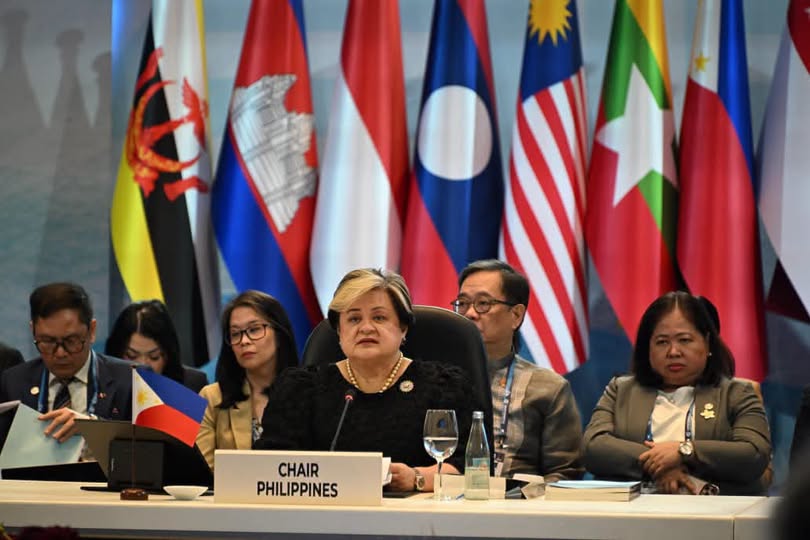
The Bangko Sentral ng Pilipinas (BSP) welcomed S&P Global Ratings’ decision to affirm the Philippines’ long-term sovereign credit rating at BBB+ and its short-term rating at A-2, even as the global fallout from the Middle East conflict continues to weigh on economies worldwide.
While S&P revised its outlook on the country from positive to stable, the move still signals continued confidence in the Philippines’ economic fundamentals and financial resilience. For the BSP, the latest rating action underscores the country’s ability to withstand external shocks while sustaining growth.
BSP Governor Eli M. Remolona Jr. said the central bank remains committed to steering policy with caution as risks at home and abroad continue to evolve. He said the BSP will keep a close watch on both domestic and international developments as it pursues measures aimed at preserving price and financial stability in an increasingly complex economic and geopolitical environment.
Despite heightened global uncertainty, S&P said the Philippines’ credit profile continues to be supported by above-average economic growth. The ratings agency expects the Philippine economy to expand by 5.8 percent in 2026 and average about 6.2 percent from 2027 to 2029, reflecting confidence in the country’s medium-term growth story.
S&P said its stable outlook reflects its expectation that the Philippines will continue to post healthy economic growth while gradually narrowing its fiscal deficit over the next two years. At the same time, it noted that the change in outlook was driven by rising risks to the country’s external and fiscal position as a result of the ongoing Middle East conflict.
Even so, S&P pointed to the country’s external position as a key source of strength. It also cited the BSP’s track record in keeping inflation under control and maintaining the stability of the domestic banking system, both of which have helped reinforce investor confidence.
The country’s foreign exchange buffer remains solid. As of end-March 2026, gross international reserves stood at US$107.5 billion, enough to cover 7.1 months’ worth of imports and nearly four times the country’s short-term external debt based on residual maturity. That level continues to provide a strong cushion against external volatility.
S&P also recognized the BSP’s tighter and more effective oversight of the financial system, saying reforms and stronger supervision have contributed to greater banking sector stability in recent years.
An investment-grade credit rating such as BBB+ is significant because it signals low credit risk and helps the country maintain favorable access to financing. This gives the government more room to fund essential programs, infrastructure, and public services at manageable borrowing costs.
For now, the stable outlook means S&P does not expect the Philippines’ rating to change over the next two years. In the face of global uncertainty, that steady view offers a reassuring signal that the country’s economic foundations remain intact.