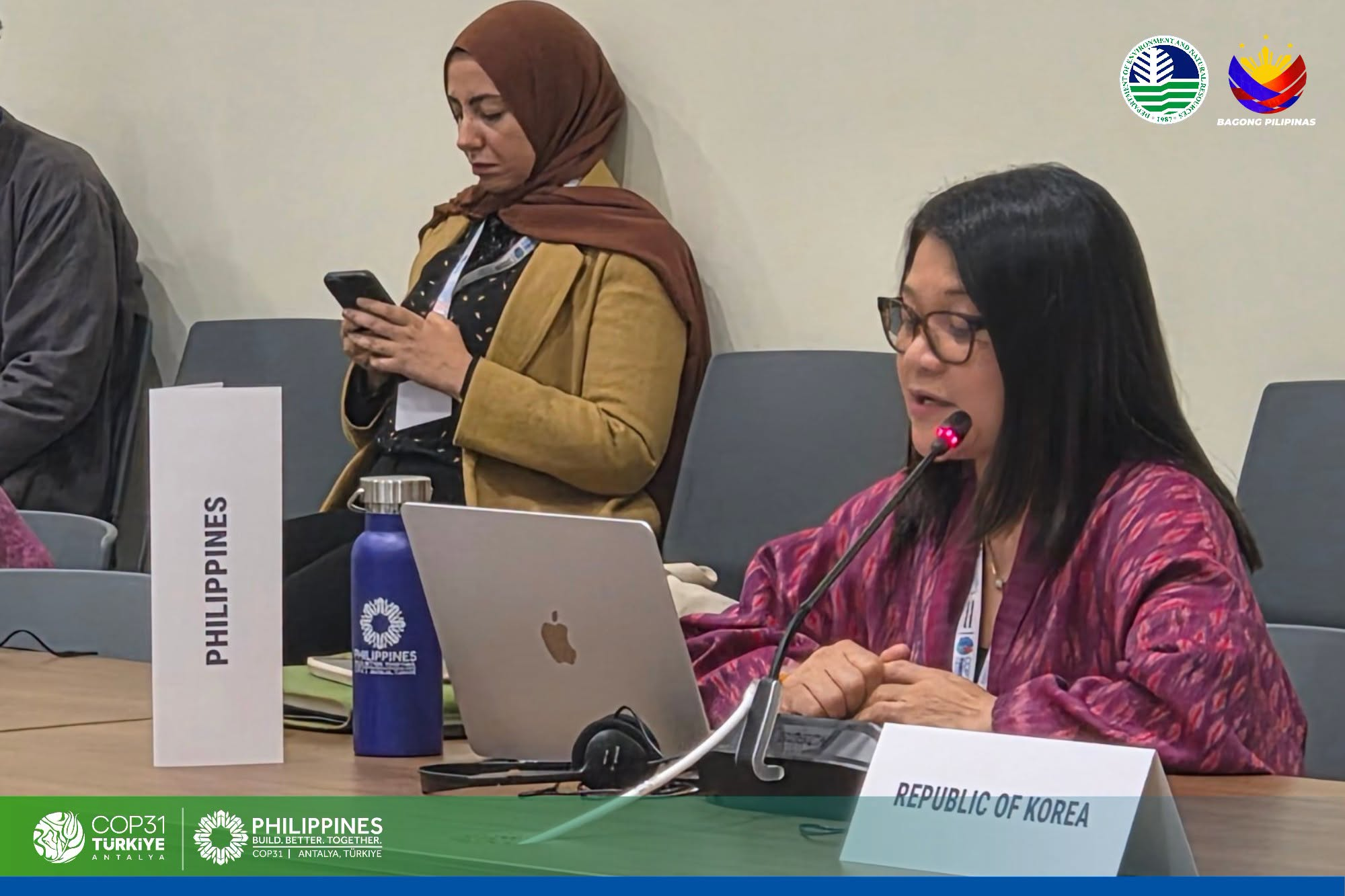

The Philippines reaffirmed its commitment to accelerating efforts to reduce super pollutants, including methane, black carbon, and hydrofluorocarbons (HFCs), during the 2026 Ministerial Meeting of the Climate and Clean Air Coalition (CCAC) held on November 16 at the 31st United Nations Climate Change Conference (COP31) in Antalya, Türkiye.
Department of Environment and Natural Resources (DENR) Assistant Secretary Noralene Uy expressed the country’s support for the 2026 CCAC Ministerial Declaration, emphasizing the importance of addressing pollutants that contribute significantly to global warming and environmental degradation.
Uy stressed that reducing super pollutants is not only essential to combating climate change but also a development priority that could deliver immediate benefits to public health, food security, and community resilience.
She highlighted the Philippines’ ongoing initiatives to translate international climate commitments into concrete measures, particularly through national strategies addressing short-lived climate pollutants and methane emissions.
The country also underscored its participation in regional cooperation initiatives, including the ASEAN Methane Reduction Roadmap, which seeks to strengthen coordinated efforts among Southeast Asian nations to curb methane emissions.
During the ministerial meeting, the Philippines called for stronger international partnerships, technical assistance, and increased climate financing to support developing countries in implementing effective pollution reduction measures.
The government emphasized that access to financial resources and implementation support is crucial to transforming climate policies into investments and measurable environmental improvements.
Super pollutants, including methane, black carbon, and HFCs, are potent contributors to global warming. Reducing their emissions can help slow near-term temperature increases while improving air quality and protecting vulnerable communities.
The Philippines reiterated its commitment to working with international partners to advance climate action, strengthen environmental protection, and promote sustainable development.