
(Photo coirtesy of Anadolu)
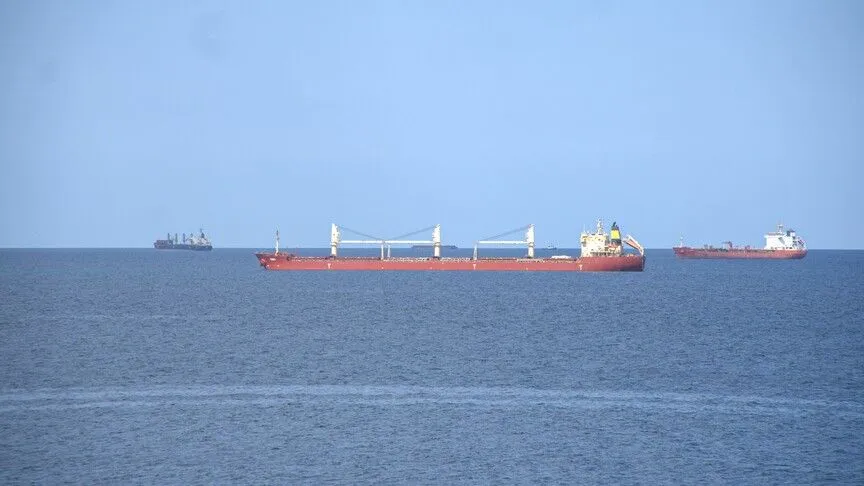
ANKARA — Attacks on commercial vessels in and around the Strait of Hormuz surged to their highest monthly level in October since the US-Iran conflict began in late February, according to figures from the United Kingdom Maritime Trade Operations Centre (UKMTO).
More than 30 maritime incidents were reported to UKMTO in October, marking the first time the monthly total exceeded that level since the conflict erupted.
At least 22 attacks were recorded as of Sunday in November across the Strait of Hormuz, the Gulf and the Gulf of Oman.
Before October, reported attacks averaged approximately 10 per month, according to the maritime monitoring agency.
Separate data from the International Maritime Organization (IMO) also identified October as the month with the highest number of confirmed maritime incidents so far this year.
In its weekly report released Friday, UKMTO clarified that its statistics include only incidents verified through primary sources, warning that the actual number of attacks could be higher.
The agency acknowledged receiving information about additional incidents that could not be independently confirmed.
In a report issued in mid-October, UKMTO said most vessels targeted by attacks had declined to report the incidents, complicating efforts to establish the full extent of maritime security threats.
Many commercial ships have also reportedly disabled their tracking systems to reduce the risk of detection.
Shipping activity through the Strait of Hormuz, a critical passage for global energy supplies, remains approximately 65 percent below pre-conflict levels.
Before the war, the waterway handled roughly one-fifth of the world’s oil supplies.
Maritime traffic has declined sharply following Iranian efforts to restrict shipping and the United States’ blockade of Iranian ports.
Despite continued security threats in the region, global oil prices have recently declined.
The International Energy Agency attributed the downward trend partly to recovering oil exports from Gulf producers and easing concerns over additional US military operations following the American midterm elections.
The latest figures highlight the continuing risks facing commercial shipping in one of the world’s most strategically important maritime corridors, even as regional oil exports show signs of recovery.