
By Wilnard Bacelonia
The Philippine Government Electronic Procurement System (PhilGEPS) is developing new features to automatically flag possible collusion and unusually repetitive government contract awards.
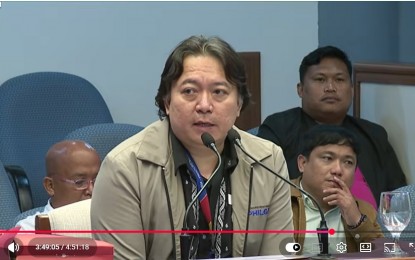
PhilGEPS Division Chief Rendell Sopeña told the Senate impeachment court Monday about the upgrade during the 30th day of Vice President Sara Z. Duterte’s impeachment trial after Senator-judge Joel Villanueva questioned whether the existing system could detect potentially preferential procurement patterns.
“May red flags po ba ang PhilGEPS para makita na unusually repetitive awards o repository lang talaga po kayo (Does PhilGEPS have red flags to detect unusually repetitive awards, or are you really just a repository)?” Villanueva asked.
Sopeña said such capability is not available in the system that handled the procurement records being examined by the court.
“The current procuring system, wala pa po. However, ‘yung dine-develop po namin ngayon kasama na po yung mga ganyang (The current procurement system does not have it yet. However, the system we are developing will include those) features,” he said.
Sopeña said the new procurement platform being developed in line with Republic Act No. 12009, or the New Government Procurement Act, would include mechanisms for detecting possible collusion and procurement red flags, as well as enhanced beneficial ownership information.
The government has already begun integrating beneficial ownership information into PhilGEPS.
The Procurement Service-Department of Budget and Management said its Open Data Portal was expanded in March to incorporate a beneficial ownership registry aimed at helping expose possible collusion among bidders and procuring entities.
Villanueva raised the issue while examining 49 government contracts awarded to GenCorp Industries Inc. that Sopeña said were created and posted under the older PhilGEPS 1.5 system.
He asked whether PhilGEPS could determine how often GenCorp was the sole responsive bidder, or whether it could identify repeated awards by the same procuring entity involving similar goods and services.
Sopeña said such information may appear in documents uploaded by procuring entities but is not readily captured in the electronic data downloaded from the older system.
Villanueva also questioned whether government could independently verify bidder declarations on ownership, beneficial ownership and relationships with officials involved in procurement.
“So ang hirap po sabihin sa publiko na may maaasahan po kami na natukoy o maiwasan ‘yung anumang (it is difficult to tell the public that we can rely on the system to detect or prevent any) direct or indirect conflict of interest,” Villanueva said.
“With this case, I agree, Your Honor,” Sopeña replied.
Under current procurement requirements, corporations participating in government bidding must disclose beneficial ownership information and relationships with key procurement officials, with false or incomplete declarations subject to sanctions, including possible blacklisting.
Sopeña said the modernized PhilGEPS would eventually capture procurement activities electronically from annual procurement planning through bidding and contract management, allowing more information to be analyzed within the system.