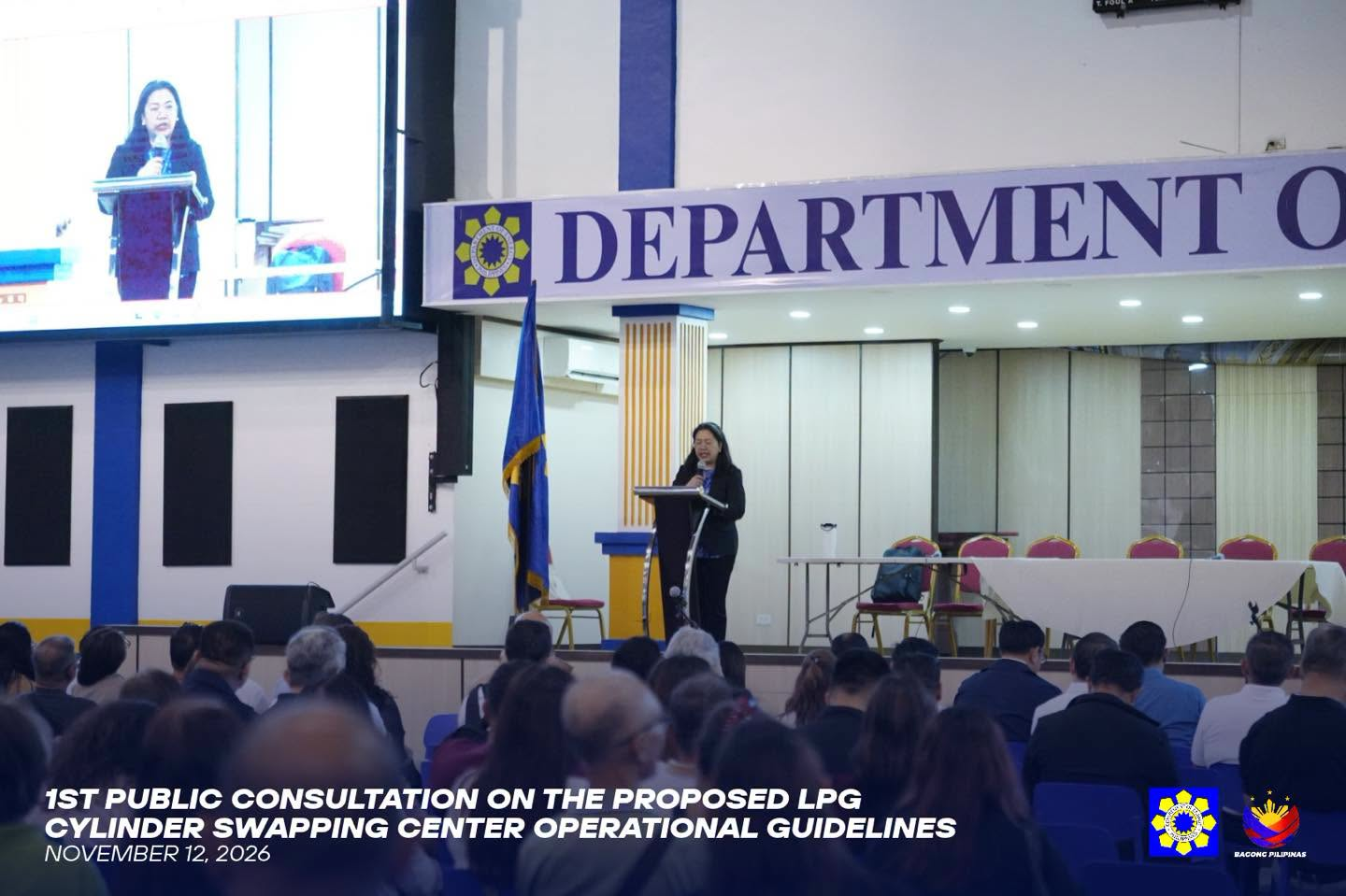

The Department of Energy (DOE), in coordination with the Department of Trade and Industry (DTI), has begun public consultations on proposed operational guidelines for liquefied petroleum gas (LPG) cylinder swapping centers to strengthen consumer protection and prevent unsafe refilling practices.
The first consultation, conducted on November 12, 2026, brought together consumer groups, LPG industry stakeholders, and other interested parties to review the proposed regulations and submit recommendations.
Led by the DOE’s Oil Industry Management Bureau (OIMB), the initiative seeks to establish standardized operating procedures for LPG cylinder swapping facilities and ensure that cylinders distributed to consumers comply with established safety requirements.
The proposed guidelines are intended to address safety concerns associated with improper LPG cylinder handling and unauthorized or unsafe refilling practices.
Under the proposed framework, cylinder swapping centers would be guided by standardized procedures designed to promote safer operations and improve compliance with applicable safety standards.
The DOE emphasized the importance of stakeholder participation in developing regulations that balance consumer safety with the operational requirements of the LPG industry.
Representatives from consumer organizations and industry groups were given an opportunity to raise concerns and provide recommendations on the proposed guidelines.
The consultation forms part of the government’s continuing efforts to strengthen oversight of the LPG sector and reduce safety risks associated with the distribution and use of LPG cylinders.
The DOE has scheduled two additional public consultations on November 26 and December 3, 2026, to gather further feedback before finalizing the proposed operational guidelines.
Details regarding the venues and registration procedures for the succeeding consultations will be announced in the coming days.
The agency encouraged LPG industry participants, consumer advocates, and other interested stakeholders to take part in the discussions to help develop practical and effective safety regulations.
Once finalized, the guidelines are expected to provide a more consistent operational framework for LPG cylinder swapping centers and strengthen safeguards for consumers.