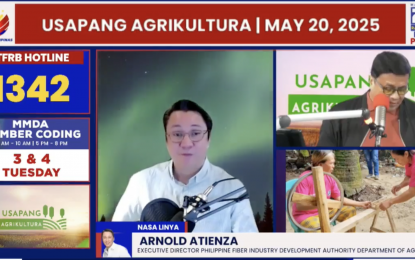
The Philippine Fiber Industry Development Authority (PhilFIDA) is working closely with the Bangko Sentral ng Pilipinas (BSP) to reintegrate abaca fibers into the country’s polymer banknotes.
In a radio interview during Usapang Agrikultura on Radyo Pilipinas, PhilFIDA Executive Director Arnold Atienza said the BSP expressed interest in the idea to support the local abaca industry.
“We have talked with BSP and we are now working together para po ibalik ang abaca sa ating pera,” Atienza said.
Atienza explained that the key challenge is finding a way to liquify abaca so it can be blended with polymer. “Ang unang naging usapan ay dapat ma-liquify ang abaca para maihalo sa polymer, and luckily PhilFIDA has the capacity to do it,” he said.
Currently, the BSP uses polymer banknotes that are designed to last up to 7.5 years and resist dirt, water, and oil. However, integrating abaca could provide both durability and economic benefits for Filipino farmers.
Atienza noted that the country is facing an overproduction of abaca, with around 40,000 metric tons exported—just 10 percent of the 400,000 metric tons previously exported in past years.
He stressed the urgency of supporting local abaca farmers, warning that the industry could die out if not sustained. “With or without budget, we have to move the soonest possible time dahil baka susunod na generation ay baka wala na tayong magsasaka dahil akala nila wala na tayong kikitain,” he said.