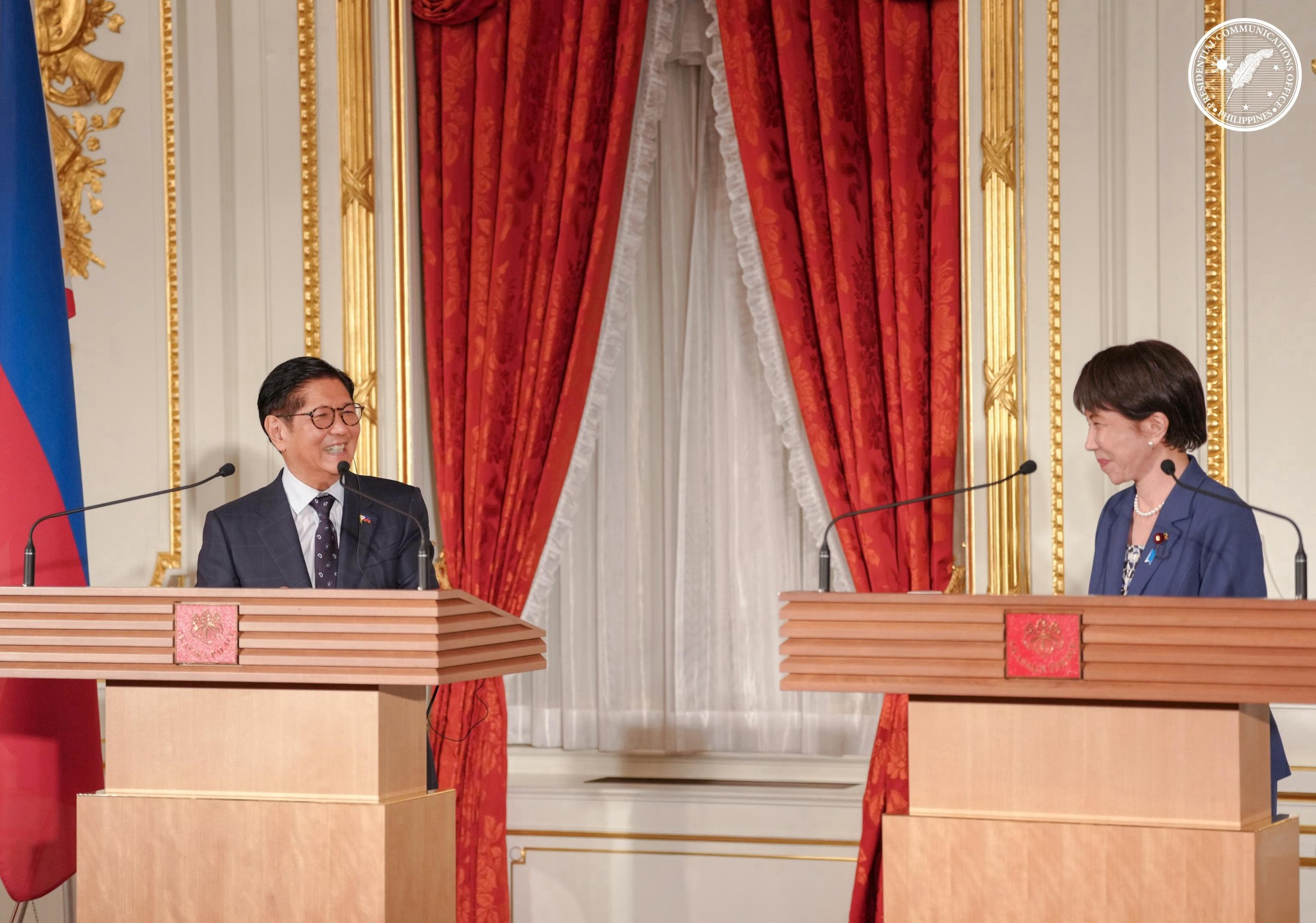

President ‘Bongbong’ Marcos ended his Tokyo visit with an assurance of US$3.4 billion worth of new investments. (Photo from the Presidential Communications Office)
President Ferdinand ‘Bongbong’ Marcos Jr. concluded his successful state visit to Japan with a memorable display of friendship and goodwill as he joined Japanese Prime Minister Sanae Takaichi in singing the Beatles classic “Hey Jude” during an official dinner following bilateral talks.
The karaoke performance was posted online, gaining much attention as it provided a lighter side to the high-level discussions that further strengthened the longstanding partnership between Manila and Tokyo.
But the real highlight of the visit was the president’s securing US$3.4 billion (about PhP210 billion) worth of fresh Japanese investments while advancing a broader strategic partnership with Japan spanning trade, security and parliamentary cooperation.
At the business roundtable with top Japanese executives, Marcos Jr. was able to position into deeper economic integration that, he said, is critical amid global instability.
“We are entering a new chapter—a chapter defined not only by friendship, but by deeper integration, shared growth, and a common belief in the future,” the chief executive pointed out.
He emphasized that “trade and tourism are not supporting sectors. They are core drivers of economic expansion in the Philippines moving forward,” as commitments flowed into manufacturing, green energy and tourism infrastructure.
Mr. Marcos thanked major Japanese firms operating in the Philippines, telling them, “You are no longer just investors in our economy. You are builders of it,” as the pledges are expected to generate thousands of high-quality jobs and strengthen supply chains.
Underscoring that parallel engagements which have earned economic gains are part of a wider strategic alignment, the president also called on Japanese lawmakers for “deeper engagement” among allies, stressing that “the importance of trusted partnerships . . . has never been more evident” amid geopolitical tensions and supply chain disruptions.
He highlighted plans to elevate ties to a Comprehensive Strategic Partnership and expand cooperation in maritime security, defense and technology.