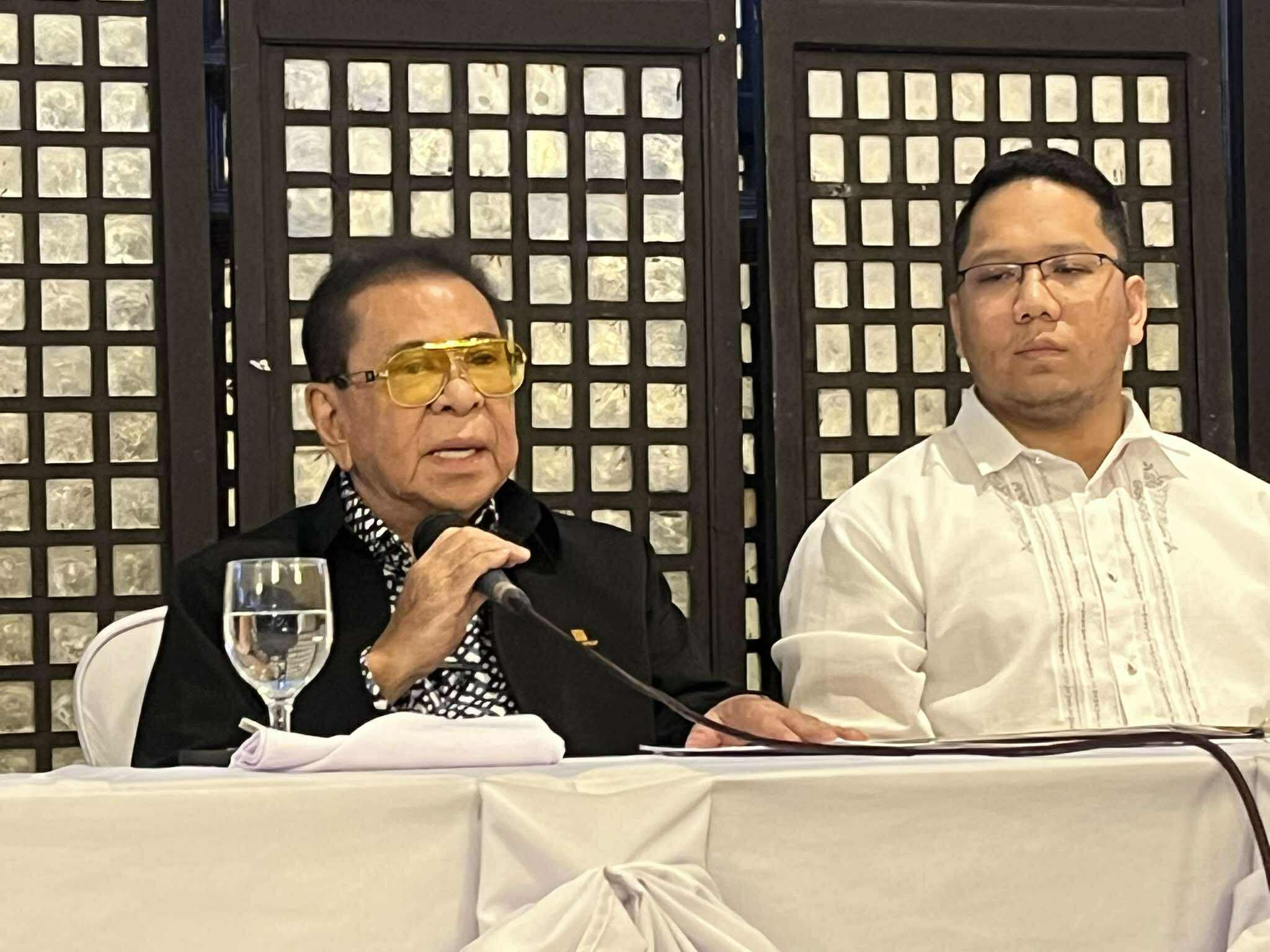

A fresh political storm is brewing between Malacañang and one of President Ferdinand Marcos Jr.’s most colorful allies-turned-critics, Luis “Chavit” Singson. The former Ilocos Sur governor and businessman, once a fixture of presidential entourages, now finds himself in the Palace’s crosshairs after calling for a “revolution against corruption” and openly suggesting Marcos’ removal.
Palace press officer Claire Castro urged the Department of the Interior and Local Government, the Philippine National Police, and the Department of Justice to scrutinize Singson’s remarks, warning that his appeal to students to abandon classes and join protest actions may fall under inciting to sedition.
“This is not a matter of political debate,” Castro said. “When a public figure encourages minors and young people to rise against the government, it becomes a question of law and order.”
The call to investigate is unusual, given Singson’s long political career and his reputation as a Marcos ally who once played kingmaker in Philippine politics. His fiery interview on Bilyonaryo News Channel, where he said Marcos should step down because corruption had become “irreparable,” shocked both supporters and detractors alike. He even proposed a “revolutionary government” akin to what emerged after the ouster of Ferdinand Marcos Sr. in 1986.
“If he has a conscience, he should give up. I never thought this would happen after I helped him,” Singson declared.
Constitutional clash
But while Malacañang seeks a probe, critics see the Palace’s move as a dangerous overreach. Former Solicitor General Florin Hilbay dismissed Castro’s suggestion as unconstitutional.
“Calling for a revolution against corruption is free speech,” Hilbay wrote online. “Unless corruption itself is the official function of government, this cannot be punished as sedition.”
His statement underscores the legal tightrope officials must walk: balancing public order with constitutionally protected dissent.
Youth at the center
Singson, who has reinvented himself many times over decades in politics, deliberately placed young Filipinos at the heart of his rhetoric. He urged college and high school students to boycott classes and instead take the streets as “the real stakeholders of the nation’s future.” He clarified, however, that elementary pupils and impoverished children should remain in school.
The imagery was stark: a seasoned political operator calling on the youth to do what their elders cannot—or will not.
High stakes for Malacañang
Whether the DOJ or police take action remains to be seen. A conviction for inciting to sedition carries a penalty of up to six years in prison and a fine of as much as P400,000. But pursuing charges risks framing Singson as a martyr for anti-corruption activism rather than a political has-been.
The clash sets up a broader question: is Malacañang defending stability, or is it silencing dissent at a time when anti-corruption protests are flaring nationwide?
For now, one thing is clear—Chavit Singson, once seen as an elder statesman in Marcos’ corner, has become an unexpected lightning rod in the widening debate over corruption, accountability, and the future of the presidency itself.