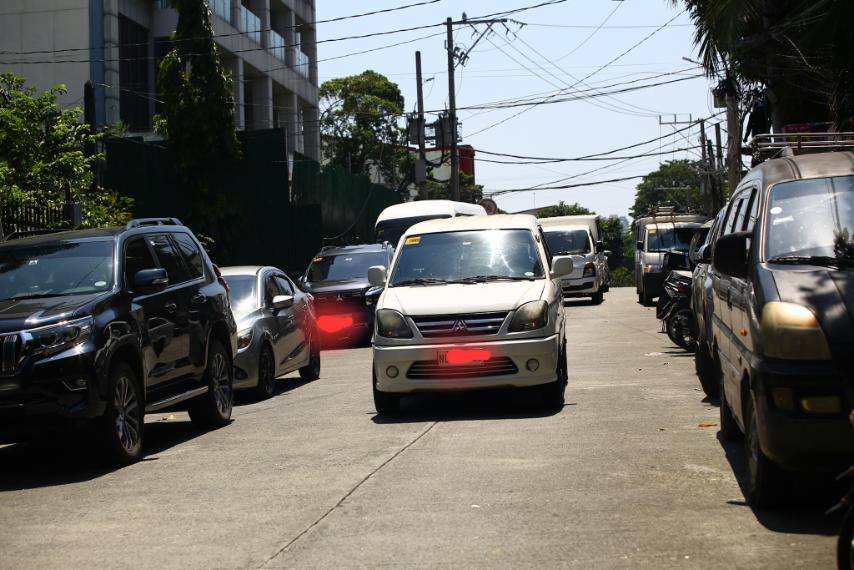

The clock is ticking for Metro Manila mayors to finalize a harmonized street parking policy before the September 1 deadline set by the Department of the Interior and Local Government (DILG). The move is part of a broader initiative to improve the region’s livability by easing its notoriously heavy traffic.
Interior Secretary Jonvic Remulla is calling for bold action. In a recent meeting with the Metro Manila Council (MMC) and Regional Development Council, he emphasized that freeing up public roads during peak hours could significantly improve traffic flow. Among the proposals on the table: declaring all public streets as no-parking zones during rush hours.
But not everyone agrees that a sweeping ban is the answer.
San Juan Mayor Francis Zamora, who currently chairs the MMC, said on Saturday that a blanket prohibition across all roads is simply not workable. “A one-size-fits-all solution won’t work in a metropolis with such diverse traffic conditions,” he told dzBB. “We need flexibility. Some areas might allow one-side parking, others might permit parking during non-peak hours, like overnight.”
Each of the 17 Metro Manila cities will soon submit a list of roads with their own tailored parking schemes. A technical working group will evaluate and consolidate these inputs, with a unified position expected in the coming weeks.
San Juan, for its part, has been enforcing a strict no-parking rule on major roads and designated Mabuhay lanes since 2019. But Zamora noted that quieter secondary roads may not need such rigid restrictions.
The debate over parking isn’t limited to mayors and bureaucrats—labor groups are also entering the conversation. The Federation of Free Workers (FFW) supports tighter controls on street parking, arguing that public roads should serve the majority, not just car owners.
“Just because you own a car doesn’t mean you own a piece of the street,” said FFW president Sonny Matula. “Metro Manila is not your personal garage.”
Matula pointed to Singapore’s highly regulated parking system as a potential model. There, just 14,500 on-street parking spaces exist across the city, managed through digital enforcement and stiff penalties for violators.
But he insists parking reform must be paired with better public transport. He called for the expansion of the PNR, MRT, and LRT networks, and even floated the idea of introducing double-decker buses—similar to those in London and Singapore—as a way to reduce the number of private vehicles clogging the roads.
“One double-decker bus can carry as many as 100 passengers,” he said. “That’s equivalent to taking 80 cars off the road, while using a fraction of the space.”
As the September deadline approaches, Metro Manila finds itself at a crossroads—caught between a growing population, limited road space, and the urgent need for a smarter, fairer transportation system. Whether the mayors can reach a consensus remains to be seen, but one thing is clear: the way Metro Manila parks—or doesn’t—could soon look very different.