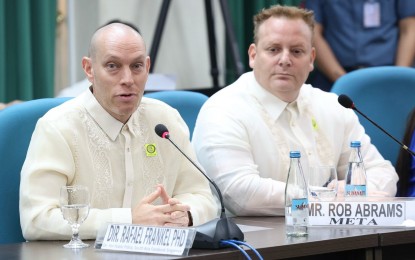
Social media giant Meta has recognized the Philippines as home to some of the “most robust” fact-checkers globally, as the company reiterated its commitment to curb online disinformation during a House Tri-Committee hearing on Tuesday.
Dr. Rafael Frankel, Meta’s director of public policy for Southeast Asia, told lawmakers that local third-party fact-checkers such as VERA Files, Rappler, and Agence France-Presse play a critical role in the company’s efforts to identify and reduce the spread of false content on platforms like Facebook and Instagram.
“When it comes to misinformation… fact-checkers can operate independently. They don’t need to wait for us to flag content—they can act on their own. And what we see in the Philippines is they are very robust. I think we have some of the most robust fact-checkers in the world active in the Philippines,” Frankel said.
He highlighted Meta’s content moderation priorities, noting that posts related to child exploitation, incitement to violence, and terrorism are addressed with the highest urgency. Lower-tier offenses, including misinformation, are managed through a combination of AI tools and partnerships with fact-checking organizations.
Frankel cited a recent example involving pro-Duterte blogger Mark Lopez, who falsely claimed that the Philippine Coast Guard had used water cannons on the Chinese Coast Guard in the West Philippine Sea. The post, fact-checked and rated false by VERA Files on March 26, was flagged on the platform, overlaid with a warning label, and subjected to reduced distribution.
Antipolo City Rep. Romeo Acop questioned whether Meta holds accountability for harmful content spread via its platforms. Frankel did not give a direct yes or no, stating that while users are responsible for what they post, Meta aims to strike a balance between ensuring user safety and protecting freedom of expression.
Acop expressed concern over the limited legal control the Philippine government has over Meta, especially since local offices like Facebook Philippines reportedly do not manage platform regulation or enforcement. He proposed that social media companies operating in the country be required to register or gain accreditation to ensure local accountability.
“That is why we are exploring the idea of requiring accreditation or registration for social media platforms operating in this country,” Acop said. “There should be a readily accessible point of contact that understands and complies with our laws.”
Frankel responded that Meta is open to working with the Philippine government on developing appropriate regulation frameworks.
“I’d be more than happy for Meta to engage with the Philippine government and Congress on any type of regulation being considered,” he said, adding that the company has worked with other governments across Southeast Asia and the Asia-Pacific to find regulatory solutions that protect users while respecting freedom of speech.