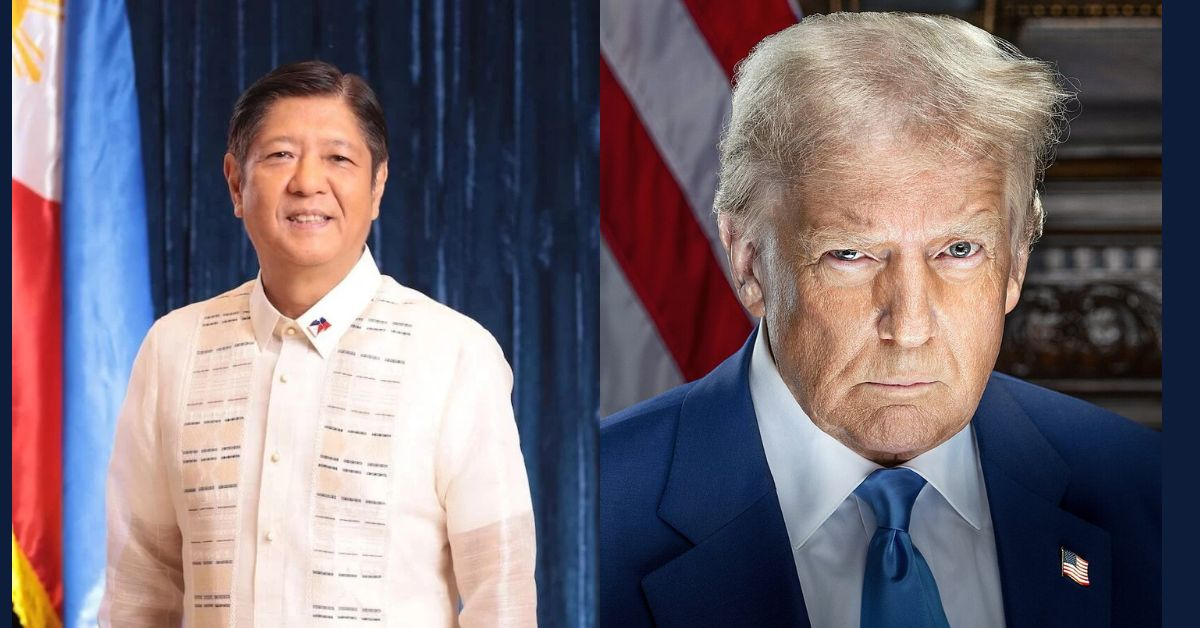

President Ferdinand R. Marcos Jr. is expected to fly to Washington, D.C. later this month for his first-ever bilateral meeting with U.S. President Donald Trump — a high-stakes diplomatic visit that signals the intensifying economic and geopolitical cooperation between the Philippines and the United States.
The anticipated summit, scheduled for July 20 to 22, was confirmed by Palace Press Officer Claire Castro and further highlighted by U.S. Secretary of State Marco Rubio during diplomatic engagements in Kuala Lumpur. Rubio, speaking at the sidelines of the ASEAN Regional Forum and a trilateral foreign ministers’ meeting with Japan and the Philippines, emphasized the strength of the trilateral alliance.
“This was an excellent dialogue,” Rubio said. “We’re working closely with the Philippines and Japan on building an economic corridor, ensuring maritime security, and defending territorial sovereignty. We’re very much looking forward to welcoming President Marcos to Washington.”
While the Presidential Communications Office has not yet released the official itinerary, the trip comes at a critical moment as both countries navigate trade tensions, regional security threats, and shifting global alliances.
Tariff troubles on the Agenda
One of the major topics expected to dominate the agenda is the looming 20-percent reciprocal tariff the United States plans to impose on certain Philippine exports starting next month. According to Frederick Go, Marcos’ special assistant for investment and economic affairs, Philippine trade officials are heading to Washington ahead of the president to negotiate a more favorable arrangement.
“This development poses serious concerns to Philippine exporters, and we are pursuing diplomatic and economic talks to address it head-on,” Go said during a Thursday briefing at Malacañang.
Though Go did not confirm whether the President would personally intervene in the trade talks, his presence in Washington could lend diplomatic weight to ongoing negotiations.
Resetting relations with Trump 2.0
This bilateral meeting is also being viewed as a symbolic reset in PH-US relations under the second Trump administration. Marcos was one of the first world leaders to publicly congratulate Trump after his return to office last January.
“I look forward to working closely with you and your administration,” Marcos had posted on social media, affirming his desire to reinforce what he called the “strong and lasting” alliance between the two nations.
That sentiment was echoed in a previous phone call between the two leaders in November 2024, described by the Palace as “friendly and productive.” During that exchange, both sides expressed mutual interest in strengthening defense ties and boosting economic collaboration.
Geopolitical implications
The timing of the meeting also holds wider strategic significance. As tensions simmer in the South China Sea and major powers compete for influence in the Indo-Pacific, the Philippines finds itself at a geopolitical crossroads. By aligning more closely with both the United States and Japan — its two strongest regional allies — Manila is seeking to hedge its bets and solidify its role in a potential regional security framework.
Observers believe this summit could pave the way for new bilateral initiatives, including joint infrastructure projects under the economic corridor plan, deeper defense cooperation, and possibly an updated version of the Visiting Forces Agreement (VFA) or the Mutual Defense Treaty.
What comes next?
While the visit is still a few days away, anticipation is building both in Manila and Washington. Analysts say the outcome of the talks could shape Philippine foreign policy for the rest of Marcos’ term and help define how the Trump administration engages with Southeast Asia moving forward.
If successful, the meeting could mark a turning point — from ceremonial diplomacy to strategic alignment. For both Marcos and Trump, it’s a chance to demonstrate that the historic alliance remains not just intact, but evolving in the face of new global challenges.