
(Photo courtesy of PNA)
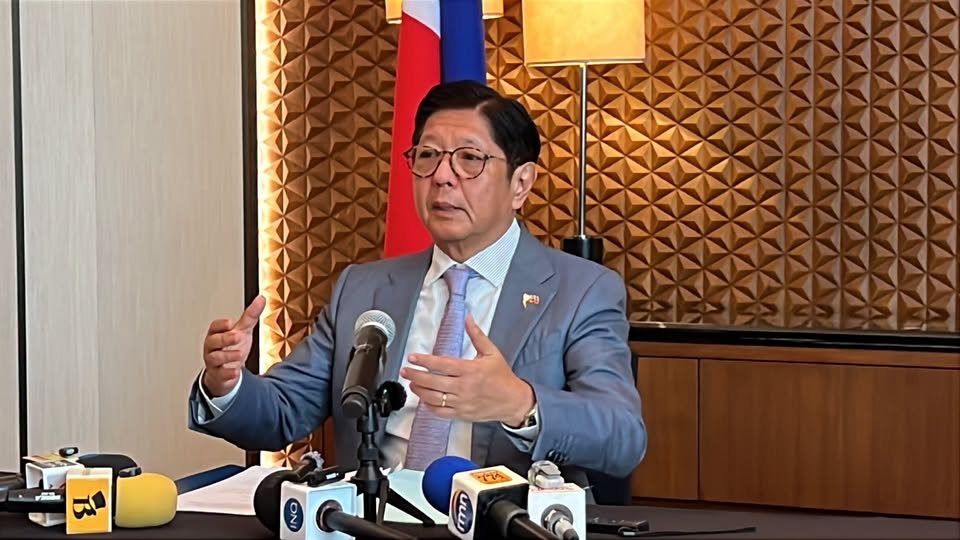
SHENZHEN, China – President Ferdinand Marcos Jr. said Friday that foreign investors continue to express confidence in the Philippines despite global economic uncertainties, with several companies considering the country as a regional manufacturing hub and a strategic base to strengthen their operations against future disruptions.
Speaking after the Asia-Pacific Economic Cooperation (APEC) Economic Leaders’ Meeting, Marcos cited his discussions with Chinese companies, including electric vehicle manufacturer BYD Co. Ltd. and bearing producer C&U Group, as part of the administration’s efforts to attract foreign investments and expand the country’s industrial capacity.
His meeting with C&U Group resulted in an initial USD 87 million investment commitment for a 20-hectare manufacturing facility in Alitagtag, Batangas.
The proposed plant, which will produce bearings and related components, is expected to become C&U Group’s largest manufacturing facility outside China and its only production base in Southeast Asia.
Marcos said investors remain interested in expanding their presence in the Philippines because of their confidence in the country’s economic prospects and policy reforms.
“That’s exactly what they said. We are here because we have confidence,” Marcos said, referring to the companies he met during his visit.
“They are saying that’s why we are here to talk to you, to show that we are continuing to be confident in the economic development of the Philippines, and that the changes that we have made to the different parts of our economy have provided them incentives to come.”
The President acknowledged that businesses worldwide are exercising caution in their immediate investment decisions because of the conflict involving Iran and its effects on international markets.
However, he said companies are also preparing for possible future disruptions, particularly those affecting global supplies of oil, petroleum products and food.
According to Marcos, some foreign firms consider establishing operations in the Philippines an important part of their strategy to improve supply chain resilience and reduce exposure to external economic shocks.
“They would like, as part of our strategy, to be more resilient to such shocks, we would like to come to the Philippines because we believe that our being in the Philippines is going to help us and help the Philippines for that matter, to be better prepared for any such things,” he said.
Marcos added that investing in the Philippines would remain beneficial even if similar disruptions did not occur, as companies could expand their market reach and establish regional operations.
“Should these shocks not come, then it is still to their advantage to continue to invest in the Philippines, to widen their markets, and to use the Philippines as a hub,” the President said.
He emphasized that the Philippines’ strategic location in Asia provides opportunities for businesses seeking to establish manufacturing, distribution and other regional operations.
Marcos also cautioned that the global economy might not return to conditions prevailing before the conflict, particularly in sectors involving energy, petroleum and food supplies.
He said his discussions with business leaders and foreign officials included strategies to strengthen preparedness against future supply disruptions and minimize their potential impact on economic activity.
The President maintained that continued foreign investment interest reflects the Philippines’ potential to expand its role in regional trade, manufacturing and supply chain development despite continuing global challenges.