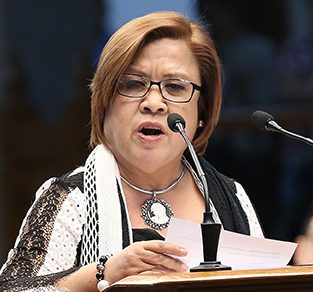

In the wake of swelling public outrage over the multibillion-peso flood control scandal, ML Partylist Rep. Leila de Lima has challenged President Ferdinand Marcos Jr. to do more than issue executive orders and lip service. She wants him to certify as urgent a bill that would create a truly independent commission with broad powers to investigate what many now call the “greatest plunder of this decade.”
Speaking before protesters at Rizal Park during the September 21 anti-corruption rally, De Lima minced no words.
“Hindi uubra ang mababaw at patingi-tingi na pagiimbistiga. Kailangan may ngipin. Kailangan tunay na independent ang commission,” she declared, drawing cheers from the crowd.
For De Lima, who served as justice secretary before her stint in Congress, the issue is simple: cosmetic inquiries won’t cut it. Only a law-backed commission, with its own subpoena powers and prosecutorial pathways, can dig into the systemic corruption behind the flood control mess.
Marcos’ EO not enough?
Earlier this month, Marcos signed Executive Order No. 94 establishing the Independent Commission for Infrastructure. Malacañang hailed it as proof of his commitment to transparency. But De Lima and other lawmakers say the EO falls short because it remains under executive control—vulnerable to political interference and limited in scope.
To address these weaknesses, House Bill 4453 was filed, creating a statutory Independent Commission to Investigate the Misuse of Funds for Flood Control and Other Infrastructure Projects. The measure grants the body sweeping investigative authority, subpoena powers, its own secretariat, and the ability to directly recommend charges to the DOJ and the Ombudsman.
“It must be beyond the reach of political compromise,” De Lima stressed. “This is not about protecting allies or enemies—it’s about protecting taxpayers’ money and the Filipino people.”
Framers join the chorus
The push gained further moral weight after several framers of the 1987 Constitution issued a manifesto condemning what they described as “staggering corruption” in public works projects. They warned that unless a strong, independent mechanism is institutionalized, the scandals will only grow, feeding public cynicism and eroding democratic institutions.
“The framers remind us: our democracy was rebuilt on accountability. If we betray that, then everything we fought for after martial law collapses,” De Lima said.
A test of will
For critics, the question is no longer whether corruption exists—it’s whether Marcos has the political will to confront it, even if it means exposing allies or party mates. With thousands of citizens pouring into the streets on September 21, the symbolism could not be sharper: forty years after Filipinos toppled a dictatorship for corruption, they are once again demanding systemic accountability.
Marcos, who has styled himself as a reformer, now faces a defining moment. Will he back an independent commission that can dig into the rot without fear or favor? Or will he settle for executive orders and task forces that critics dismiss as band-aid measures?
The protests, the bills, and the manifestos all point to one thing: the public’s patience has run out.