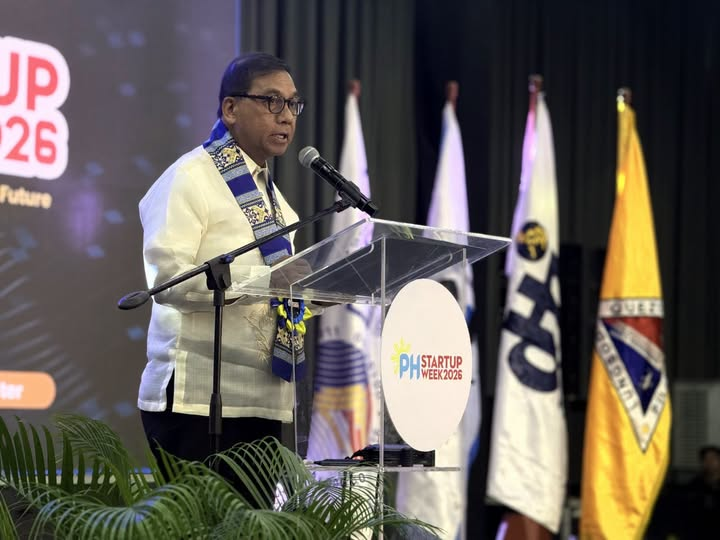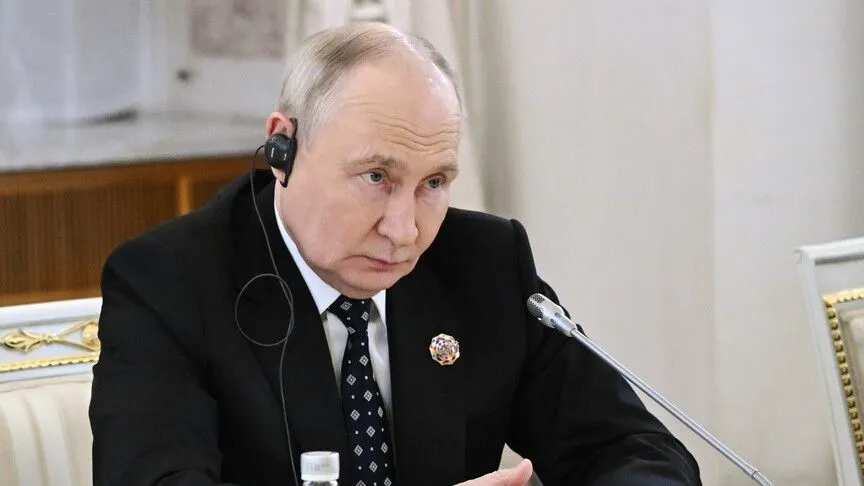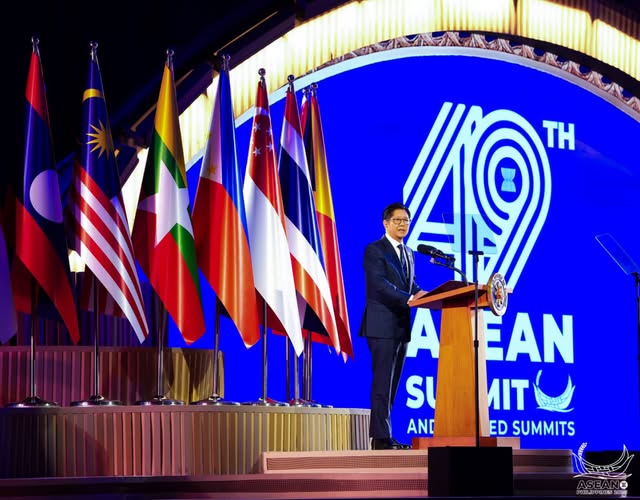

(Photo courtesy of ASEAN PH 2026)
MANILA – President Ferdinand Marcos Jr. departed for Shenzhen, China, on Wednesday, November 18, to attend the 33rd Asia-Pacific Economic Cooperation (APEC) Economic Leaders’ Meeting, following the Philippines’ hosting of the 49th ASEAN Summit and Related Summits.
The aircraft carrying Marcos and the Philippine delegation took off from Villamor Air Base in Pasay City at 3:25 p.m., hours after his bilateral meeting with United States President Donald Trump.
Marcos will join leaders from APEC’s 21 member economies at the November 18 to 19 gathering in Shenzhen, a major Chinese technology and manufacturing hub.
The annual meeting brings together economic leaders, ministers, senior officials, and business representatives to discuss regional economic developments, strengthen trade cooperation, and identify priorities for future growth.
In his departure statement, Marcos emphasized APEC’s significance to the global economy, noting that its member economies account for 61 percent of global gross domestic product and 46 percent of global trade in goods and commercial services.
“It is also where the world’s growth is concentrated,” Marcos said.
He noted that APEC economies are projected to expand by 3.4 percent, outpacing global economic growth, supported by investments in digital technology and artificial intelligence.
Philippines seeks stronger trade and investment ties
Marcos said he would attend the summit with confidence, citing the country’s reported economic gains and continuing reforms aimed at improving its competitiveness.
Among the developments he highlighted were the Philippines’ recent reclassification as an upper-middle-income economy, record exports of USD 84.5 billion in 2025, and government efforts to expand the country’s network of free trade agreements.
“These gains show that openness, reform, and partnership work for our people,” he said.
The President said he intends to use the APEC meeting to deepen economic partnerships, expand market access for Philippine products, and attract additional foreign investments.
He also expressed interest in engaging business leaders to promote the Philippines as an investment destination, particularly in industries supported by emerging technologies and regional supply chains.
“Our message is clear: the Philippines is open for business. Invest in the Filipino,” Marcos said.
Marcos seeks constructive engagement with China
On relations with China, Marcos said the Philippines would pursue constructive economic engagement while maintaining its position on matters involving national interests.
He identified trade, investment, and people-to-people exchanges as areas where Manila and Beijing could expand cooperation.
The President said the Philippines would engage China constructively in these areas, “even as we remain steadfast in upholding our national interest.”
His remarks underscored the administration’s intention to strengthen economic relations with Beijing while protecting Philippine interests.
Trump also expected at APEC
US President Donald Trump, who arrived in Manila on Tuesday for the ASEAN-US Special Summit, a meeting of Quad leaders, and bilateral talks with Marcos, is also expected to attend the APEC gathering in China.
Trump’s visit to the Philippines included discussions on bilateral trade, defense cooperation, energy security, and other areas of mutual interest.
The US leader is also reportedly expected to participate in trilateral discussions with Chinese President Xi Jinping and Russian President Vladimir Putin concerning nuclear issues.
However, official confirmation of the proposed three-way meeting and its agenda remains necessary.
For the Philippines, Marcos’ participation in APEC follows a series of high-level diplomatic engagements aimed at strengthening regional partnerships and expanding economic opportunities.
The President said the country’s continued participation in international economic forums reflects its commitment to trade openness, investment promotion, and cooperation with regional partners.