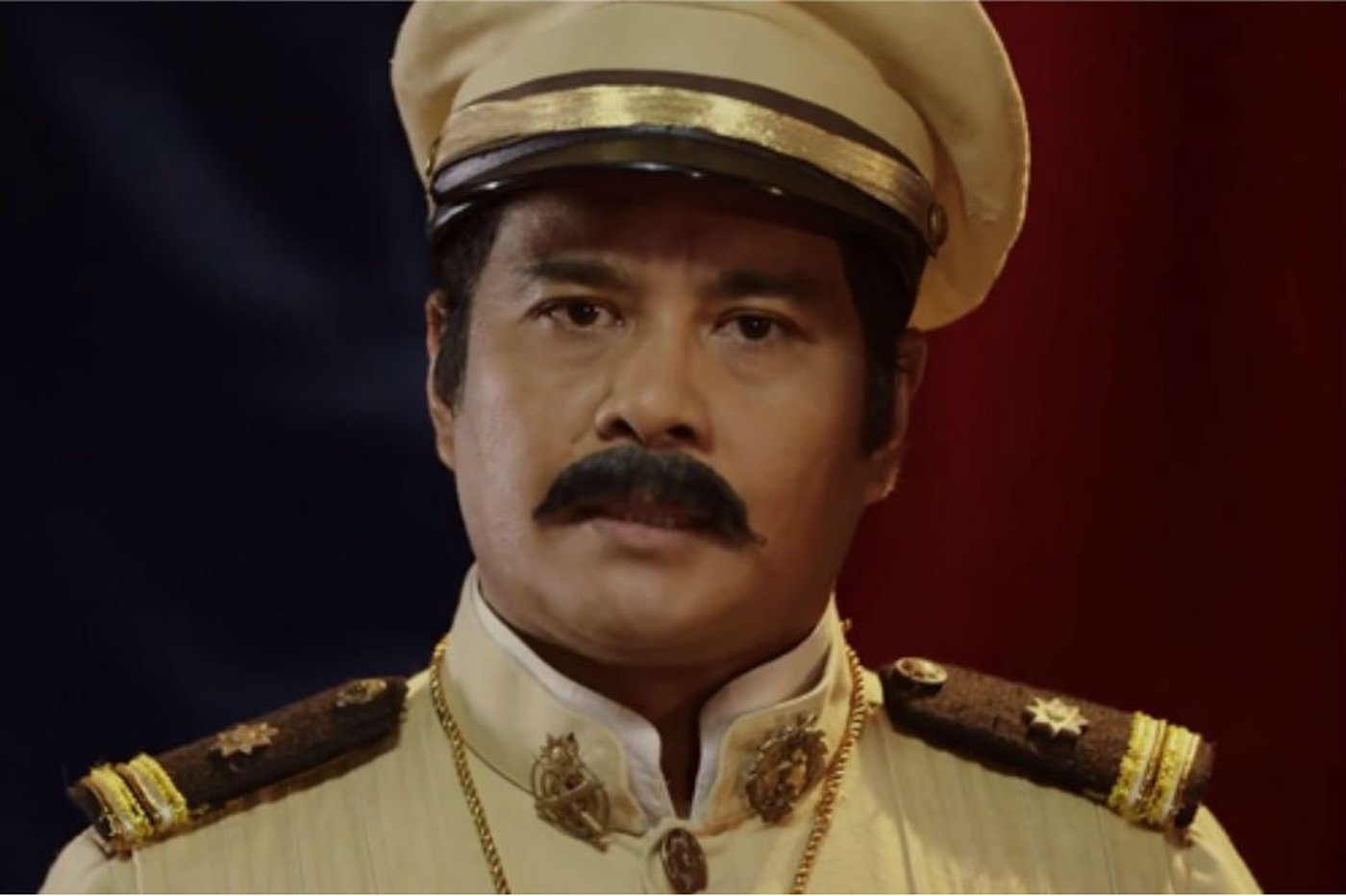

Veteran actor John Arcilla, best known for his acclaimed portrayal of General Antonio Luna in the 2015 historical film Heneral Luna, has spoken out on the controversy surrounding Quezon, the latest and final installment of the Bayaniverse trilogy directed by Jerrold Tarog.
The new film, centered on the life of former Philippine President Manuel L. Quezon and starring Jericho Rosales, has drawn sharp criticism from Quezon’s grandson, Ricky Quezon Avanceña. The younger Quezon accused Tarog of distorting his grandfather’s image, describing the movie as “an insult to his memory.” His impassioned confrontation with Tarog and Rosales after a private screening in Makati went viral on social media earlier this week, sparking widespread debate on artistic freedom versus historical responsibility.
The clash over “satire”
According to Avanceña, his outrage stemmed from Tarog’s statement that Quezon was intended as a satire—a creative choice he said desecrated the dignity of his late grandfather. “He reduced him to a caricature,” Avanceña wrote in his Facebook post accompanying the viral video of the confrontation.
Tarog, meanwhile, defended his artistic vision, saying the satirical framing was meant to critique power and politics in general, not to demean Quezon himself.
Arcilla’s call for respect and consultation
Amid the heated exchanges, Arcilla, who is a distant relative of the late president through his mother Eustacia Gonzales of Baler, joined the conversation by commenting on Avanceña’s post. Expressing empathy for his cousin, Arcilla said the filmmakers should have consulted Quezon’s descendants before developing such a sensitive portrayal.
“I cannot blame you, Ricky,” Arcilla wrote. “Our family is still very much alive—they should have considered consulting the direct descendants and relatives.”
He compared the situation to why no one has yet made a film about painter Juan Luna, explaining that Luna’s wife’s family has consistently refused permission. “That principle may apply here as well, especially since the living descendants were not even consulted,” he added.
A balancing act between art and legacy
While careful not to condemn his colleagues, Arcilla acknowledged the emotional toll the controversy has caused. “All the people involved are my friends and colleagues,” he said. “I cannot apologize on their behalf—but if the living family feels hurt, they are entitled to their reaction, or even to seek proper clarification or action if necessary.”
He went on to question whether Quezon truly succeeded as a satire, saying the film’s tone felt more accusatory than ironic. “The so-called satirical angle may be the film’s defense,” Arcilla noted, “but its preachy tone and direct characterization of our grandfather’s persona were quite explicit. That’s what makes it troubling.”
A family divided, a nation watching
The Quezon controversy has now become a lightning rod for broader discussions on how Philippine historical figures are portrayed on screen. For many, it raises the question: how far can creative freedom go when it intersects with national memory?
For Arcilla, the answer lies in balance. “Artistic freedom is important,” he implied, “but so is respect for legacy.”
And as the debate continues, the film that sought to revisit history has instead reignited it—reminding Filipinos that the stories of their heroes are not just cinematic material, but living legacies still deeply felt by their descendants today.