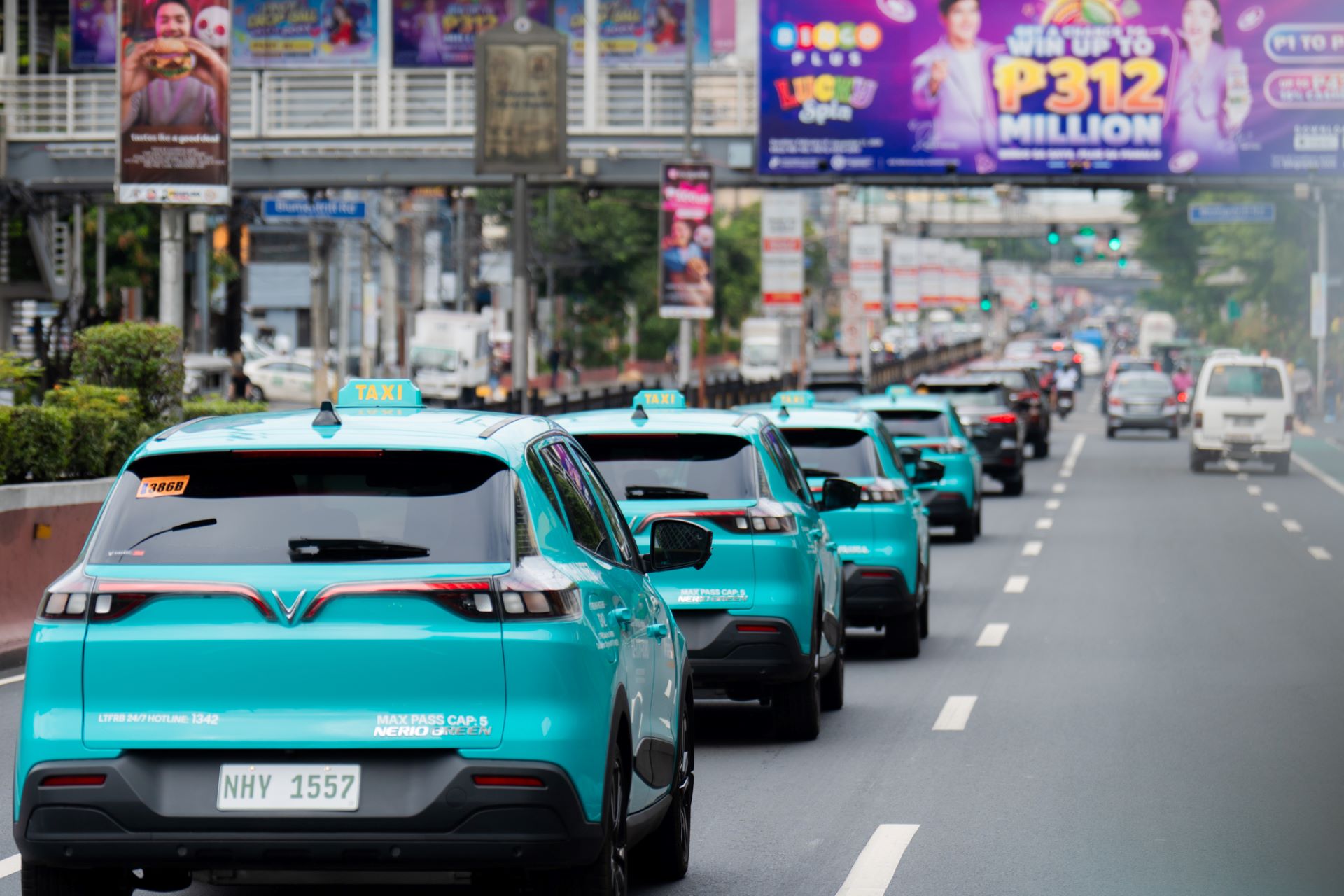

In the thick of Manila’s morning rush, where the blare of horns and the growl of engines define the soundtrack of the city, a subtle change is humming beneath the noise. Blue-and-green electric taxis—sleek, silent, and unmistakably modern—are quietly weaving their way through traffic, signaling that the electric era has arrived not through press conferences or glossy ads, but through lived experience.
For many Metro Manila residents, the future of mobility is no longer a distant dream—it’s a daily commute. These VinFast-built electric taxis, operated by Green GSM, the country’s first all-electric ride-hailing service, have been plying the streets since June. And with every trip, they’re turning curiosity into confidence.
At first, most passengers can’t help but ask questions. How far can it go before charging? Does it cost more? Why is it so quiet? Drivers have learned to answer these with pride and patience, often sharing how much easier—and cheaper—the cars are to operate.
“I feel less tired, the costs are lower, and I take home more earnings,” said Tarwin S., 51, a former gasoline taxi driver who switched to Green GSM. For him, the difference is more than mechanical—it’s personal.
These small conversations, repeated hundreds of times a day across the city, are doing what marketing campaigns can’t: they’re normalizing electric vehicles (EVs). Each smooth, near-silent ride becomes a demonstration that sustainability doesn’t have to mean sacrifice.
How familiarity builds acceptance
What’s happening in Manila mirrors the experience of cities that went electric years earlier. In China, the transition began not with luxury cars but with public taxis and buses—everyday vehicles that millions encountered firsthand. Over time, familiarity turned into trust, and trust into adoption.
Green GSM’s growing fleet is taking Manila down the same road. The sight of electric taxis idling quietly at intersections or gliding past EDSA’s bottlenecks is making EVs feel less foreign, less futuristic, and more… Filipino.
Of course, curiosity and experience can only go so far without a reliable system behind them. That’s where VinFast, the Vietnamese automaker behind Green GSM’s taxis, steps in.
VinFast isn’t just selling vehicles—it’s building an ecosystem. Partnering with V-Green, a global EV charging station developer, the company aims to roll out around 15,000 charging ports across the country. It’s also establishing dealerships, authorized service centers, and financing partnerships with local banks—laying down the invisible but essential foundation of a new transport era.
When charging points become as common as gas stations, when skilled technicians are easy to find, and when affordable financing makes EV ownership possible, the shift stops being experimental—it becomes inevitable.
The rollout dovetails with the government’s Electric Vehicle Industry Development Act (EVIDA), which incentivizes cleaner transport solutions and emissions reduction. But beyond policy, every charger installed creates jobs for electricians, engineers, and IT specialists—proof that sustainability and economic growth can move hand in hand.
Charging hubs in malls, office complexes, and highways are now subtle but powerful reminders that the EV ecosystem is taking root. People may not consciously register it, but every sighting reinforces the idea that electric transport is here to stay.
The sound of change
Transformation doesn’t always announce itself with fanfare. Sometimes, it’s heard—or rather, not heard—in the soft hum of a car gliding down an avenue that used to roar with engines.
Manila’s electric taxis are more than just a convenience—they’re the sound of a city learning to breathe easier. Each ride, each charging station, each driver’s story contributes to a quiet revolution that’s changing the rhythm of the streets.
And one day soon, that gentle silence might just be the most familiar sound of all.